Pick the one new thing
Same shape, same colour, same crunch as a food they already eat. The pediatricians call this a food bridge. Three chains that start from real safe foods:
nuggets › breaded chicken › plain chickenfries › roasted wedges › mashplain pasta › sauce on the side › sauce mixed in
One new thing at a time. Change it when the current one has gone boring, not before.
At the table
The safe food on the plate, every time. Canadian Paediatric Society: Offer at least one food at every meal that you know your child likes.
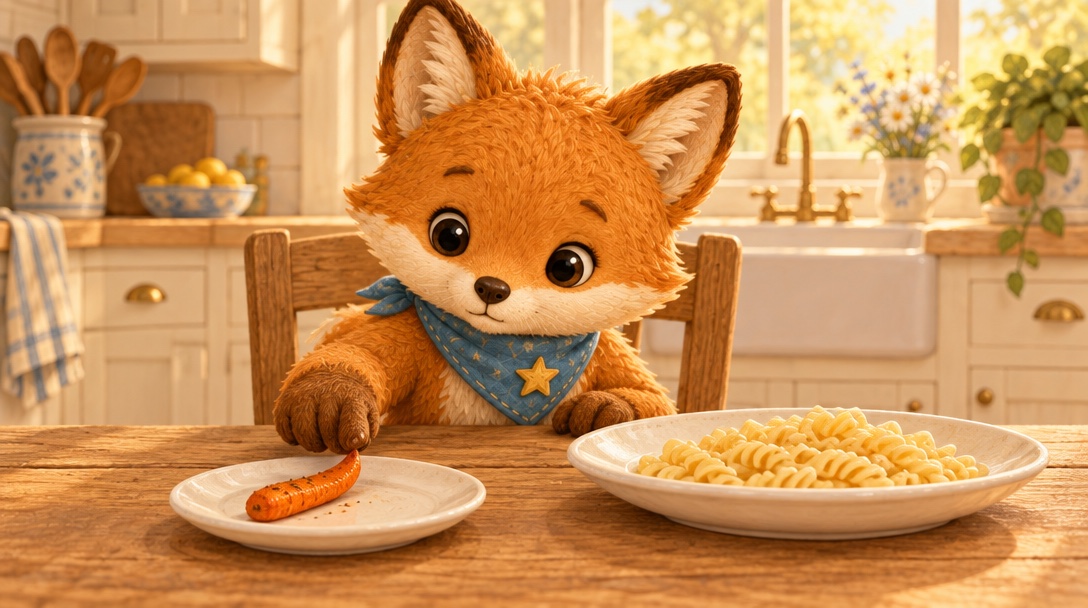
The new thing beside it, not touching, one bite's worth. Cleveland Clinic: put one bite on their plate.
You eat yours. If they say no, You don't have to eat it,
and that is the whole conversation. When the meal ends, the NHS: Just take the food away without saying anything.
What counts, and why there is no sticker
Looking, touching, smelling and licking are real steps. The CDC: Allow kids to touch and smell their food to spark interest and improve comfort with new foods during meal time.
Every rung gets the same paw, the bite too.
Food is never the prize. The American Academy of Pediatrics: Tempting as it may be, try not to bribe your children with treats for eating other foods.
UCSF: If your child refuses to eat, withholding dessert is not the answer.
A sticker for tasting did fine in two small home studies; a treat for eating never did. So: a paw for every step, nothing to earn.
How many tries
More than you think. The American Academy of Pediatrics: It can take as many as 10 or more times tasting a food before a toddler's taste buds accept it.
The Ellyn Satter Institute says 20 or more. Most parents stop at three to five.
Fourteen dots is two weeks, and most families need a second sheet. Daily is fine, every few days is fine, not every meal, never at the end of a hard day. A shrinking list, gagging or fear is a call to the pediatrician, not a second sheet.
What's behind this: the American Academy of Pediatrics, the Canadian Paediatric Society, the CDC, the NHS, the Cleveland Clinic, UCSF Benioff Children's, the Ellyn Satter Institute, and about 125 families' own stories.

fablefleet.com/stories/trying-new-foodsFree bedtime routine in the app