
· Updated
How to Wean Pacifier at Night Without Wrecking Sleep
How to wean the pacifier at night: it's the last piece and the hardest, because the pacifier is how your child falls asleep, not just a habit. Daytime goes first. Then either fade it (your child falls asleep with it, you take it out once they're under, and nobody puts it back) or make a clean break with a goodbye. Have a soft thing already in the bed and a bedtime routine that ends the same way every night. Expect one to three hard nights: night one is the worst, night two is less, by night three most children are sleeping fairly well. Never give it back on night two. If your child is under about two and a half and truly distressed, it's too early; put the sleep pacifier back and try again in a few months.
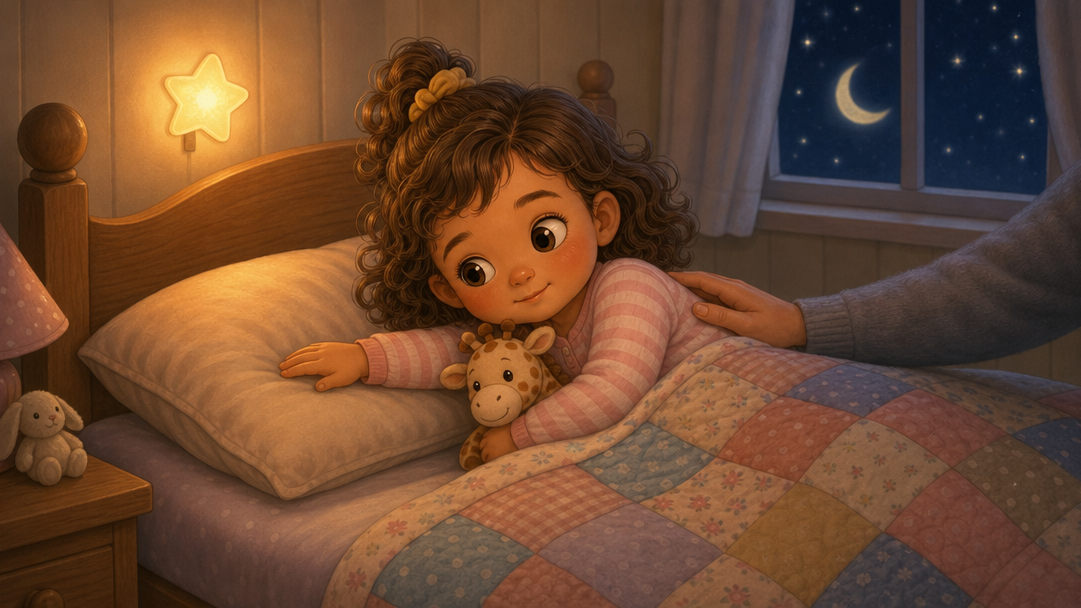
The night pacifier is the one everyone's scared of, and fair enough. It's 2 a.m., the pacifier is on the floor, and a small person is screaming for it. I lie down with my own kids at bedtime, so I know that hour well, just for different reasons. Here's what the sleep people and about seventy families say actually happens on nights one, two and three, and what to do on each.
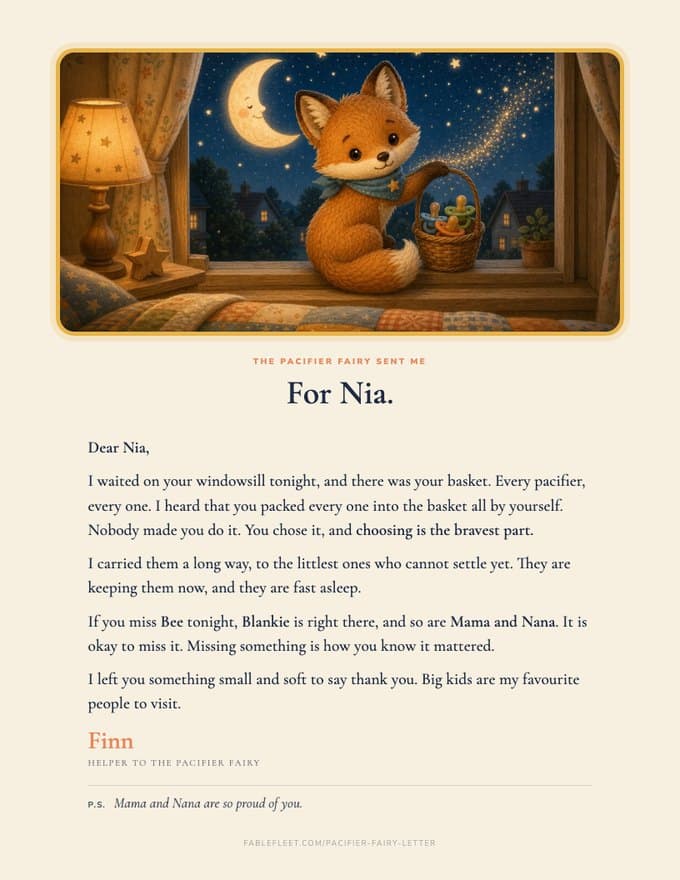
Free to print: a letter from Finn, the pacifier fairy's helper, with your child's name in it.
Why nights are the hard part
The daytime pacifier is easy to lose because your child wasn't really attached to it at the playground. The night one is different. Your child learned to fall asleep with it, probably from the first weeks, and when it falls out at 2 a.m. and they can't find it, someone has to. The AAP names this plainly: a child who depends on the pacifier to fall asleep often wakes when it falls out. So what you're really teaching isn't "no pacifier." It's "here's how you fall asleep now." That's a skill, and skills take a few nights.
Two things before you start, both from the Cleveland Clinic. If your child has never fallen asleep without the pacifier, sort out settling first, ahead of the goodbye; in its words, if the pacifier is the sleep crutch, work on sleep first. And daytime goes before nights, every time. When each piece should happen is in when to stop pacifier.
Set the bed up first
The soft thing moves in a week or two early. A small blanket or a stuffed animal in the bed before the pacifier leaves, so by the night it goes there's already a friend there. (Mine was a giraffe. The giraffe did all the work.) The Cleveland Clinic and the Canadian Paediatric Society both say this; so does nearly every smooth story I read.
A routine that ends the same way every night. Bath, pajamas, teeth, a story, the same few words, lights out. The routine becomes the thing that says "sleep now," so the pacifier doesn't have to. If you don't have one, build it before the goodbye, not during.
One safety line, every expert, no exceptions. The AAP: "Never tie a pacifier to the crib or around the child's neck or hand." No clips on sleep clothes either. A tethered pacifier is a strangling risk, and no easier night is worth it.
Two roads for nights
The fade. Your child falls asleep with the pacifier. Once they're under, you slip it out. And when it falls out in the night, nobody puts it back. The family doctors' guidance (American Family Physician, 2025) says it in two words: "do not reinsert once asleep." The NHS speech therapists suggest the same. Over a week or two your child is practising staying asleep without it, then falling asleep without it at naps, then at bedtime. Gentle, slow, no single hard night. Suits a younger toddler.
The clean break. The pacifier doesn't go in at bedtime at all, paired with a goodbye your child was part of. Sleep consultants mostly prefer this for a child whose pacifier is wired into sleep, on the logic that having no option is easier than sometimes having it. A few harder nights, then done. The goodbye itself, bag and all, is in how to wean off pacifier and the pacifier fairy.
Nobody has studied which is better. Pick the one your family can hold steady through, and then hold steady.
Nights one, two and three
Here's the honest shape, from a pediatric sleep clinic's handout and the families I read.
Night one. The worst one. Expect a long settle and a wake or two. At bedtime: "Finn has them now. Bear is here, and so am I." In the night: a quiet check, a hand on the back, the soft thing pressed into their arms, "it's okay to miss it," and nothing more. Not a conversation. Not the pacifier.
Night two. Less fussing, usually. This is also the dangerous one, because you're tired and it would be so easy. Don't. Giving it back on night two teaches that enough crying brings it back, and you start again from night one, with a child who now knows crying works. One mom I read was still stuck in that loop at four and a half, three nights at a time, round after round.
Night three. The handout's line is that by the third night the child "should be sleeping fairly well." The families I read mostly agreed: one to three hard nights, then a tail of asking now and then for a few weeks, which fades.
If it isn't fading. The same handout says if crying goes on for more than an hour, think again. I'd put it this way: if your child is under about two and a half and truly distressed, it's too early, not a failure. Put the sleep pacifier back, keep daytime gone, and try again in a few months. Forcing it early is the one thing linked to thumb sucking instead. If your child is older and it's still bad past a week, or you're not sure whether to push or pause, that's a normal thing to bring to your pediatrician.
The 2 a.m. script
What the calm parents all did, in order: wait a moment before going in; a hand on the back; the soft thing into their arms; one short line, the same one every time; stay until they're calm, not until they're asleep, if you can. No pacifier, no negotiation, no new rules invented at 2 a.m. Your child reads your steadiness. If you treat the night as expected and ordinary, they're far more likely to meet it the same way.
Free printable
A letter from Finn, with your child's name in it
For the morning after the pacifiers go. Tap a few things about your family; nothing you type leaves your device.
Who will be there tonight (tap one or two)
The comfort object (what they hold instead)
Optional. Finishes the sentence “I heard that…”
Two pages: the letter from Finn, and a page for you with the night on it. Your answers go into the print page in the address after the #, which your browser never sends to us. How the fairy night works.
Later: when it comes back
When they're sick. This is the one parents don't see coming. A cold four months on, and the request is back. Hold the line, pile on the other comfort, and it passes in a few nights. Giving it back here restarts everything.
A new baby in the house. The baby has one and your toddler notices. "That one's the baby's. Yours went to the littlest ones." Then move on. It's brief and often funny.
A rough patch of sleep. Teething, travel, a time change. Normal regressions last a few weeks and self-correct. The pacifier doesn't need to come back for any of them.
How FableFleet fits
The routine is the part a bedtime can carry. Finn's Bedtime in the FableFleet app is a free guided bedtime routine for ages two to four: pajamas, teeth, potty, a cuddle, a few lines said together, then a calm story that says your child's name. It isn't about the pacifier; it's the same ending every night, which is exactly what you want the week the pacifier leaves. We also made a free letter for the morning after the goodbye, with your child's name, what they call it, the grown-ups who'll be there and the soft thing that's right there if they miss it. The whole picture, timing and both roads, is in the main pacifier weaning guide.
More in Pacifier Weaning
- Pacifier Weaning: When to Stop and How to Do It Without a Meltdown
Pacifier weaning is helping your child let go of the pacifier for good. For a toddler, the honest version of the advice is simple: sleep only now, gone by three, and done in a way your child owns. Three is the age the dentists agree on, because how long the habit lasts matters more than how often. Nobody has studied which way of stopping works best, so gradual and cold turkey are both fine. The parents who did it well all did the same things: a quiet two weeks, a short countdown, the child fills the bag, a comfort object already in the bed, and no giving it back on night two. Expect one to three hard nights, then a few weeks of asking now and then.
- How to Wean Off Pacifier: Gradual, Cold Turkey, and What Makes It Kinder
How to wean off the pacifier: shrink it to sleep only first, then pick one of two roads. Gradual: close the sleep window over a week or two, no single hard night. Clean break: a countdown, your child fills the bag, the pacifiers go somewhere good, and you hold the line for one to three hard nights. Nobody has studied which road works better, so both are fine. What makes either one kinder is the same: a quiet two weeks, a comfort object already in the bed, every spare found, praise instead of shame, and never giving it back on night two.
- The Pacifier Fairy: How the Goodbye Ritual Works (and Why It Helps)
The pacifier fairy is a goodbye ritual: your child fills a bag with every pacifier, leaves it on the windowsill, and in the morning the pacifiers are gone and a letter and a small, soft gift are in their place. The pacifiers went to the littlest ones who need them, and they keep them. It works from about two and a half, when a child can follow a three-day plan and do the giving themselves. Nobody has studied it, but pediatricians suggest it, and about seventy families' stories agree on the shape: a quiet two weeks, a countdown, the child fills the bag, every spare found, a soft thing already in the bed, a small gift, a letter, one to three hard nights, and never giving it back on night two.
- When to Stop Pacifier Use: Reading Your Child, Not the Calendar
When to stop the pacifier: sleep only now, gone by three. The experts give different ages because they are worried about different things. The ear infection advice (wean in the first year) is about babies. The teeth advice is about age three: the pediatric dentists say stop by 36 months, because how long the habit runs matters more than how often. The speech worry is the weakest of the three. For a toddler, that means shrink it to sleep only now, and plan the goodbye for somewhere between two and a half and three, when your child can understand it and do the giving. Taking it away earlier than your child is ready is the one thing that reliably backfires.
The story we are making next
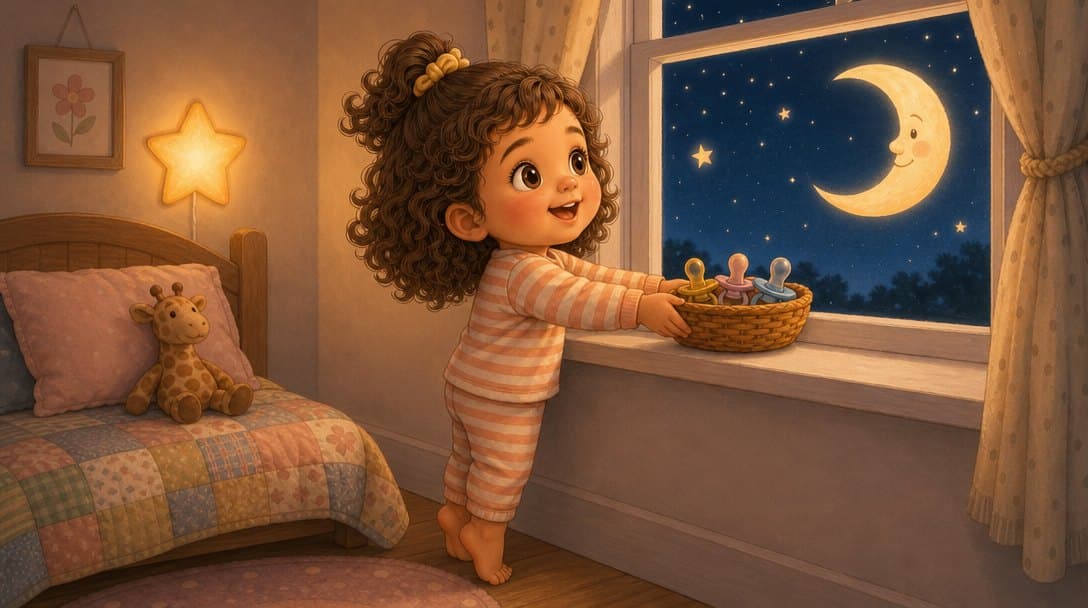
The Pacifier Fairy
Your child, by name, gathering up their pacifiers for the fairy: the brave night, and the morning after. Leave your email and we will tell you the day it is ready to make.
Frequently asked questions
- When should you stop using a pacifier at night?
Nights are the last piece, after daytime is already gone. Aim to be done by three, the age the pediatric dentists and the Canadian Paediatric Society agree on. The goodbye works best from about two and a half, when your child can follow a plan and fill the bag themselves. Before then, if it's going, it goes quietly, and only once your child can settle another way.
- How do you get rid of the pacifier for sleep?
Put a soft thing in the bed a week or two early and settle a bedtime routine that ends the same way every night. Then either fade it (your child falls asleep with it, you take it out once they're under, nobody puts it back when it falls out) or make a clean break paired with a goodbye your child was part of. Never tie a pacifier to the crib or your child. Expect one to three hard nights and don't give it back on night two.
- How long does it take to wean off a pacifier at night?
One to three hard nights for most children. Night one is the worst, night two less, and by the third night a pediatric sleep clinic's handout says the child should be sleeping fairly well. After that, a few weeks of asking now and then, which fades. If it's still bad past a week, or your child is under about two and a half and truly distressed, pause and ask your pediatrician.
- What do I do when my child wakes up at night asking for the pacifier?
Wait a moment, then go in calmly. A hand on the back, the comfort object into their arms, one short line like "it's okay to miss it, Bear is here," and nothing more. No pacifier, no negotiation, no new rules at 2 a.m. Stay until they're calm. It's hard on night one and much shorter by night three.
- Should I give the pacifier back if my child is sick?
Hold the line kindly and pile on the other comfort. Asking for it back months later during a cold is common, and it passes in a few nights. Giving it back restarts the whole thing. The one exception is a child under about two and a half who is truly distressed by the wean itself; that's too early, so put the sleep pacifier back and try again in a few months.
Sources
- American Academy of Pediatrics (HealthyChildren.org), Pacifiers and Thumb Sucking
- American Academy of Pediatrics, Pacifier Safety
- American Family Physician, Pacifiers: Common Questions and Answers (2025)
- Canadian Paediatric Society, Pacifiers (soothers)
- Cleveland Clinic, Tips to Wean Your Baby From Pacifiers
- St. Luke's Hospital pediatric sleep medicine, Pacifier handout
- NHS Leeds Teaching Hospitals, Dummies and non-nutritive sucking
FableFleet team
Founders & moms, FableFleet
We're a small team of moms building the personalized children's stories we wished existed for our own kids. Everything we publish is rooted in lived experience and cited research.