
· Updated
The Pacifier Fairy: How the Goodbye Ritual Works (and Why It Helps)
The pacifier fairy is a goodbye ritual: your child fills a bag with every pacifier, leaves it on the windowsill, and in the morning the pacifiers are gone and a letter and a small, soft gift are in their place. The pacifiers went to the littlest ones who need them, and they keep them. It works from about two and a half, when a child can follow a three-day plan and do the giving themselves. Nobody has studied it, but pediatricians suggest it, and about seventy families' stories agree on the shape: a quiet two weeks, a countdown, the child fills the bag, every spare found, a soft thing already in the bed, a small gift, a letter, one to three hard nights, and never giving it back on night two.
This is the part that's genuinely mine. If a friend asked me how to do the pacifier goodbye, I'd say make it a little ceremony, when your child is ready, with a real conversation around it. The pediatric world agrees as far as it goes, and about seventy families on the forums and blogs filled in the rest. Here's the night, step by step, and what went wrong for the families it didn't work for.
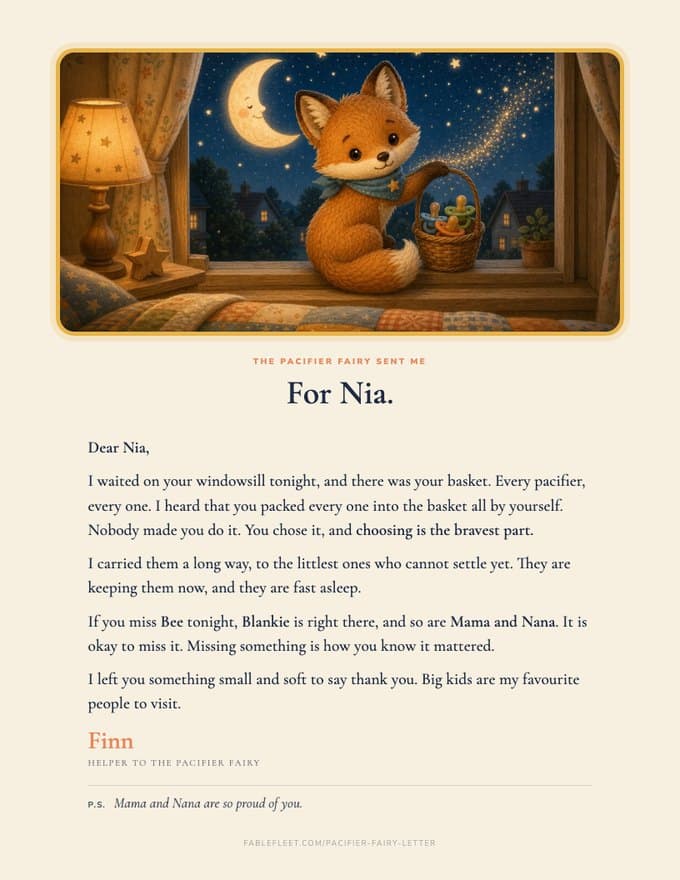
Free to print: a letter from Finn, the pacifier fairy's helper, with your child's name in it.
What the pacifier fairy is, and who says so
Your child gathers every pacifier, puts them in a bag or basket, and leaves it out at bedtime. In the night the fairy collects them to give to the babies who need them. In the morning the bag is empty, and in its place is a letter and something small and soft. Some families say binky fairy or paci fairy; in Canada the Canadian Paediatric Society's own page suggests leaving it "for the soother fairy," and in the UK it's the dummy fairy. Same night, different word.
It isn't just an internet trick. The Cleveland Clinic lists the "Binky Fairy" alongside a goodbye party and a trade-in at the store as ways to "get creative," and the reason, in the doctors' words, is that these rituals let a child get involved and understand the change. The Canadian Paediatric Society says to involve your child: let them throw it away themselves or leave it for the fairy. The AAP's rule for any sucking habit is explain the plan, praise, reward charts, and "stop right away if it makes them afraid or tense."
Has anyone studied it? No. The only review of how kids stop sucking habits never looked at pacifiers at all. What I can tell you is what the families did, and where the smooth ones agreed. The timing question, and why it's three, is in when to stop pacifier.
How old
About two and a half to four. The research on pretend and real says kids start sorting the two around three, and the families' stories line up: the fairy wasted on an 18-month-old, who just saw the pacifier vanish; wonderful at three, with a child who decorated the bag and was proud for a week. Under two and a half, if it's going, it goes quietly, not with a ceremony. And a child who's just had a new sibling, a move, a cold or a first week of daycare isn't ready at any age. Almost every goodbye I read that dragged on for a week or more was a timing problem.
The night, step by step
The week before. Daytime pacifier already gone, quietly, one place at a time. The soft thing (a blanket, a stuffed animal) already in the bed so it's a friend by the night. For three or four days: "In three sleeps, the pacifiers go to the littlest ones." Decorate a bag or a basket together. And sweep every room, every bag, and the car seat. A spare found on night two was the number one way this fell apart; five moms raised it unprompted.
Where they go. Make it real. The families whose kids remembered it fondly had a concrete recipient: the newborn elephant at the zoo (handed to a zookeeper, one night of crying, then forgot), a monkey pacifier "mailed home to the jungle," the piglets at the children's farm, the ducks, a new baby cousin. The littlest ones who can't settle yet. A two or three year old understands giving when the need is real and in front of them.
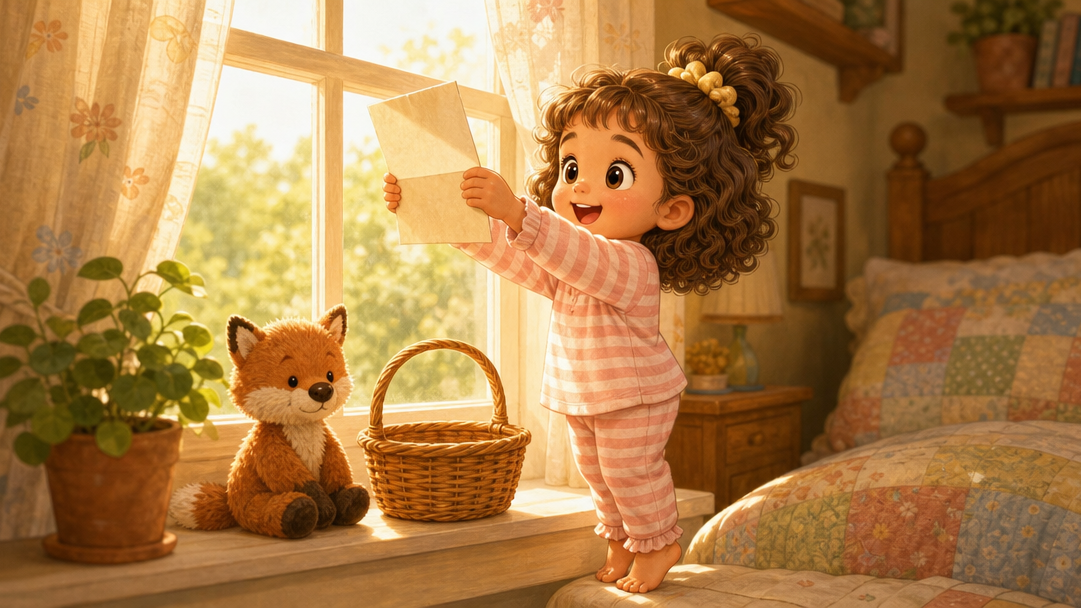
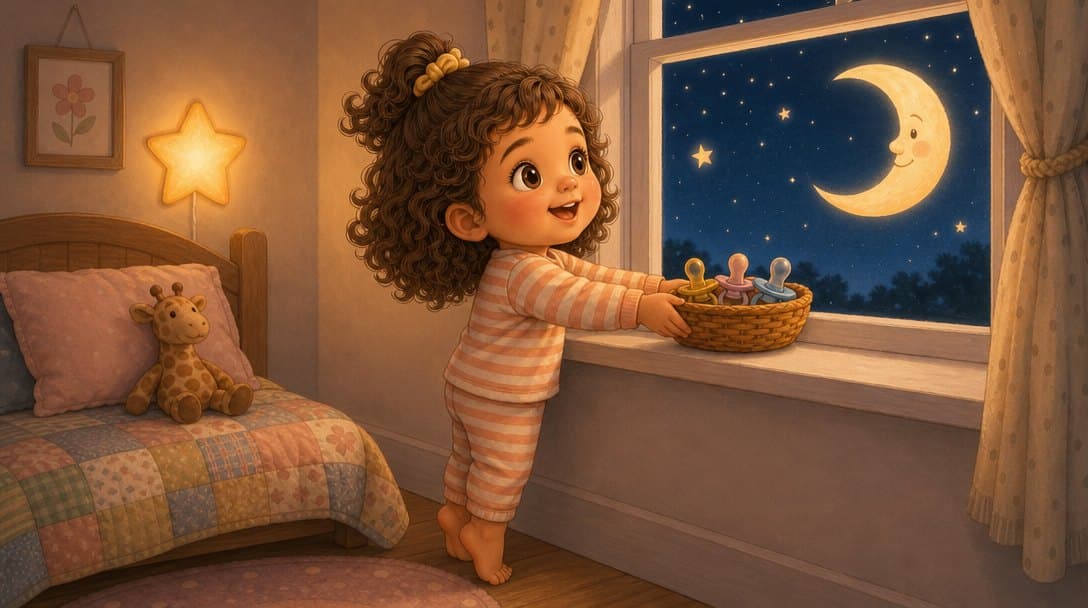
Bedtime. Your child fills the bag. Every one, including the one under the pillow. If they ask to keep one, wait; most put it in. The bag goes on the windowsill or the door handle. Nobody comes into the room; the fairy collects it from outside. "Finn has them now. Bear is here, and so am I."
The morning. The bag is empty. In its place, a letter with their name and one small, soft thing. Read the letter slowly. Praise the brave thing, not the gift. In the stories I read a cuddly toy was the most common gift, two families gave no gift at all and it still worked, and the child who got a bike had many wake-ups anyway. Big gifts say this was a huge loss. The letter is what the kids kept; one five-year-old still had hers in a cupboard six weeks on and had declined the present.
Nights one to three. One to three hard nights, then a tail of asking now and then for a few weeks. A hand on the back, "it's okay to miss it," and nothing more. Never the pacifier back on night two; that teaches that enough crying brings it back. The nights in detail are in how to wean pacifier at night.
Two rules the good nights all followed
Nobody frightening comes into the dark room. I went looking for a child frightened of the fairy and couldn't find one first-hand account, but I did find the reason the smooth families never had the problem: the fairy never enters. The bag is outside the door or on the windowsill, and she collects it from out there, a trail of light and gone. The AAP's line applies: if it makes them afraid or tense, stop.
Sadness is allowed, and named. The books parents complained about were the ones where the pacifier vanishes and everyone's instantly fine. The ones they loved said it's hard and it's okay to feel sad. Say it out loud. "It's okay to miss it. Missing something is how you know it mattered."
Where it goes wrong, and the line that fixes it
"The babies will be done with it soon." The most common hole. If the pacifiers went to the babies, your child will reason that the babies could give them back; one little girl announced they'd be returning in two days. The story has to close that door: the littlest ones keep them. That's the whole point of giving. Say it once, warmly, and don't debate it.
Asking for it back when sick, months later. Hold the line, pile on the other comfort. Give it back and you start over.
A sibling's or daycare's pacifier in your child's mouth. Expected, brief, usually funny. "That one's the baby's. Yours went to the littlest ones."
Threats. "Your teeth will fall out," "Santa won't come," the fairy as a punisher. Not one mom said it worked, and every pediatric body says don't.
If the fairy isn't your thing
The trade-in. Three families, kids around three: cashier arranged in advance, the child "pays" with the pacifier, picks a toy. Worked every time.
The goodbye party. Cupcake, Grandma on a video call, a big-kid send-off. The Cleveland Clinic's own suggestion.
Pacifiers sewn inside a stuffed animal. Keeps the comfort, loses the sucking. One child still sleeps with the bear four years later.
Santa. The UK families often used Father Christmas instead of the fairy, usually for the timing. Same shape.
What every version shares is the thing the doctors care about: your child is doing it, not having it done to them. The two roads and the other tricks, honestly rated, are in how to wean off pacifier.
Free printable
A letter from Finn, with your child's name in it
For the morning after the pacifiers go. Tap a few things about your family; nothing you type leaves your device.
Who will be there tonight (tap one or two)
The comfort object (what they hold instead)
Optional. Finishes the sentence “I heard that…”
Two pages: the letter from Finn, and a page for you with the night on it. Your answers go into the print page in the address after the #, which your browser never sends to us. How the fairy night works.
The books, honestly
The mainstream board books (Elizabeth Verdick's "Pacifiers Are Not Forever," Michael Dahl's "No More Pacifier, Duck") have no fairy at all; the pacifier goes to a baby or gets lost in play, and parents split on whether they're too harsh or too neat. The fairy books are small-press, and most of the complaints about them were "too long for a two year old" or "the pictures were a bit scary." The one with clean reviews is "Pacita, the Pacifier Fairy": the fairy leaves a letter instead of a toy, and the book says plainly that it's okay to feel sad. Sesame Street's Elmo episode ("Bye Bye Binky") is the best-known screen version. Whatever you read, read it for a few days before the night, not on the night.
How FableFleet fits
The goodbye is the part a story can carry, and the letter is the part your child keeps. We made a free letter from Finn, on the fairy's behalf: your child's name, what they call it, the grown-ups who'll be there, the soft thing that's right there if they miss it, and the line that closes the door (the littlest ones keep them), plus a one page version of the night above for you. And the pacifier goodbye is the film we're making next: your child fills the bag, Finn carries it to the littlest ones, the hard night is in there and gets through, and the morning brings the letter. The whole picture, timing and both roads, is in the main pacifier weaning guide.
More in Pacifier Weaning
- Pacifier Weaning: When to Stop and How to Do It Without a Meltdown
Pacifier weaning is helping your child let go of the pacifier for good. For a toddler, the honest version of the advice is simple: sleep only now, gone by three, and done in a way your child owns. Three is the age the dentists agree on, because how long the habit lasts matters more than how often. Nobody has studied which way of stopping works best, so gradual and cold turkey are both fine. The parents who did it well all did the same things: a quiet two weeks, a short countdown, the child fills the bag, a comfort object already in the bed, and no giving it back on night two. Expect one to three hard nights, then a few weeks of asking now and then.
- How to Wean Off Pacifier: Gradual, Cold Turkey, and What Makes It Kinder
How to wean off the pacifier: shrink it to sleep only first, then pick one of two roads. Gradual: close the sleep window over a week or two, no single hard night. Clean break: a countdown, your child fills the bag, the pacifiers go somewhere good, and you hold the line for one to three hard nights. Nobody has studied which road works better, so both are fine. What makes either one kinder is the same: a quiet two weeks, a comfort object already in the bed, every spare found, praise instead of shame, and never giving it back on night two.
- How to Wean Pacifier at Night Without Wrecking Sleep
How to wean the pacifier at night: it's the last piece and the hardest, because the pacifier is how your child falls asleep, not just a habit. Daytime goes first. Then either fade it (your child falls asleep with it, you take it out once they're under, and nobody puts it back) or make a clean break with a goodbye. Have a soft thing already in the bed and a bedtime routine that ends the same way every night. Expect one to three hard nights: night one is the worst, night two is less, by night three most children are sleeping fairly well. Never give it back on night two. If your child is under about two and a half and truly distressed, it's too early; put the sleep pacifier back and try again in a few months.
- When to Stop Pacifier Use: Reading Your Child, Not the Calendar
When to stop the pacifier: sleep only now, gone by three. The experts give different ages because they are worried about different things. The ear infection advice (wean in the first year) is about babies. The teeth advice is about age three: the pediatric dentists say stop by 36 months, because how long the habit runs matters more than how often. The speech worry is the weakest of the three. For a toddler, that means shrink it to sleep only now, and plan the goodbye for somewhere between two and a half and three, when your child can understand it and do the giving. Taking it away earlier than your child is ready is the one thing that reliably backfires.
The story we are making next
The Pacifier Fairy
Your child, by name, gathering up their pacifiers for the fairy: the brave night, and the morning after. Leave your email and we will tell you the day it is ready to make.
Frequently asked questions
- What does the pacifier fairy leave?
A letter and something small and soft. In the family stories a cuddly toy was the most common gift, two families gave no gift at all and it still worked, and the child who got a bike had plenty of wake-ups anyway. Big gifts say the pacifier was a huge loss. The letter, with your child's name and the line that the littlest ones keep the pacifiers now, is what the kids actually kept.
- How old should a child be for the pacifier fairy?
About two and a half to four. A child needs to follow a three-day countdown, fill the bag themselves and understand that the pacifiers went to babies who need them. Under about two and a half, families found the fairy was wasted; the pacifier just vanished. If it's going before then, it goes quietly, not with a ceremony.
- How do you set up the pacifier fairy?
Pick a quiet two weeks. Daytime pacifier gone first, a soft thing already in the bed, three or four days of countdown, every spare swept from every room and the car seat. At bedtime your child fills a bag with every pacifier and leaves it on the windowsill or the door handle; the fairy collects it from outside. In the morning: an empty bag, a letter with their name, and one small soft gift. Expect one to three hard nights and never give it back on night two.
- What do you say when your child asks for the pacifier back from the fairy?
Close the door kindly: "The littlest ones keep them now. That's the whole point of giving." If the story leaves room for the babies to be finished with them, a toddler will ask for them back; one little girl announced they'd be returning in two days. Say it once, warmly, and don't debate it. For a sibling's or daycare's pacifier: "That one's the baby's. Yours went to the littlest ones."
- Is the pacifier fairy scary for toddlers?
Not in any first-hand account I could find, and the reason is simple: in the families' versions the fairy never enters the room. The bag goes on the windowsill or the door handle and she collects it from outside. Never use the fairy, or teeth, as a threat, and follow the AAP's rule for any sucking habit: if it makes your child afraid or tense, stop.
Sources
- American Academy of Pediatrics (HealthyChildren.org), Pacifiers and Thumb Sucking
- Canadian Paediatric Society, Pacifiers (soothers)
- Cleveland Clinic, Tips to Wean Your Baby From Pacifiers
- American Academy of Pediatric Dentistry, Policy on Pacifiers (revised 2024)
- Cochrane Review, Interventions for the cessation of non-nutritive sucking habits in children (2015)
- Kirkus Reviews, Pacita, the Pacifier Fairy
FableFleet team
Founders & moms, FableFleet
We're a small team of moms building the personalized children's stories we wished existed for our own kids. Everything we publish is rooted in lived experience and cited research.