
· Updated
When to Stop Pacifier Use: Reading Your Child, Not the Calendar
When to stop the pacifier: sleep only now, gone by three. The experts give different ages because they are worried about different things. The ear infection advice (wean in the first year) is about babies. The teeth advice is about age three: the pediatric dentists say stop by 36 months, because how long the habit runs matters more than how often. The speech worry is the weakest of the three. For a toddler, that means shrink it to sleep only now, and plan the goodbye for somewhere between two and a half and three, when your child can understand it and do the giving. Taking it away earlier than your child is ready is the one thing that reliably backfires.
When I went looking for the age, I got four different answers, and for a minute I thought I was missing something. I wasn't. The pediatricians, the dentists and the ear people are each answering a different question. Once you see that, the whole thing gets simple: sleep only now, gone by three, and the exact week is your child's call more than the calendar's.
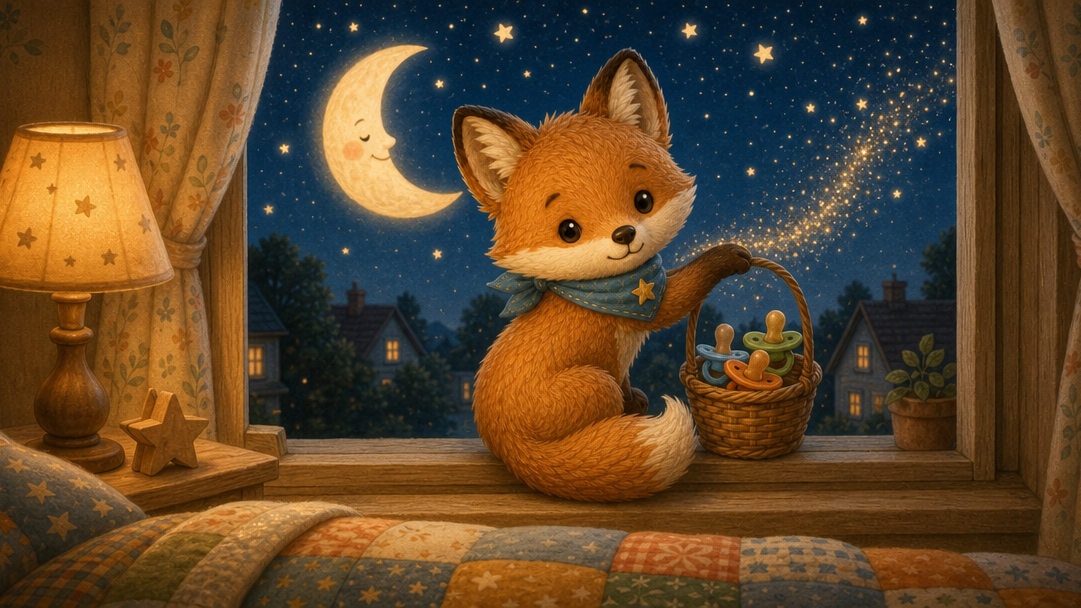
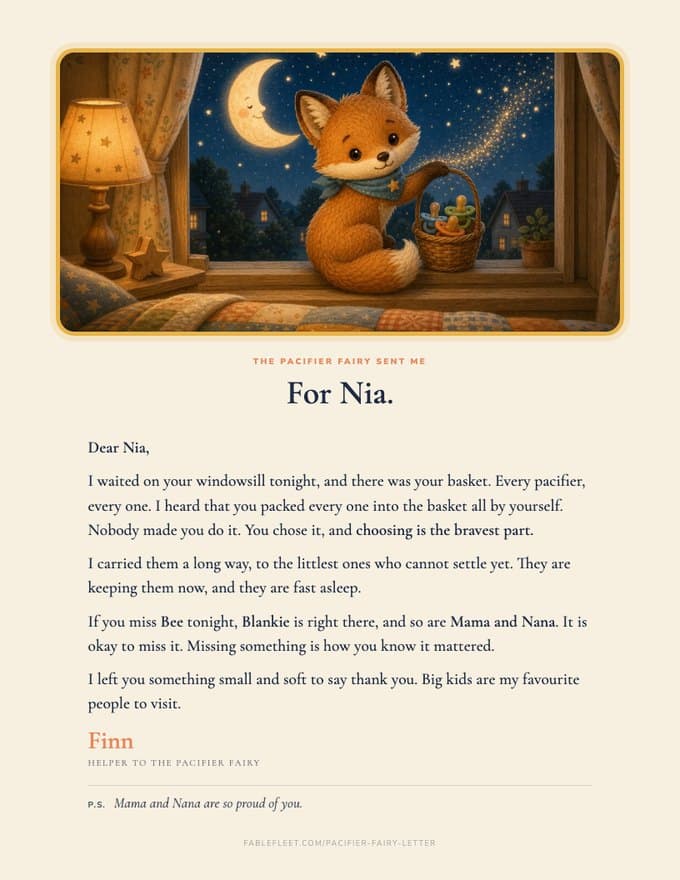
Free to print: a letter from Finn, the pacifier fairy's helper, with your child's name in it.
Four answers, and why they're different
Here's what the big names actually say, in their own words, because the differences matter.
The American Academy of Pediatrics sets no cutoff. It says strong sucking "beyond 2 to 4 years" may affect the mouth and teeth, and that most kids stop on their own before they get far into school. For ear infections, it recommends weaning "during the second 6 months of life."
The pediatric dentists (AAPD) are the most specific: "discontinuance of nonnutritive sucking habits by 36 months of age." Their reason is in one line too: "malocclusion was affected by duration more than frequency." How many years, not how many hours.
The Canadian Paediatric Society says "plan to give it up by 3-4 years of age," and before that, "use it only for sleep and comfort."
The Cleveland Clinic is the one that splits day and night: daytime done by one, no later than eighteen months, and it's "typically fine to let kids use a pacifier for bedtime and naps up to age 3."
So the ear advice is a baby thing. If you're past the first birthday, that window closed and nothing bad happened. The teeth advice is the one that applies to a toddler, and every body puts it at three. That's where "sleep only now, gone by three" comes from. It isn't my number. It's theirs.
What it means at your child's age
Around one. This is when the daytime pacifier quietly goes: out of the car seat, the stroller, the grocery cart, one place at a time. Babies this age are busy and easily distracted, and most barely notice. The sleep pacifier stays. You're not saying goodbye yet, you're shrinking it to where it still earns its keep.
Under two and a half. If it's going at this age, it goes quietly. "It got lost," "it's all chewed up," and it isn't replaced. The moms I read who tried the fairy and the big goodbye with an 18-month-old or a two year old mostly found it was wasted on them; the child couldn't follow the story, so it was just a thing that disappeared. And one 22-month-old, taken off it on a dentist's say-so, had a week of inconsolable wakes until the parents put it back for nights. The replies on that thread all said the same thing: too young, wait for three.
Two and a half to three. This is the sweet spot for the goodbye. Your child can follow "in three sleeps," can decorate a bag, can put every pacifier in it themselves, and can feel proud afterwards. Kids this age also understand giving when the need is real and concrete (a crying baby, a cousin, the littlest ones), which is why nearly every smooth story has the pacifiers going somewhere good. The step by step is in how to wean off pacifier, and the goodbye itself is in the pacifier fairy.
Three and up. You're at the dentists' line, not past a cliff. Nothing is ruined. But this is the point to make a real plan instead of letting it drift, because the bite changes build with every year it stays. The good news: a three or four year old has lots of language and lots of pride to work with. The goodbye is often easier at this age than it would have been a year earlier.
Ready looks like this
Three signs, and they beat the calendar every time. The pacifier only comes out for sleep and big upsets. Your child can be talked or distracted out of wanting it. And your child can follow a simple chat about saying goodbye. When all three are true, you have a partner, not a patient. If the paci is still in all day at two and a half, that's not a failure. It's just your sign that it won't fade on its own and you'll need the plan.
Then pick a boring two weeks. No new baby, no move, no first week of daycare, no cold. Almost every goodbye I read that dragged on for a week or more was a timing problem, not a method problem.
When waiting starts to cost
I'm not a dentist, and my rule for anything medical is name it, show where it comes from, then send you to your own doctor. Here are the three worries, in honest order, with the numbers.
Teeth: real, and it builds with time. In a 2025 review of 35 studies, open bite (where the front teeth don't meet) showed up far more in kids who kept the pacifier past three than in kids who stopped before. One study found use past 18 months tripled the risk. The reassuring half: it mostly reverses. In a trial with four year olds, open bite dropped from 85% to 4% a year after the pacifier went. A Finnish study found crossbite at age seven in 7% of kids whose habit lasted a year or more, versus 1% under a year. So: every year counts, and stopping before three usually puts it right.
Ears: small, and mostly babies. The 2025 pooled research found a modest bump in ear infections, and the researchers rated their own certainty very low. It's why the first year advice exists. It isn't a reason to rush a toddler.
Speech: the weakest. You'll read scary things. The dentists, who'd happily find a reason against pacifiers, say the evidence "is limited" and "a strong speech-related justification against pacifier use is not evident." A binky in all day crowds out babbling, which is a reason for sleep only. The research doesn't show a bedtime pacifier delays talking.
The first dental visit is recommended between one and two. That's a natural moment to ask "how are we doing on the pacifier?"
Free printable
A letter from Finn, with your child's name in it
For the morning after the pacifiers go. Tap a few things about your family; nothing you type leaves your device.
Who will be there tonight (tap one or two)
The comfort object (what they hold instead)
Optional. Finishes the sentence “I heard that…”
Two pages: the letter from Finn, and a page for you with the night on it. Your answers go into the print page in the address after the #, which your browser never sends to us. How the fairy night works.
Is three too late? Is one too early?
Three isn't too late. It's the line, and the bite usually corrects once the habit stops. Make the plan now, pick the quiet fortnight, and let your child do the giving.
One isn't too early for the daytime pacifier. It is too early for the big goodbye. Under about two and a half, a child can't follow the story, and the one thing that reliably backfires is taking it away before they're ready: the dentists point to research linking forced early removal to thumb sucking instead, and two moms I read described exactly that. Daytime off at one, sleep only through two, goodbye around two and a half to three. That's the shape.
For the nights themselves, which are the hard part at any age, there's how to wean pacifier at night. The whole picture, both roads and what to do when it stalls, is in the main pacifier weaning guide.
How FableFleet fits
The goodbye is the part a story can carry. We made a free letter for the morning after, with your child's name, what they call it, the grown-ups who'll be there and the soft thing that's right there if they miss it, plus a one page checklist for you. And the pacifier goodbye is the film we're making next: your child fills the bag, Finn carries it to the littlest ones, and the morning brings the letter.
More in Pacifier Weaning
- Pacifier Weaning: When to Stop and How to Do It Without a Meltdown
Pacifier weaning is helping your child let go of the pacifier for good. For a toddler, the honest version of the advice is simple: sleep only now, gone by three, and done in a way your child owns. Three is the age the dentists agree on, because how long the habit lasts matters more than how often. Nobody has studied which way of stopping works best, so gradual and cold turkey are both fine. The parents who did it well all did the same things: a quiet two weeks, a short countdown, the child fills the bag, a comfort object already in the bed, and no giving it back on night two. Expect one to three hard nights, then a few weeks of asking now and then.
- How to Wean Off Pacifier: Gradual, Cold Turkey, and What Makes It Kinder
How to wean off the pacifier: shrink it to sleep only first, then pick one of two roads. Gradual: close the sleep window over a week or two, no single hard night. Clean break: a countdown, your child fills the bag, the pacifiers go somewhere good, and you hold the line for one to three hard nights. Nobody has studied which road works better, so both are fine. What makes either one kinder is the same: a quiet two weeks, a comfort object already in the bed, every spare found, praise instead of shame, and never giving it back on night two.
- How to Wean Pacifier at Night Without Wrecking Sleep
How to wean the pacifier at night: it's the last piece and the hardest, because the pacifier is how your child falls asleep, not just a habit. Daytime goes first. Then either fade it (your child falls asleep with it, you take it out once they're under, and nobody puts it back) or make a clean break with a goodbye. Have a soft thing already in the bed and a bedtime routine that ends the same way every night. Expect one to three hard nights: night one is the worst, night two is less, by night three most children are sleeping fairly well. Never give it back on night two. If your child is under about two and a half and truly distressed, it's too early; put the sleep pacifier back and try again in a few months.
- The Pacifier Fairy: How the Goodbye Ritual Works (and Why It Helps)
The pacifier fairy is a goodbye ritual: your child fills a bag with every pacifier, leaves it on the windowsill, and in the morning the pacifiers are gone and a letter and a small, soft gift are in their place. The pacifiers went to the littlest ones who need them, and they keep them. It works from about two and a half, when a child can follow a three-day plan and do the giving themselves. Nobody has studied it, but pediatricians suggest it, and about seventy families' stories agree on the shape: a quiet two weeks, a countdown, the child fills the bag, every spare found, a soft thing already in the bed, a small gift, a letter, one to three hard nights, and never giving it back on night two.
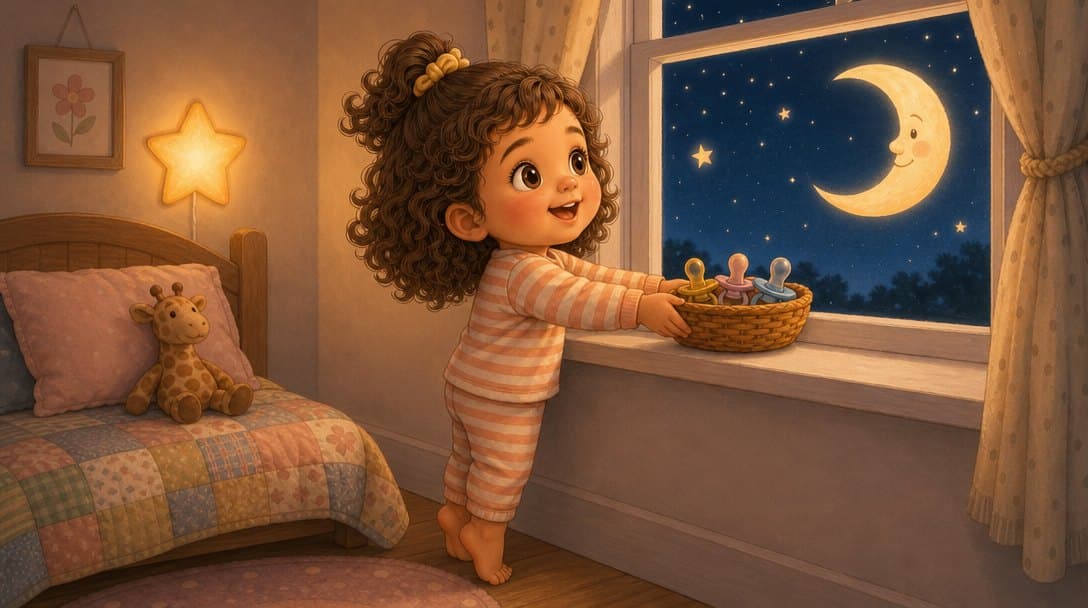
The story we are making next
The Pacifier Fairy
Your child, by name, gathering up their pacifiers for the fairy: the brave night, and the morning after. Leave your email and we will tell you the day it is ready to make.
Frequently asked questions
- When should you stop using a pacifier?
Sleep only now, gone by three. Daytime use goes first, somewhere between one and eighteen months. The sleep pacifier can stay a while longer, and the goodbye works best around two and a half to three, when your child can understand it and fill the bag themselves. Three is the age the pediatric dentists (by 36 months) and the Canadian Paediatric Society (by three to four) agree on for teeth.
- What age should a pacifier be taken away according to the AAP?
The American Academy of Pediatrics sets no hard cutoff. It says strong sucking beyond two to four years may affect the shape of the mouth and the teeth, and that the bite usually corrects itself if the habit stops before the permanent front teeth come in. For ear infections, the AAP recommends weaning during the second six months of life. The pediatric dentists are more specific: stop by 36 months.
- Is 3 too old for a pacifier?
Three is the dentists' line, not a cliff. Bite changes build with every year the pacifier stays, and they mostly reverse once it goes, so make the plan now rather than letting it drift. A three year old has plenty of language and pride to work with, which often makes the goodbye easier than it would have been a year earlier.
- Is 1 too early to take away the pacifier?
Not for the daytime pacifier, which is the right thing to retire around one. It is too early for the big goodbye. Under about two and a half, a child cannot follow the story, and forced removal before a child is ready is the one thing that reliably backfires: the dentists link it to thumb sucking instead. Keep the sleep pacifier through two, then plan the goodbye.
- When should you stop the pacifier at night?
Night is the last piece and the hardest, because the pacifier is how your child falls asleep. Aim to be done by three. Have a comfort object already in the bed, pick a quiet two weeks, and expect one to three hard nights with some waking before it settles.
Sources
- American Academy of Pediatrics (HealthyChildren.org), Pacifiers and Thumb Sucking
- American Academy of Pediatric Dentistry, Policy on Pacifiers (revised 2024)
- Canadian Paediatric Society, Pacifiers (soothers)
- Cleveland Clinic, Tips to Wean Your Baby From Pacifiers
- American Family Physician, Pacifiers: Common Questions and Answers (2025)
- Pacifier use and malocclusion, scoping review, Dentistry Journal (2025)
- Pacifier type and crossbite at age 7, European Journal of Orthodontics (2024)
- Sucking habits and otitis media, meta-analysis, Brazilian Oral Research (2025)
FableFleet team
Founders & moms, FableFleet
We're a small team of moms building the personalized children's stories we wished existed for our own kids. Everything we publish is rooted in lived experience and cited research.