
A Biting Social Story for Toddlers (Free Printable, and What to Say in the Moment)
A biting social story is a short, calm story told in your toddler's own voice that names the biting feeling, says it is allowed, and gives one or two things to do with it instead. Below is a complete free one you can copy and print tonight, followed by why toddlers bite, exactly what to say and do in the moment, how to work with daycare, and when to talk to your pediatrician.

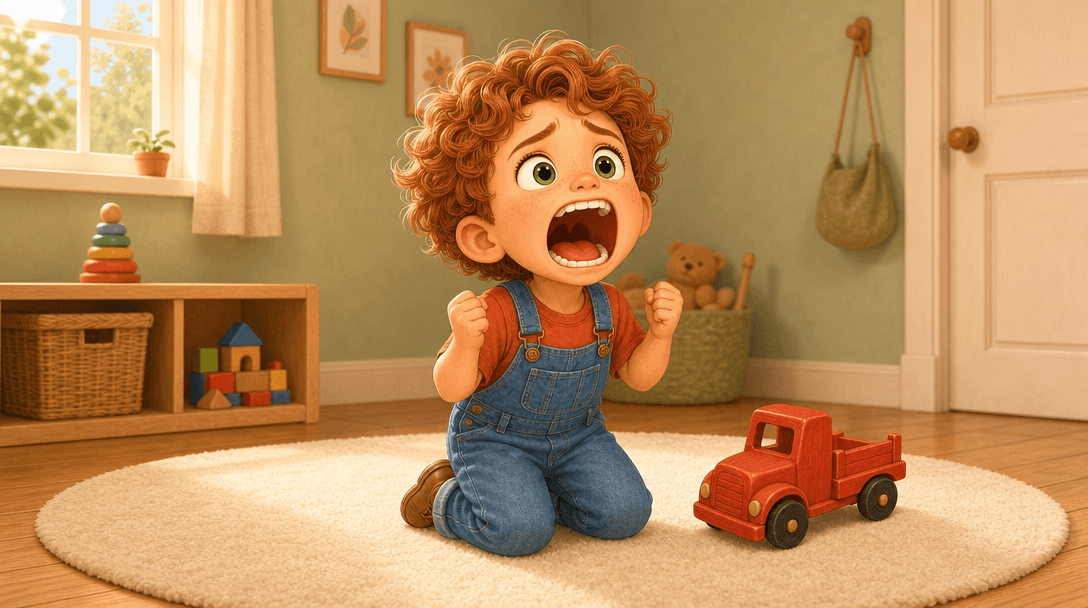 A story for thisFor the toddler who bites when the feeling gets too bigYour child, by name, in every scene. See the Biting Feeling story →
A free biting social story you can print
Copy this, swap in your child's name, and print one or two sentences per page. If you can, add a photo of your child on the first page and a photo of their own chewy toy or snack bowl on the "I can" pages.
My Biting Feeling
- My name is [child's name].
- Sometimes I get a big feeling in my body.
- Sometimes it is a mad feeling, a tired feeling, or a too crowded feeling.
- Sometimes the big feeling goes to my mouth, and my mouth wants to bite.
- Lots of little children get a biting feeling. That is OK.
- Biting hurts. When someone gets bitten, they feel sad and sore.
- My grown-ups help keep everybody safe, and they help me too.
- When I get the biting feeling, I can say "Stop" or "Back up, please."
- I can bite my chewy, or crunch something crunchy at snack time.
- My grown-up can help me with the big feeling.
- My grown-ups love me, even when my feelings are big.
- I am learning what to do with my biting feeling.
Why it is written this way. Carol Gray's social story method, as taught in guidance built on it, asks for mostly descriptive and perspective sentences and only a few directive ones, roughly two to five of the first kind for every one of the second. This story has two "I can" lines (8 and 9) and ten that describe, reassure or explain. It never calls the child a biter, never says "always" or "never", and ends calmly rather than with a reward. If your child already has a word for their chewy or a phrase your daycare uses, put that in instead of mine. The one rule is that line 8 uses the exact words you will use in the moment.
How to use it. Read it once a day at a quiet time, at the same point in the day if you can. Leave it where your child can find it. Do not read it right after a bite: then it becomes a telling-off, and the story works because it is not one. For more on writing your own, see our guide to personalized social stories.
Why toddlers bite
Biting is one of the most common reasons a daycare calls home, and it almost always lands on the parent as a verdict. It is not one.
KidsHealth notes that biting tends to happen most between the first and second birthday, and that it fades as language improves. ZERO TO THREE puts it simply: toddlers do not yet have the words or the self-control for strong feelings, so they rely on actions to tell us what they are thinking and feeling. A bite can mean any of these:
- I am frustrated or angry, and I do not have the words.
- You are too close, or the room is too crowded and loud.
- I am tired or hungry, and everything is too much.
- I want that toy, and grabbing did not work.
- My mouth hurts or needs something: teething, or just a strong urge to chew.
- I want to see what happens. Toddlers are learning cause and effect, and a bite gets a very big reaction.
The American Academy of Pediatrics says young children have little natural self-control and need grown-ups to teach them, patiently and repeatedly, what to do with angry feelings instead. That is the job of the story, and of everything you do in the moment.
What to do in the moment
Step in, calmly and fast. Move your child back from the other child. Your calm face and voice do more than your words: ZERO TO THREE notes that a grown-up staying steady helps a toddler get back in control.
Say one short line, the same way every time. "No biting. Biting hurts." KidsHealth suggests exactly this kind of firm, simple phrase. Do not add a lecture. A long talk is a lot of attention, and attention is part of what a bite can be asking for.
Comfort the child who was bitten first. Your child gets to watch what a bite does: someone is sad, and the grown-up goes to help them. If the skin is broken, wash it with soap and water and let the other family know.
Never bite back. It is still sometimes passed on as advice. It teaches that biting is what bigger people do when they are upset.
Offer the alternative. Once things are calm: "You can say back up, please." Or hand over the chewy. Keep it to one or two choices and use the same ones every time, so they match the story.
Skip the forced sorry. A two year old saying sorry on command is mostly learning to say a word to end an awkward moment. Let them help instead, by handing the other child a toy or holding a cold cloth, and the real apologies will come once they have the language.
Before the next bite
Most biting has a pattern once you look for one. A few things help:
- Watch the time of day. Before lunch and late afternoon are common. A snack or a quieter activity before that window can cut bites down.
- Watch the place. Crowded corners, the doorway at drop-off, one popular toy.
- Feed the urge. A chewy toy that lives in the same place, and something crunchy at snack, gives a mouthy toddler somewhere safe to put the feeling.
- Name feelings all day, not only in hard moments. "You are mad, that block fell." Toddlers learn feeling words from hearing them used on their own experience.
- Praise the try. When they say "stop" instead of biting, say so: "You used your words." The AAP lists praise for the behaviour you want as one of its tips.
Talking to daycare
If the biting happens at care, ask for specifics, not reassurance. When does it happen, where, with whom, and what happened just before? Then agree on one shared line and one shared alternative, so your child hears "No biting. Biting hurts" and "back up, please" in both places. Ask whether your child can have their chewy at care. Offer them a copy of the printed story; some rooms will happily read it.
A biting story with your child in it
We made a personalized storybook film called The Biting Feeling for exactly this age, two to four. It is about two and a half minutes. Your child is in every scene, made from the details you choose, and the narrator says their name. It shows the pressing feeling, a calm grown-up who stops the bite before it lands, words to use instead, and something crunchy that is allowed. The friend is never hurt. Nobody is called a biter or naughty, nobody is sent away from the group, and there is no forced apology. What a family can keep from it is the same three things as above: one short line said the same way every time, a flat hand and the words "back up, please", and somewhere for the feeling to go, a chewy that lives on a hook and something crunchy at snack. Every film is checked by a person and ready within 24 hours, to watch in the FableFleet app or from the email link. It is a story to watch together, not a treatment, and it sits alongside the printable above rather than replacing it.
If your toddler hits or pushes rather than bites, see our hitting social story.
When to talk to your pediatrician
Most biting stops on its own as words come in. Talk to your pediatrician if:
- Biting carries on past about age three or four, or is getting more frequent rather than less.
- Bites often break the skin, or your child bites adults.
- It comes with other worrying behaviour, or your child seems to bite with no trigger anyone can find.
- Your child has been sent home from care, or you are being asked to find another place.
- You have any worry about speech, hearing or development. A child who cannot yet say what they need has more reason to bite, and support with language can help.
The AAP suggests talking to your pediatrician when aggressive behaviour lasts beyond a few weeks. If a therapist or developmental specialist becomes involved, take your printed story with you. They can adapt it to your child far more closely than any template.
More in Social Stories
- Personalized Social Stories for Toddlers: What Works, a Free Template, and When a Film Helps
A personalized social story is a short, calm story about one real situation in a child's life, told with their own name, their own people and their own places, so the situation is familiar before it happens. Carol Gray, who created the format, describes a social story as one that accurately describes a context, skill, achievement or concept. Here is what makes one work for a two to four year old, a free template you can fill in tonight, how a personalized story film fits, and when to talk to a professional instead.
- A Hitting Social Story for Toddlers: Gentle Hands, Free Printable
A hitting social story is a short, calm story in your toddler's own voice about the mad feeling that goes to their hands, what hitting does to other people, and two or three things their hands and feet can do instead. Below is a complete free gentle hands story you can copy and print, then why toddlers hit, what to say and do in the moment, and when to talk to your pediatrician.
The story for this milestone
For the toddler who bites when the feeling gets too big
A personalized story for toddlers who bite: the pressing feeling, a calm grown-up who stops it, words to use instead, and something crunchy that is allowed. A 2.5 minute storybook film for ages 2 to 4.
We make it from the details you choose. Your child, by name, in every scene.
Frequently asked questions
- Is biting normal at 2?
Yes, very. Biting is most common between the first and second birthday and usually fades as language grows, which is why so much of it happens at daycare in the toddler room. It is not a sign of a mean child or of bad parenting. It is a feeling, or a need, that does not yet have words.
- What should I say right after my child bites?
Something short and calm, said the same way every time, such as "No biting. Biting hurts." Then turn your attention to the child who was bitten first. Save the explanation and the story for later, when your child is calm. A long talk in the moment mostly teaches that biting gets a lot of attention.
- How do I stop my toddler biting at daycare?
Ask the staff when and where it happens: before lunch, at drop-off, in a crowded corner, when a toy is taken. Patterns are the most useful thing they can give you. Agree on one shared line and one shared alternative, such as a chewy toy or the words "back up, please", so your child hears the same thing at home and at care. Read the social story at home at calm times.
- Do social stories help with biting?
They can help some children, especially alongside the same short line in the moment and a clear alternative. The research on social stories shows modest effects that vary between children, so treat the story as one support, not a fix. The things that matter most are still a calm grown-up, the same words every time, and fewer of the situations that set biting off.
- Should I make my child say sorry after biting?
A two year old rarely understands a forced sorry, and it can turn the moment into a standoff. It usually works better to let your child watch you comfort the child who was bitten, name what happened simply, and show them a way to help, such as handing over a toy or a cold cloth. Real apologies come later, when they have the words for them.
- When should I worry about biting?
Talk to your pediatrician if biting carries on past about age three or four, is getting more frequent, breaks the skin often, comes with other worrying behaviour, or gets your child sent home from care. Talk to them sooner if you have any concerns about your child's speech or development.
Sources
- KidsHealth from Nemours, Biting. Why children bite; most common between the first and second birthday; firm short phrase, comfort the bitten child, never bite back; get help if biting continues past 3 to 4.
- American Academy of Pediatrics, HealthyChildren.org, 10 Tips to Prevent Aggressive Behavior in Young Children. Toddlers need help with self-control; stop it at once; teach alternatives; when to contact the pediatrician.
- ZERO TO THREE, Aggressive Behavior in Toddlers. Toddlers rely on actions to tell us what they feel; stay calm, name the feeling, offer an alternative.
- ZERO TO THREE, Helping Young Children Channel Their Aggression. Keep it brief in the moment; give the feeling an allowed outlet; watch for triggers like tiredness and hunger.
- Nebraska ASD Network (University of Nebraska-Lincoln), Social Stories. Sentence types and the two to five descriptive sentences per directive guideline used to write the printable.
FableFleet team
Founders & moms, FableFleet
We're a small team of moms building the personalized children's stories we wished existed for our own kids. Everything we publish is rooted in lived experience and cited research.