
A Hitting Social Story for Toddlers: Gentle Hands, Free Printable
A hitting social story is a short, calm story in your toddler's own voice about the mad feeling that goes to their hands, what hitting does to other people, and two or three things their hands and feet can do instead. Below is a complete free gentle hands story you can copy and print, then why toddlers hit, what to say and do in the moment, and when to talk to your pediatrician.

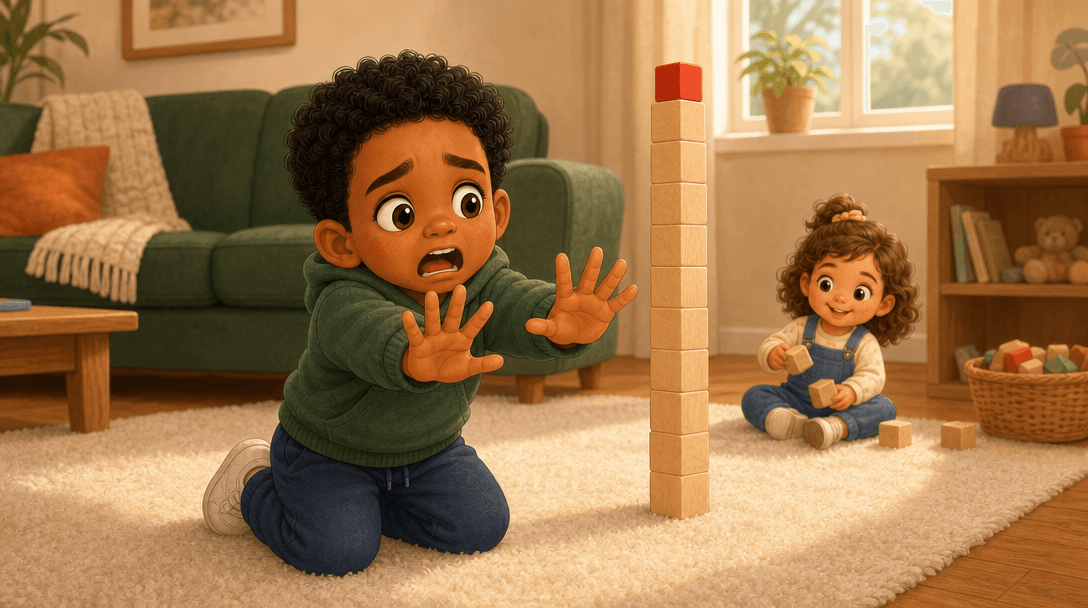 A story for thisFor the toddler whose hands move before the words doYour child, by name, in every scene. See the Gentle Hands story →
A free hitting social story you can print
Copy this, put your child's name in, and print one or two sentences per page. A photo of your child on the first page and a photo of their own hands building something near the end make it more theirs.
My Gentle Hands
- My name is [child's name].
- My hands do lots of things. They build, they hold, they wave, they hug.
- Sometimes I feel mad.
- Sometimes someone takes my toy, or comes too close, or I am very tired.
- Sometimes the mad feeling goes to my hands, and my hands want to hit or push.
- Lots of little children feel mad. Mad is an OK feeling.
- Hitting hurts. When someone gets hit, they feel sad and scared.
- My grown-ups stop my hands to keep everybody safe.
- When I feel mad, I can hold up a flat hand and say "Stop."
- I can stomp my feet, big and loud, to let the mad out.
- My hands can help fix things, like building the tower again.
- My grown-ups love me, and I am learning gentle hands.
Why it is written this way. Social stories in Carol Gray's method mostly describe, and only a small part tells the child what to do. Guidance built on her method suggests roughly two to five descriptive, perspective or reassuring sentences for every directive one. Here lines 9 and 10 are the only "I can do this" lines. The story says mad is allowed, because it is. What is not allowed is hurting, and the story keeps those two things apart. It never calls the child rough or naughty, and it ends on repair and love rather than a reward.
How to use it. Read it once a day at a quiet time. Make line 9 the exact words you will use in the moment, and practise the flat hand and the stomp together when nobody is upset, so they are easy to reach for when somebody is. Do not read it straight after a hit, when it turns into a telling-off. Our guide to personalized social stories has a fill-in template for other situations.
Why toddlers hit
Toddlers hit for the same reason they bite: the feeling is there before any words are.
ZERO TO THREE describes toddlers as relying heavily on their actions to tell us what they are thinking and feeling, and puts the peak of this between about twelve and twenty-four months, with older toddlers understanding rules but still not having the impulse control to follow them when upset. A hit or a push can mean:
- I'm mad, and I have no other way to say it.
- You're too close. Toddlers have a strong sense of their own space and no polite way to defend it.
- I want what you have.
- I'm on overdrive. Tired, hungry, overstimulated, at the end of a long day.
- What happens if I do this? Especially with a new baby or a pet, where the reaction is big.
The American Academy of Pediatrics puts it plainly: young children have little natural self-control and need grown-ups to teach them not to hit when they are angry, and to show them what to do instead. That takes many, many repetitions, which is why the same words every time matter so much.
What to do in the moment
Stop the hands. Gently hold their hands or move them back. Do it the same way every time.
Say one short line. "I won't let you hit." Or the AAP's "We don't hurt each other." Pick one and stick to it. ZERO TO THREE suggests keeping the message brief, because a toddler mid-meltdown cannot follow a lecture.
Stay calm. This is the hard part, especially if it was a baby who got hit. Your steady voice is what helps a toddler come back down. ZERO TO THREE is clear that toddlers usually need help calming down before any learning can happen.
Check on the other child. Out loud and kindly. Your child sees what hitting does: someone is hurt, and the grown-up helps them.
Name the feeling, then offer the alternative. "You're mad. He took your truck. You can say stop." Or, "You can stomp." ZERO TO THREE suggests outlets like stomping, or hitting a pillow, so the feeling is allowed somewhere even though hitting a person is not.
Invite repair instead of a forced sorry. Hand back the toy, rebuild the tower together, bring the other child their cup. Repair is something hands can do, and it teaches more than a word said on command.
Do not hit back or spank. It teaches that big people hit when they are upset, which is the opposite of the lesson.
Before the next hit
- Notice the pattern. Before meals, at the end of the day, when a sibling is on your lap, at a crowded play date.
- Give space. A toddler who hits when crowded may simply need more room. Spread toys out, or move them before it gets tight.
- Practise the alternatives at calm times. Flat hand and "stop" as a game. Big stomps across the kitchen. It is much easier to use a move you already know.
- Praise the try. "You said stop. That worked." The AAP lists praise for the behaviour you want among its top tips.
- Look after the new baby moments. If the hitting started when a sibling arrived, a lot of it is jealousy with nowhere to go. Our big sibling story speaks to that feeling directly.
A gentle hands story with your child in it
We made a personalized storybook film called Gentle Hands for toddlers aged two to four whose hands move before the words do. To be clear about what is in it: it is about a push, the close cousin of a hit. It is about two and a half minutes, your child is in every scene, made from the details you choose, and the narrator says their name. The push is stopped before it lands and the little one is never touched roughly. The feeling is named as real and allowed, and then given two places to go: a flat hand and a big STOP for the next time somebody comes too close, and a stomp for the rest of the mad. The grown-up's line is "I will not let you push", and repair is something the hands do, a block handed back and a tower rebuilt. Nobody is called rough or naughty, there is no time-out, and nothing is taken away. The little one is a visiting toddler, so it reads for a sibling, a cousin or a friend at daycare. Every film is checked by a person and ready within 24 hours, to watch in the FableFleet app or from the email link. It is a story, not a treatment, and it works best alongside the printable above.
If your toddler bites rather than hits, see our biting social story.
When to talk to your pediatrician
Most hitting fades as children learn words and as their self-control grows. The AAP suggests talking to your pediatrician if aggressive behaviour lasts beyond a few weeks, and especially if:
- Someone is getting hurt, or your child is hitting adults.
- It is happening many times a day.
- Your child has been sent home from care or school because of it.
- Your child seems to hit with no trigger you can find, or does not seem to notice danger. ZERO TO THREE suggests a child development professional in this case.
- You have any concern about speech, hearing or development.
None of this is a judgment of you or your child. A pediatrician, and if needed a child psychologist or developmental specialist, can look at the whole picture in a way no story or printable can.
More in Social Stories
- Personalized Social Stories for Toddlers: What Works, a Free Template, and When a Film Helps
A personalized social story is a short, calm story about one real situation in a child's life, told with their own name, their own people and their own places, so the situation is familiar before it happens. Carol Gray, who created the format, describes a social story as one that accurately describes a context, skill, achievement or concept. Here is what makes one work for a two to four year old, a free template you can fill in tonight, how a personalized story film fits, and when to talk to a professional instead.
- A Biting Social Story for Toddlers (Free Printable, and What to Say in the Moment)
A biting social story is a short, calm story told in your toddler's own voice that names the biting feeling, says it is allowed, and gives one or two things to do with it instead. Below is a complete free one you can copy and print tonight, followed by why toddlers bite, exactly what to say and do in the moment, how to work with daycare, and when to talk to your pediatrician.
The story for this milestone
For the toddler whose hands move before the words do
A personalized story for toddlers who push or hit: the push stopped before it lands, the feeling named, a flat hand and a stomp that work, and hands that rebuild. A 2.5 minute storybook film for ages 2 to 4.
We make it from the details you choose. Your child, by name, in every scene.
Frequently asked questions
- Why does my toddler hit?
Because the feeling arrives before the words do. Between about one and three, children feel anger, frustration and crowding very strongly but have little language and even less self-control. Hitting, pushing and grabbing are how they say "I'm mad", "you're too close" or "I want that". It is common and it is not a sign that your child is unkind.
- What should I say when my toddler hits?
One short calm line, the same every time, such as "I won't let you hit." Hold their hands gently or move them back, check on the child who was hit, and once things are calm, offer the alternative: "You can say stop" or "You can stomp." Keep the talking for later. A long explanation in the moment does not land.
- Do social stories help with hitting?
They can help some children, especially when the story uses the same words you use in the moment. Research on social stories shows modest effects that vary a lot, so use the story as one support alongside a calm grown-up, a clear line and fewer of the situations that set the hitting off.
- Should I make my child say sorry after hitting?
A forced sorry from a two year old is usually just a word to end the moment. It tends to work better to let your child see you comfort the other child, then invite them to help put things right, such as handing back a toy or rebuilding what fell. That teaches repair as something you do, and real apologies follow once they have the language.
- Is time-out a good idea for hitting?
The American Academy of Pediatrics suggests using time-outs sparingly, as a last resort. With toddlers, moving them out of the situation, staying close and calm, and offering an allowed way to get the mad out usually does more. A short break to calm down together is different from being sent away.
- When should I worry about hitting?
Talk to your pediatrician if hitting keeps going for more than a few weeks, causes injuries, is aimed at adults, happens many times a day, or gets your child sent home from care. Also talk to them if your child seems to hit with no trigger you can find, or you have any worry about speech or development.
Sources
- ZERO TO THREE, Aggressive Behavior in Toddlers. Toddlers rely on actions to tell us what they feel; 12 to 24 months is the peak; stay calm, recognise the feeling, offer alternatives; when to see a professional.
- ZERO TO THREE, Helping Young Children Channel Their Aggression. Brief message in the moment; allowed outlets such as stomping; coach words like no and mine; watch triggers.
- American Academy of Pediatrics, HealthyChildren.org, 10 Tips to Prevent Aggressive Behavior in Young Children. "We don't hurt each other"; teach alternatives; time-outs sparingly; model calm; when to contact the pediatrician.
- Nebraska ASD Network (University of Nebraska-Lincoln), Social Stories. Sentence types and the two to five descriptive sentences per directive guideline used to write the printable.
- Carol Gray Social Stories, official site. A Social Story accurately describes a context, skill, achievement, or concept; patient, supportive, safe quality.
FableFleet team
Founders & moms, FableFleet
We're a small team of moms building the personalized children's stories we wished existed for our own kids. Everything we publish is rooted in lived experience and cited research.