
What a chart is for
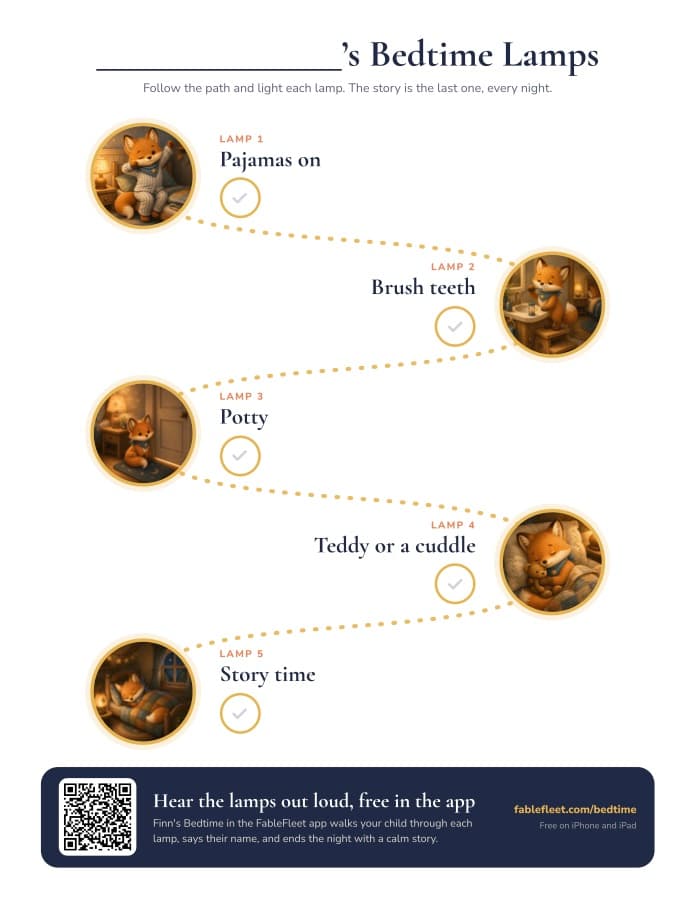
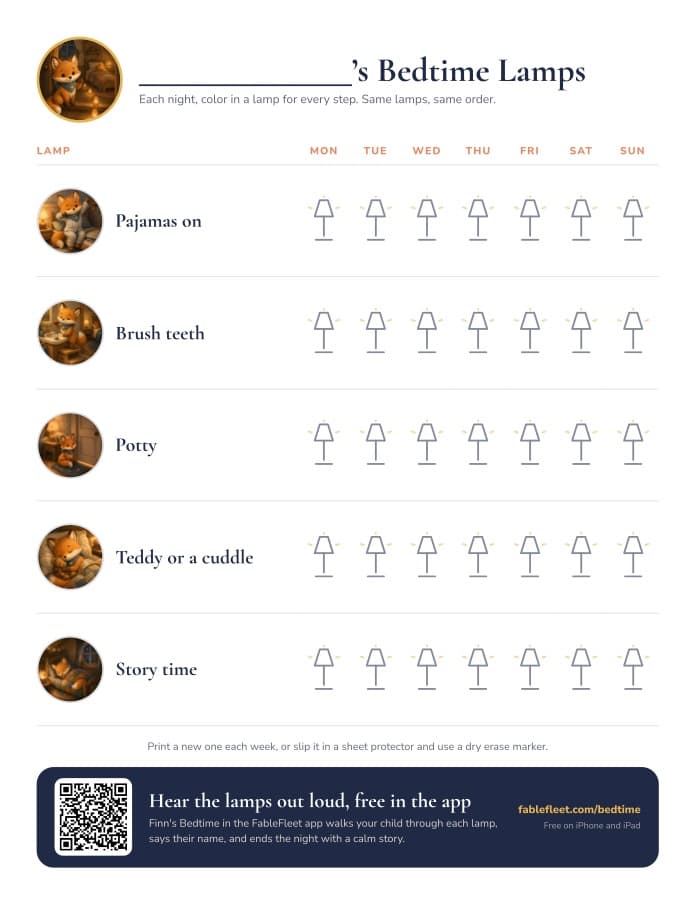
The order. The best research on bedtime routines, a study of the mothers of 10,085 children, found that what helps is doing the same things in the same order most nights: “the more consistently a bedtime routine is instituted and the younger started the better.” A chart does one thing well: it lets a child who cannot read see what comes next, which means fewer reminders from you and a clear signal when the day is done. The routine itself, step by step, with the research behind each piece, is in bedtime routine for 3 year olds.
What it will not do
Stop a child getting out of bed. A chart is for the order, and it does that job well. For the child at the door, the tool is the bedtime pass, with the walk-back in the pediatricians' words on its grown-ups' page.
Questions parents ask
- What should be on a toddler bedtime routine chart?
- The same few steps you do every night, in the order you do them. Ours is pajamas, teeth, potty, teddy or a cuddle, and story time. The research on routines found that the sameness is what helps, not the particular steps: "the more consistently a bedtime routine is instituted and the younger started the better."
- Does a bedtime chart stop stalling?
- No. A chart is for the order: a child who can see what comes next needs fewer reminders, and the lamp at the end is the signal that the day is done. For the child who gets out of bed, the bedtime pass is the tool.
- What age is a bedtime chart for?
- About two to five, the years a child can follow pictures before they can read. Under two, the routine is yours to run and a chart is for you. By five or six most children do not need it.
- Should the chart have a reward?
- The lamp is the reward: color one in each night. The American Academy of Pediatrics' reward for bedtime is praise in the morning. In the family accounts we read, sticker prizes wore off within a week; the routine did not.