
· Updated
How to Potty Train a Boy: Sitting First, Standing Later
To potty train a boy, start him sitting for both pee and poop, and add standing only once sitting is fully reliable. That is the position of the American Academy of Pediatrics, the Mayo Clinic and Nemours. Boys finish a couple of months later than girls on average, but the gap is small next to how different one child is from the next. We trained our daughter; our son's turn is still ahead. This is the pediatric guidance on boys, next to what carries over from doing it once.
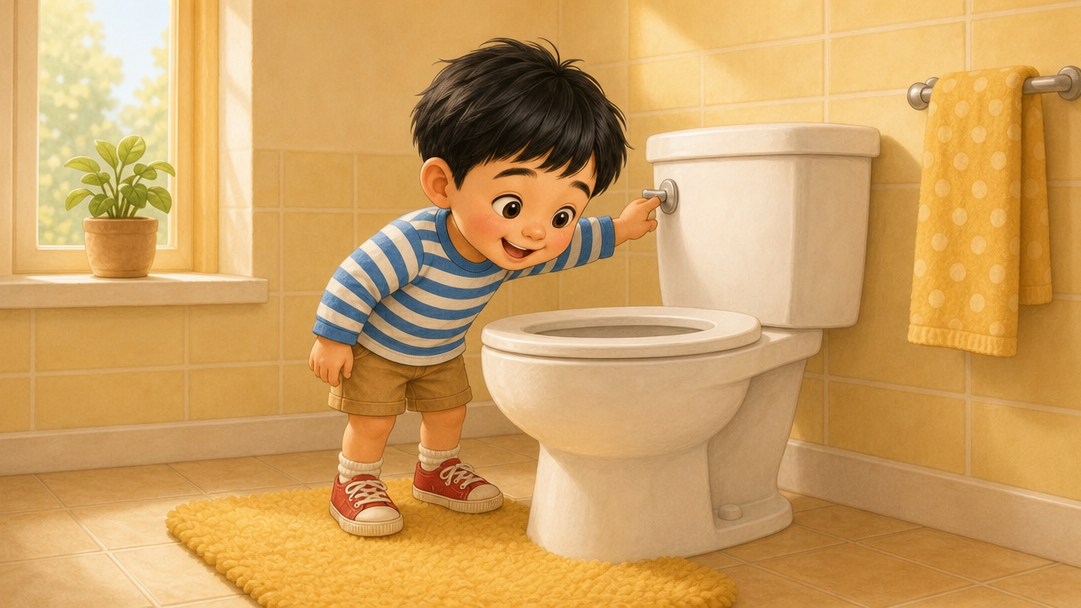
Sit first, stand later, and let standing be his idea. Everything else about training a boy is the same as training any child: readiness first, one calm sentence for accidents, simple gear. Here is the sitting first sequence, the standing switch, the loud flush, and what carries over.
Free to print: a potty chart with your child's name and a picture for every step.
Where I am standing
I will be straight with you. We trained our daughter, so the boy version is still ahead of us. Our son is a few months old, and when his turn comes the plan is the same one that worked for his sister: watch for the readiness signs, three days at home, low pressure, lead with his own excitement.
So this is not "here is how my son trained." It is the pediatric guidance on boys, lined up next to the one thing I am confident about from doing it once: the parent's calm matters more than any boy and girl difference. The internet wants to convince you that boys are a separate category that needs a separate system. The AAP does not say that, and neither do I. Boys are children with a small physical difference and a slightly longer average timeline.
Sitting first
The most consistent thing in everything I have read about boys is to start sitting. The reasoning is mechanical: a young boy who learns to stand for pee before he learns to sit for poop often ends up resisting both, because "I need to poop, so I need to sit down" is a separate skill on its own clock. One position for both in the first phase is the cleanest sequence.
In practice: the first four to eight weeks, he sits for every visit. The next month or two, sitting stays the default and standing comes in only when he starts it, because he wants to copy a parent or an older brother, or he asks. Standing he chooses goes smoothly; standing you impose muddies the cue. Once sitting is reliable and he has had several good standing tries, standing becomes the option for pee and sitting stays the default for poop.
Readiness comes first, the same as for any child; when to start potty training walks through the signs. The method choice (3 day, Oh Crap or child led) is in potty training methods, and sitting first fits inside any of them.
The standing switch
Wait until sitting is fully reliable; if he still has the occasional accident sitting, do not add standing yet. Start in low pressure moments: outdoors in a private yard, a low urinal in a family restroom, or the regular toilet with a sturdy stool. Keep the first tries short and casual. If aim is the holdup, give him a target: a piece of cereal or a small ice cube in the bowl. By all accounts most boys love this part. And do not pressure it; if he goes back to sitting for a stretch, that is fine. Many boys like standing at home but find public restrooms intimidating, and the guidance is clear that sitting in public is completely fine. The point of the bathroom is the bathroom, not the form.
The gap
The number you see everywhere is that boys finish daytime training a couple of months later than girls on average. The gap is real but small, and it gets swamped by individual differences: some boys train at 22 months, some girls at 36. The drivers are bowel control tending to mature a little later in boys, the sitting then standing sequence adding one step, and parents waiting longer to start boys because they expect it to be harder. None of these is a reason to push earlier or to brace for slower. Look at your son's actual readiness signs and go from there.
The loud flush
This is the one I am most braced for. The most common setback for boys around month three or four is the public restroom, and specifically the automatic flush: loud, unpredictable, and at adult toilet height, so a small child is sitting right inside the noise. Carry a few large sticky notes and cover the sensor before he sits. Tell him ahead of time, calmly, that the toilet might make a loud noise and that it is fine. If he gets truly scared of public bathrooms, do not push: bring the small potty in the car for a few weeks and reintroduce them slowly. Ours is a duck and lives in the truck to this day. More fear scripts are in potty training accidents and regression.
Modeling, in moderation
Letting your son watch his father, an uncle or an older brother use the bathroom for thirty seconds, with plain words about what is happening, builds interest faster than any chart. Keep it casual, because children notice staged versus natural, and do not insist. If he loses interest after fifteen seconds, that is plenty.
Free printable
A potty chart with your child's name on it
A picture of Nia for every step, so a child who cannot read yet can follow it. Nothing you type leaves your device.
Steps on the chart (pick 3 to 5)
Start with steps your child can already nearly do. A full row on the first day is the point.
The name and goal go into the print page in the address after the #, which your browser never sends to us. We cannot see them. How to use a potty chart so it helps.
Color in a lamp each time. Every lamp counts, and a lamp is never taken away.
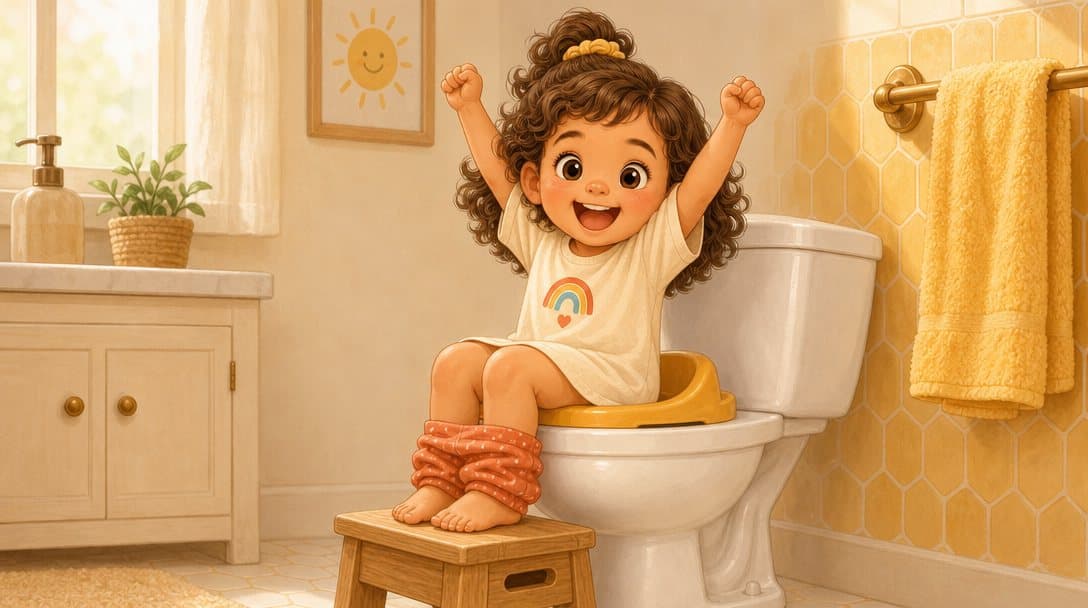
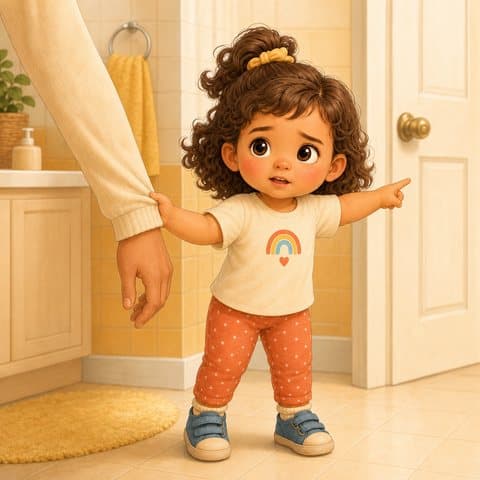 I told a grown-upbefore it happened
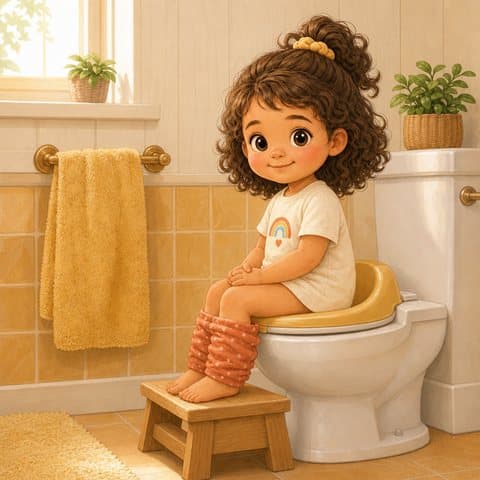 I sat on the pottyeven for a minute
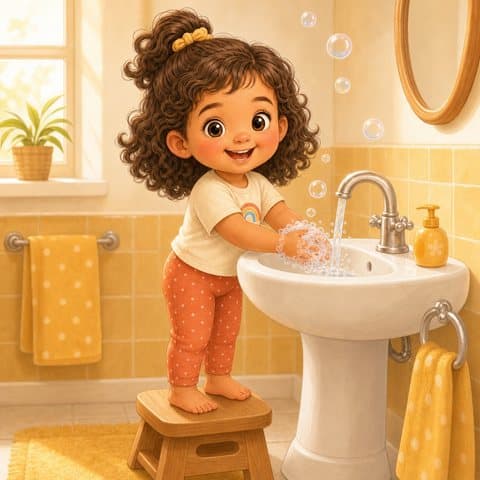 I washed my handssoap and a song
 Dry all morningor all afternoon
 When the chart is full
 What carries over from training our daughter
Readiness first, calendar second: our daughter showed signs around 16 months and was trained by 18, and the only reason it worked is that she was ready. The same rule will decide when our son starts. One calm sentence for accidents, ours was "that's okay, accidents happen," and nothing about it is a girl thing. Simple gear: a small floor potty, a seat insert with arms and a step stool he can climb alone; skip the urinal trainers, character potties and wall gadgets, because the simpler the gear, the cleaner the cue. Clothes he can manage himself: elastic waists, no overalls. And a chart that rewards the trying: our free potty chart has a picture of each step, so he can follow it before he can read.
The two adaptations for girls, for completeness: wiping front to back, early and patiently, which the AAP names in nearly every resource; and dresses are easy where overalls slow everything down. Rewards, accidents and regression work the same for boys and girls. Night dryness is its own milestone for every child, covered in night time potty training.
How FableFleet fits
The warm up before day one is where a story earns its place, for a boy or a girl. Our potty story is a personalized storybook film where your child is the main character, by name: noticing the feeling on the inside, the cold seat and the step stool, and a grown-up who waits, right up to the flush. The new routine feels familiar before he ever has to do it. I did not have it for my daughter; FableFleet did not exist yet. It is what I plan to use with my son.
More in Potty Training
- Potty Training Methods Compared: 3 Day, Oh Crap and Child-Led, and What Worked for Us
There are three potty training methods worth knowing: child-led, which pediatricians default to and takes weeks to months; the 3 day method, three days at home with no diaper; and Oh Crap, the same idea spread over one to two weeks in stages. All three work for a child who is ready, and none of them works for a child who is not. We did three days at home with our daughter. The method gave the training a shape; her readiness did the rest.
- Best Potty Training Books for Toddlers, Preschoolers and Parents
The best potty training books come in two kinds. For parents: Oh Crap (Glowacki), The No-Cry Potty Training Solution (Pantley) and the free American Academy of Pediatrics toilet training hub. For toddlers: Once Upon a Potty (Frankel), Potty (Patricelli) and A Potty for Me (Katz). Preschoolers need characters their own age and a real story: Time to Pee (Willems) and Everyone Poops (Gomi). Skip anything with shame, a promised timeline or a checklist on the back. And the most specific potty book there is, you write yourself.
- Night Time Potty Training and Pull-Ups: When to Switch, and When to Wait
Night dryness is mostly body, not behavior. A hormone that slows urine overnight and a bladder big enough for the whole night both have to grow in, and that often comes months or years after daytime training. Wet nights are normal up to age five or six. In the day, cotton underwear teaches the cue because your child feels wet; pull-ups muffle it, so they belong to naps, nights and travel. Wait for the dry morning signal before switching to underwear at night. Our daughter's nights came on their own, a good while after her days.
- Potty Training Accidents and Regression: What They Mean and What to Say
Potty training accidents are normal: three to eight a day in week one, one to three in week two, close to none by week four. Say one short, calm sentence every time; ours was "that's okay, accidents happen." When accidents come back after a child was dry, that is a regression, and it is usually information: a new sibling, a move, a daycare change, an illness, or the one most parents miss, constipation. Most regressions settle in two to four weeks.
- When to Start Potty Training: What Age, and the Readiness Signs We Watched For
There is no single right age to start potty training. Pediatricians put the first readiness signs at 18 to 24 months and typical daytime training between 24 and 36 months, and most families start somewhere in between. What tells you it is time is a pattern that holds for about two weeks: dry stretches of two hours, some curiosity about the toilet, simple instructions followed, and a cooperative mood. My daughter showed signs at 16 months and was trained by 18. That was her timing, not a target.
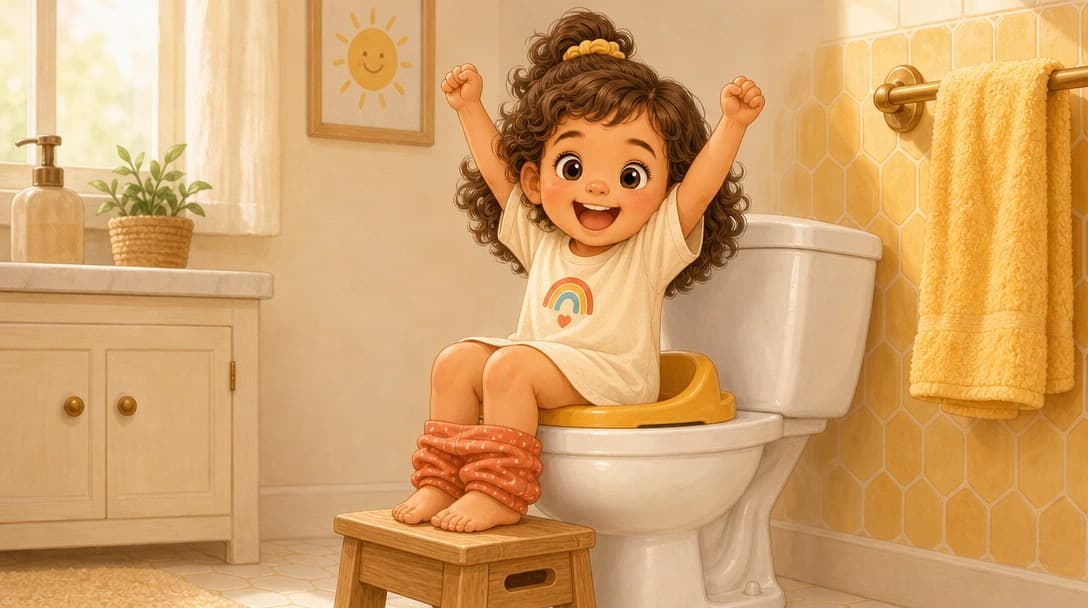
The story for this milestone
Learning the potty by noticing the feeling first
A personalized potty training story: noticing the feeling on the inside, the cold seat and the step stool, a grown-up who waits, and the flush met properly. A 2.5 minute storybook film for ages 2 to 4.
We make it from the details you choose. Your child, by name, in every scene.
Frequently asked questions
- Should boys learn to pee sitting down first?
Yes. The American Academy of Pediatrics recommends starting boys sitting for both pee and poop, then adding standing only after sitting is fully reliable. Standing too early often creates a pattern where the child stands for pee, has to sit for poop, and ends up resisting both. Sitting first, standing later, is the cleanest sequence for most boys.
- At what age should I potty train my son?
The same readiness window applies to boys and girls. The American Academy of Pediatrics names 18 to 24 months as the early readiness window and 24 to 36 months as the usual range for daytime training. Boys average a little longer than girls, but that gap is smaller than the difference between individual children. Look for readiness signs, not a specific age.
- How is potty training a boy different from potty training a girl?
The main practical differences are the standing switch (boys only, and only after sitting is reliable), wiping front to back for girls to lower the risk of urinary tract infections, and a small average difference in timing. Readiness signs, method, rewards, accidents and night dryness work the same way for both.
- How do I get my son interested in the potty?
Put a small floor potty somewhere visible, read a potty book at bedtime, name what bodies do in matter-of-fact words, and let him briefly watch a father, uncle or older brother use the bathroom. Curiosity grows from exposure, not from prompting. Pressure to "be a big boy" tends to backfire.
Sources
- American Academy of Pediatrics, healthychildren.org Toilet Training hub. AAP guidance on the sitting-first sequence, the readiness window and the gender framing.
- Mayo Clinic, "Potty training, How to get the job done". Sitting first for boys, and readiness signs.
- KidsHealth / Nemours, "Toilet Training". Pediatric reference on readiness, sitting first, and wiping front to back.
- Pampers Parent Institute, "Potty Training Tips". Manufacturer parenting resource used for practical tactics around the standing switch, such as a target in the bowl.
FableFleet team
Founders & moms, FableFleet
We're a small team of moms building the personalized children's stories we wished existed for our own kids. Everything we publish is rooted in lived experience and cited research.