
· Updated
Potty Training Methods Compared: 3 Day, Oh Crap and Child-Led, and What Worked for Us
There are three potty training methods worth knowing: child-led, which pediatricians default to and takes weeks to months; the 3 day method, three days at home with no diaper; and Oh Crap, the same idea spread over one to two weeks in stages. All three work for a child who is ready, and none of them works for a child who is not. We did three days at home with our daughter. The method gave the training a shape; her readiness did the rest.
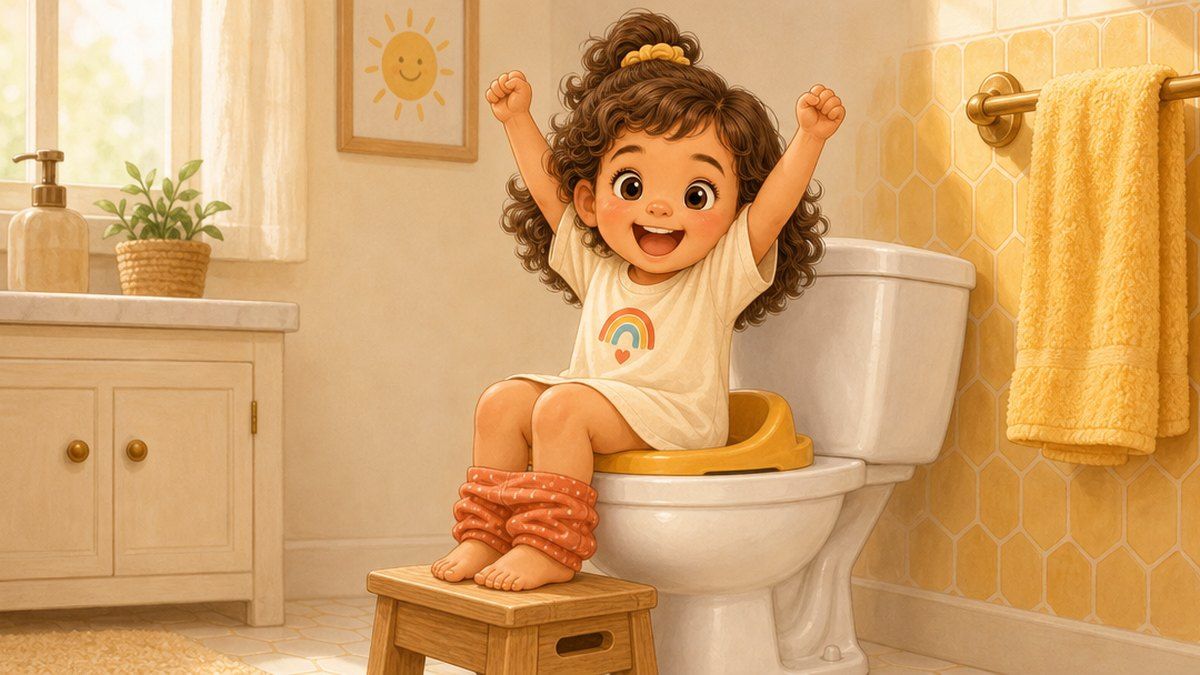
Pick by readiness, not by promise. A child who shows all the signs can do an intensive run. A child with some of the signs does better child-led. Here is how each method runs, how to choose, what we did, and the week one mistakes to skip.
Free to print: a potty chart with your child's name and a picture for every step.
The three methods in one minute
Child-led. The potty comes out as an object, your child sets the pace over weeks or months, and you praise the small wins. Lowest stress, fewest regressions, longest on the calendar, and the hardest to line up with a daycare that runs on a clock. This is where the American Academy of Pediatrics lands by default.
3 day. Three full days at home, no diaper, close watching, no outings. Fast when readiness is strong, exhausting for you, and a lot of borderline-ready kids bail on it. This is the one we did.
Oh Crap. Jamie Glowacki's staged version: the same push spread over one to two weeks in blocks, so there is no single brutal day. More flexible than the strict 3 day, more structured than child-led, and it still only works on a child who is ready.
On the calendar: child-led takes one to four months. The 3 day takes three to five days at home and two to six weeks for the full routine. Oh Crap takes one to two weeks at home and three to six weeks for the full routine. Regression risk is lowest for child-led, because a forced pace can come back later.
Is your child ready for any of them?
Every method assumes the same thing: a child who is physically, mentally and emotionally ready. A two hour dry stretch, some curiosity about the toilet, and the ability to follow a simple instruction are the signs that matter most. If you are not sure, start with when to start potty training.
What we did, and what I took from it
Three days at home with my daughter. No diaper, underwear straight away, a potty visit about every fifteen minutes. Her signs showed up around sixteen months and she was trained by eighteen.
What I took away was not "the 3 day method works." It was that she was ready, and the method gave the readiness a shape to pour into. If I had run the exact same three days on a child who was not ready yet, I do not think the calendar would have mattered at all.
There were plenty of accidents in those three days. Every time, we said the same thing, "that's okay, accidents happen," and soon she was saying it right back to us. There was no pressure in our house, only her own excitement, and I am convinced that is why she caught on so fast.
The 3 day method, day by day
The day before. Tell your child, in calm plain words, that tomorrow the daytime diapers go away.
Day one. Bare from the waist down, at home all day, and at every cue you walk them to the small potty. A pile of accidents in the morning, fewer by the afternoon.
Day two. Same again. The body cue gets clearer to your child: more catches, fewer accidents. It is also the hard day for you.
Day three. Still bare at home, plus one short outing in loose clothes with nothing underneath. A ready child is often down to one or two daytime accidents.
We went off script in one place: I put my daughter in big kid undies from the first morning, because the undies she was excited about did real motivational work.
When to stop early. If by midday on day two the accidents are flat or climbing and your child is not catching any cues, stop. Keep it light: "You worked really hard. We are going to take a break and try again soon." Pause three to four weeks. The second try is usually much smoother.
After day three. Outings stretch from ten minutes to half a day, daycare folds in around day five or six with the same words and routine, and most families have a settled daytime routine by week three. Night runs on its own clock; see night time potty training. "Three days" means the at-home phase, not the whole milestone.
Day two is the hard part
The thing that predicts a clean run better than the method, the book or your child's temperament is you staying calm on day two, usually mid afternoon. For us the calm came from that one repeated line, "that's okay, accidents happen." It took the pressure out of every miss, and before long our daughter was the one saying it.
If you can, plan a break for that window before it arrives: a partner taking over for two hours, a walk, a phone call. You come back with a steadier voice, and your child hears it.
Oh Crap in plain language
Blocks instead of fixed days: naked at home for one to three days; then nothing under loose clothes on short trips; then everywhere; then underwear at home; then underwear everywhere except nap and night; then daycare. Most families get through the first five blocks in one to two weeks, and you can stay in a block an extra day.
Pediatricians do not endorse any commercial method, this one included, but they agree with the parts that matter: readiness over age, a short intensive run for a clearly ready child, praise over prizes, and a calm parent. One caution: the book's suggested start of 20 to 30 months is early at the low end unless readiness is obvious.
If it is not working by day four: slow the block changes, prompt half as often (watch more, talk less), and check for constipation, which hides under a lot of stalled training. If you overshot on readiness, diaper up and pause three to four weeks. The pause is the fix, not the failure.
How I would pick for your child
- How clearly does my child show readiness? Strong on all the signs means any method can work. Half the signs means child-led is the safer bet.
- How much continuous time can I clear? Three to seven full days at home puts an intensive method on the table. Less than that, child-led is the honest answer.
- Does my child lean toward structure or a slower runway? You probably already know.
Most families end up with a hybrid anyway: a few child-led weeks with the potty just sitting there, a short push on a weekend once the signs are clear, then a slow settling in. Still on the fence? Default to child-led. It forgives a wrong readiness call better than anything else. And if a method ever tells you to push through your child's resistance, skip that part.
Starting with a boy? Same method; the one difference is sitting first, covered in how to potty train a boy. The parent books behind each method, and the read-alouds for your child, are in best potty training books.
Setup before day one
Our kit was a little duck shaped floor potty, then a seat with arms and a step stool on the big toilet. The duck potty earned a permanent place in the back of our truck, which sounds ridiculous until you are on a road trip with a newly trained toddler.
- Tell daycare you are starting.
- Around twenty pairs of underwear and ten of pants for an intensive week. Buy the underwear your child is excited about. Ours was Peppa Pig, and it quietly became part of the motivation.
- The small potty where your child plays, not only in the bathroom. A toddler has about thirty seconds between "I need to go" and going.
- A step stool they can climb alone, and clothes they can manage: elastic waists, no overalls, no buttons.
- Your accident sentence on the fridge. On day three, when you are tired, you will be glad it is already written down.
Rewards: what we did, and how to fade them
My honest confession: we tried not to use rewards at all. The plan was connection and specific praise, and we mostly held that line. But a pack of gummies still crept in on the mornings the pee landed in the potty, because some mornings you take the win however it shows up. So my real position is a middle one: lead with praise, let a small treat help on a hard day, and plan from the start to fade it.
The research explains both halves. A small, immediate reward helps a toddler link the act to the good thing that followed. But a tangible reward for something a child would learn anyway tends to lower their own motivation once the reward stops. A sticker every time for three months anchors the habit to the sticker.
So reward the trying, keep it small and fast, and fade it: a sticker or a cheer per success for two weeks, then every second success, then only for firsts, then praise alone. A short dip when the chart comes down is normal; do not put it back up. If the dip turns into a real regression, look for a separate stressor: potty training accidents and regression covers that.
We made a free potty chart built this way. The rows are the trying (told a grown-up, sat on the potty, washed hands), a lamp and a cheer are the reward, and nothing comes off the chart after an accident. Your child's name goes on top, with a picture of each step so they can follow it before they can read.
The treat is allowed to be a tool. It is not allowed to become the reason she sits down.
The week one mistakes to skip
- Prompting every fifteen minutes for weeks. It worked for us on day one, all in at home, but after the first days it teaches a child to wait for you instead of their own body. Every 60 to 90 minutes plus after meals is plenty.
- Reacting big to accidents. Even a flash of frustration registers.
- Leaving the house too soon. Stay home the first three to five days if you can.
- Switching methods on day two because day one was rough. Day one is rough. Give it a week.
- Comparing to another child. The cousin who trained in a weekend is not your child.
Seven to ten days in and nothing is clicking? Stop, put the diapers back on without making it a thing, and try again in three to four weeks. And if a big stressor is in the picture, a new sibling, a move, an illness, wait for it to settle before you start.
Free printable
A potty chart with your child's name on it
A picture of Nia for every step, so a child who cannot read yet can follow it. Nothing you type leaves your device.
Steps on the chart (pick 3 to 5)
Start with steps your child can already nearly do. A full row on the first day is the point.
The name and goal go into the print page in the address after the #, which your browser never sends to us. We cannot see them. How to use a potty chart so it helps.
Color in a lamp each time. Every lamp counts, and a lamp is never taken away.
 I told a grown-upbefore it happened
 I sat on the pottyeven for a minute
 I washed my handssoap and a song
 Dry all morningor all afternoon
 When the chart is full
 Daycare
Same words, same cue, same response to an accident at home and at daycare; ask for the center's written routine and run it at home. This paid off for us in a way I did not see coming: once our daughter was trained, her daycare moved her straight from the toddler room into the three to five room, and the fact that we and her teachers were doing the exact same thing was a big part of how fast it stuck. (Twins: train the more ready one first, same words for both, and let imitation bring the second along.)
How FableFleet fits
The part that is hard to teach with words is the part a story can carry. Our potty story is a personalized storybook film where your child is the main character, by name: noticing the feeling on the inside, the cold seat and the step stool, and a grown-up who waits while they get there, flush and all. Watched in the weeks before you start, it gives day one a familiar shape. I did not have it for my daughter; FableFleet did not exist yet. It is what I plan to use with my son.
More in Potty Training
- Best Potty Training Books for Toddlers, Preschoolers and Parents
The best potty training books come in two kinds. For parents: Oh Crap (Glowacki), The No-Cry Potty Training Solution (Pantley) and the free American Academy of Pediatrics toilet training hub. For toddlers: Once Upon a Potty (Frankel), Potty (Patricelli) and A Potty for Me (Katz). Preschoolers need characters their own age and a real story: Time to Pee (Willems) and Everyone Poops (Gomi). Skip anything with shame, a promised timeline or a checklist on the back. And the most specific potty book there is, you write yourself.
- How to Potty Train a Boy: Sitting First, Standing Later
To potty train a boy, start him sitting for both pee and poop, and add standing only once sitting is fully reliable. That is the position of the American Academy of Pediatrics, the Mayo Clinic and Nemours. Boys finish a couple of months later than girls on average, but the gap is small next to how different one child is from the next. We trained our daughter; our son's turn is still ahead. This is the pediatric guidance on boys, next to what carries over from doing it once.
- Night Time Potty Training and Pull-Ups: When to Switch, and When to Wait
Night dryness is mostly body, not behavior. A hormone that slows urine overnight and a bladder big enough for the whole night both have to grow in, and that often comes months or years after daytime training. Wet nights are normal up to age five or six. In the day, cotton underwear teaches the cue because your child feels wet; pull-ups muffle it, so they belong to naps, nights and travel. Wait for the dry morning signal before switching to underwear at night. Our daughter's nights came on their own, a good while after her days.
- Potty Training Accidents and Regression: What They Mean and What to Say
Potty training accidents are normal: three to eight a day in week one, one to three in week two, close to none by week four. Say one short, calm sentence every time; ours was "that's okay, accidents happen." When accidents come back after a child was dry, that is a regression, and it is usually information: a new sibling, a move, a daycare change, an illness, or the one most parents miss, constipation. Most regressions settle in two to four weeks.
- When to Start Potty Training: What Age, and the Readiness Signs We Watched For
There is no single right age to start potty training. Pediatricians put the first readiness signs at 18 to 24 months and typical daytime training between 24 and 36 months, and most families start somewhere in between. What tells you it is time is a pattern that holds for about two weeks: dry stretches of two hours, some curiosity about the toilet, simple instructions followed, and a cooperative mood. My daughter showed signs at 16 months and was trained by 18. That was her timing, not a target.
The story for this milestone
Learning the potty by noticing the feeling first
A personalized potty training story: noticing the feeling on the inside, the cold seat and the step stool, a grown-up who waits, and the flush met properly. A 2.5 minute storybook film for ages 2 to 4.
We make it from the details you choose. Your child, by name, in every scene.
Frequently asked questions
- Which potty training method is best?
The one that fits your child's readiness, your calendar and your temperament as a parent. A child with strong, steady readiness signs usually does well with an intensive method like the 3 day or Oh Crap. A child with borderline signs does better with a child-led approach. Pediatric guidance does not endorse any one commercial method; it endorses readiness-led training in whichever shape fits your family.
- Does the 3 day potty training method really work in 3 days?
For a ready child, the in-home daytime part often comes together in three to five days. Outings, daycare and night dryness take longer, so the whole milestone is closer to three to six weeks. The three days are the in-home phase, not the finish line.
- Is Oh Crap potty training too harsh?
Its reputation comes more from the book's voice than from the method. The approach itself is structured but not harsh: no punishment, praise and connection over sticker charts, and coordination with caregivers built in. The hardest part for most parents is clearing about a week at home with very close supervision.
- How long does potty training usually take?
Once readiness signs are present, daytime training usually takes between two weeks and three months. The American Academy of Pediatrics describes daytime control as typically arriving between 24 and 36 months, with night dryness often months or years later. If it runs longer, that is usually about timing or a stressor, not effort. Pause for two to four weeks and try again without making it a big deal.
- Do reward charts work for potty training?
For the first two to four weeks, yes, as a scaffold. Small, immediate rewards help a new behavior stick, and they wear off. The research on motivation suggests planning a deliberate fade: a sticker per success at first, then every second success, then new accomplishments only, then specific praise alone.
- Should you potty train twins at the same time?
Usually not. Twins rarely show readiness in the same week. The common guidance is to train the more-ready twin first, use the same words and routine for both, and let imitation help the second twin when their own signs appear. Praise each child on their own terms, never in comparison.
Sources
- American Academy of Pediatrics, healthychildren.org Toilet Training hub. Pediatric framing for the child-led default, the readiness gate behind every method, and the pause-and-restart pattern.
- Mayo Clinic, "Potty training, How to get the job done". Clinical step-by-step framing of readiness and method.
- KidsHealth / Nemours, "Toilet Training". Plain-language pediatric reference used in the week-one advice.
- Brazelton TB. "A child-oriented approach to toilet training." Pediatrics. 1962;29,121-128.. Foundational research behind the child-led approach and the pause-and-restart pattern.
- Fellom, Julie. "Diaper-Free Toddlers" workshop materials (San Francisco, 2006). Original 3 day method source.
- Glowacki, Jamie. "Oh Crap! Potty Training" (Touchstone, 2015). Primary source for the staged intensive method.
- Pantley, Elizabeth. "The No-Cry Potty Training Solution" (McGraw-Hill, 2007). Gentle child-led alternative with spelled-out scripts.
- Deci EL, Koestner R, Ryan RM. A meta-analytic review of experiments examining the effects of extrinsic rewards on intrinsic motivation. Psychological Bulletin. 1999;125(6),627-668.. Tangible rewards for something a child would learn anyway tend to reduce intrinsic motivation once they stop; the reason to plan a fade.
- Alfie Kohn, "Punished by Rewards" (Houghton Mifflin, revised 1999). Readable counterpoint on extrinsic versus intrinsic motivation.
FableFleet team
Founders & moms, FableFleet
We're a small team of moms building the personalized children's stories we wished existed for our own kids. Everything we publish is rooted in lived experience and cited research.