
Resources · Pacifier goodbye · ages 2 to 3
Pacifier goodbye, all in one place
Sleep only now, gone by three, and a goodbye your child helps plan. Three is the age the dentists agree on, because how long the habit lasts matters more than how often. Gradual and cold turkey both work; pick the one your family can hold. Expect one to three hard nights, then a few weeks of asking now and then.
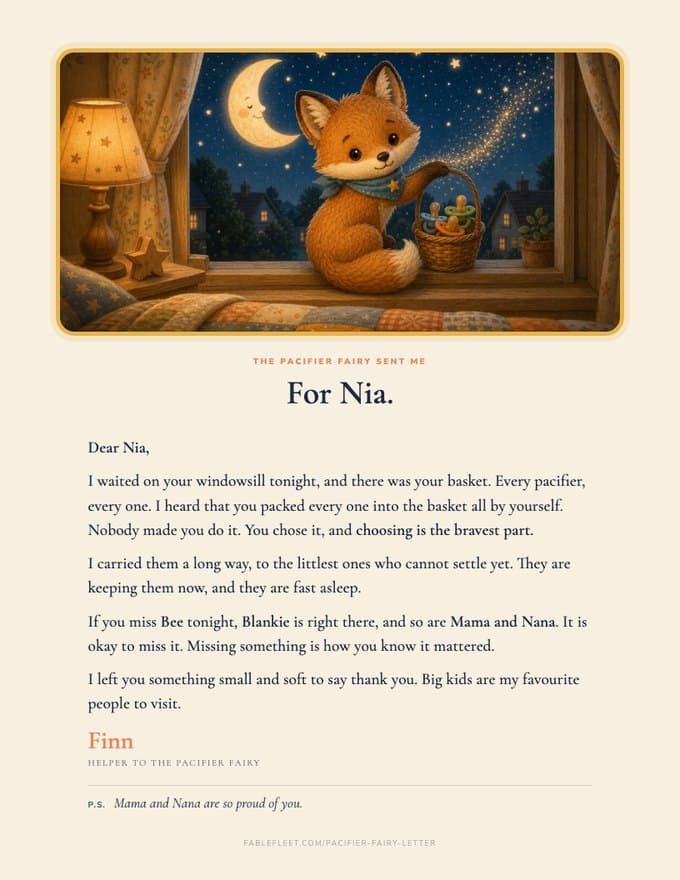
Free printable
The letter from Finn
For the morning after the goodbye: your child's name, what they call it, the grown-ups who will be there, and a one page checklist for you.
Make yours free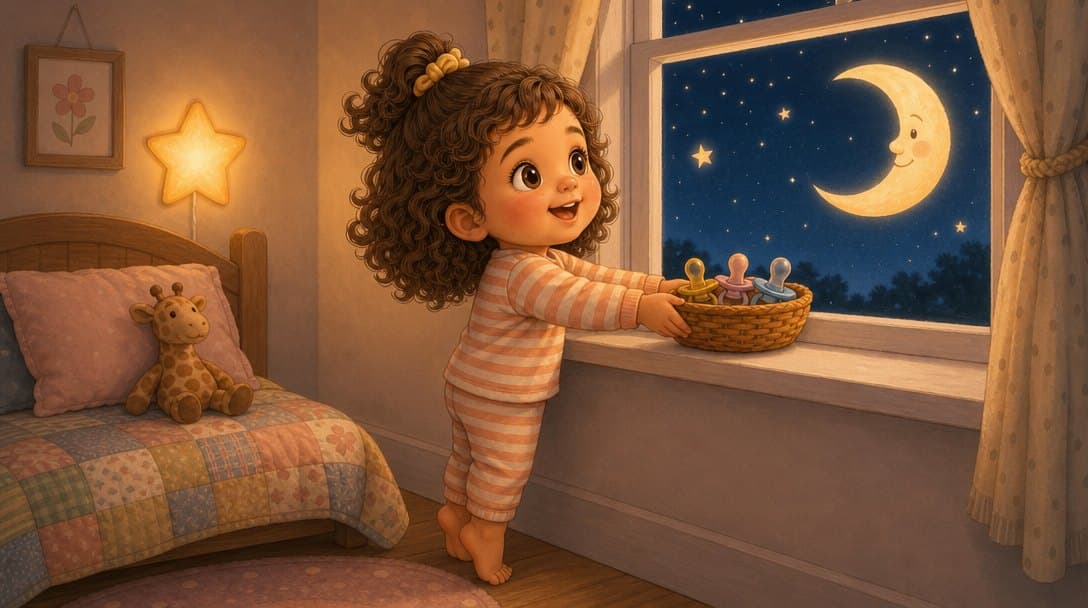
The story we are making next
The Pacifier Fairy
Your child, by name, gathering up their pacifiers for the fairy: the brave night, and the morning after.
Tell me when it is ready
For the nights
Finn's Bedtime
A free guided bedtime routine for ages two to four: pajamas, teeth, potty, a cuddle, a few lines said together, then a calm story that says your child's name.
Finn's Bedtime, freeThe guides, in the order you will need them
- 1Pacifier Weaning Without a Meltdown: Gradual, Cold Turkey and the Pacifier FairyStart here
Pacifier weaning is helping your child let go of the pacifier for good. For a toddler the advice is simple: sleep only now, gone by three, and done in a way your child owns. Three is the age the dentists agree on, because how long the habit lasts matters more than how often. No one has tested gradual against cold turkey, so both are fine. The parents who did it well all did the same things: a quiet two weeks, a short countdown, the child fills the bag, a comfort object already in the bed, and no giving it back on night two. Expect one to three hard nights, then a few weeks of asking now and then.
- 2When to Stop Pacifier Use: Reading Your Child, Not the Calendar
When to stop the pacifier: sleep only now, gone by three. The experts give different ages because they are worried about different things. The ear infection advice (wean in the first year) is about babies. The teeth advice is about age three: the pediatric dentists say stop by 36 months, because how long the habit runs matters more than how often. The speech worry is the weakest of the three. For a toddler, that means shrink it to sleep only now, and plan the goodbye for somewhere between two and a half and three, when your child can understand it and do the giving. Taking it away earlier than your child is ready is the one thing that reliably backfires.
- 3How to Wean Off Pacifier: Gradual, Cold Turkey, and What Makes It Kinder
How to wean off the pacifier: shrink it to sleep only first, then pick one of two roads. Gradual: close the sleep window over a week or two, no single hard night. Clean break: a countdown, your child fills the bag, the pacifiers go somewhere good, and you hold the line for one to three hard nights. No one has tested one road against the other, so both are fine. What makes either one kinder is the same: a quiet two weeks, a comfort object already in the bed, every spare found, praise instead of shame, and never giving it back on night two.
- 4The Pacifier Fairy: How the Goodbye Ritual Works (and Why It Helps)
The pacifier fairy is a goodbye ritual: your child fills a bag with every pacifier, leaves it on the windowsill, and in the morning the pacifiers are gone and a letter and a small, soft gift are in their place. The pacifiers went to the littlest ones who need them, and they keep them. It works from about two and a half, when a child can follow a three-day plan and do the giving themselves. Pediatricians suggest it, and the families' stories agree on the shape: a quiet two weeks, a countdown, the child fills the bag, every spare found, a soft thing already in the bed, a small gift, a letter, one to three hard nights, and never giving it back on night two.
Quick answers
- When should you get rid of the pacifier?
- For a toddler: sleep only now, gone by three. Daytime use goes first, somewhere between one and eighteen months; the sleep pacifier can stay a while longer.
- Is the pacifier fairy scary for toddlers?
- Not in any first-hand account we could find, and the reason is simple: the fairy never enters the room. The bag goes on the windowsill and she collects it from outside. Never use the fairy, or teeth, as a threat.
- What if my child asks for it back when sick?
- Hold the line kindly and pile on the other comfort. It passes in a few nights. Giving it back restarts the whole thing.
Also for this moment: bedtime, for the nights it leaves · a new baby in the house