
Resources · Two homes · ages 3 to 6
Two homes, all in one place
When I was about eight, my brother and I walked down the street between my mom's house and my dad's with a bag of clothes. The two homes weren't the hard part. The arguing was. The research says the same: little kids do well in two homes when the grown-ups are kind and short with each other at the door. Tell your child it isn't their fault, and say it more than once. Keep bedtime and meals close to the same in both houses, let one special thing ride along, and expect a grumpy first hour after a switch.
Free printable
The two homes calendar
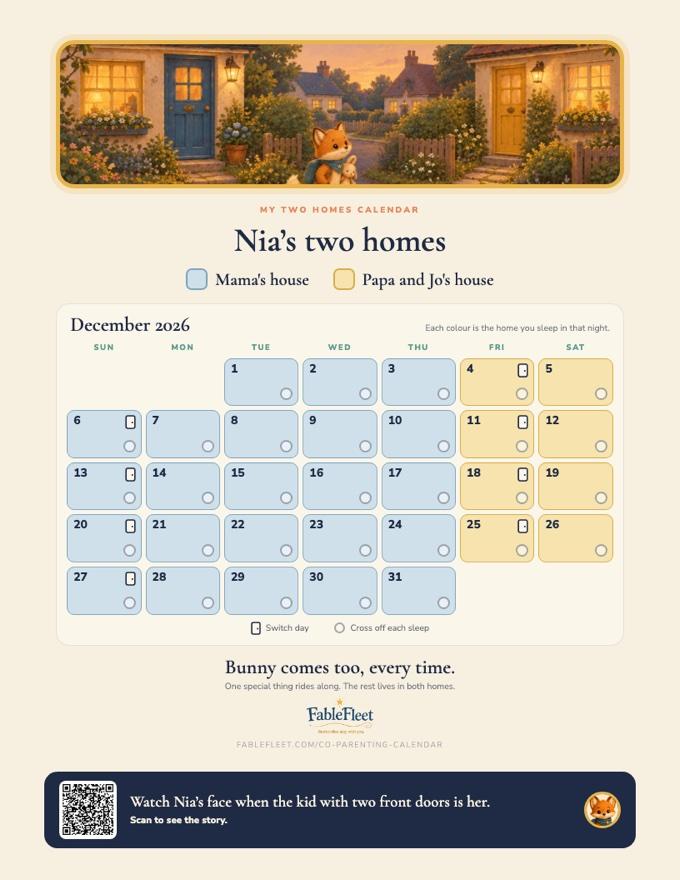
A month your child can read on the fridge: each home named their way in its own colour, the nights coloured in, a door on switch days, and the one thing that always comes too. Plus a page for you on switch day.
Make yours free
Coming soon
Two Homes
A personalized story for a child who lives in two homes: one ordinary switch day, a warm goodbye at one door and a warm hello at the other, both grown-ups named and shown. A 2 to 3 minute story.
See the story
For the nights
Finn's Bedtime
A free guided bedtime routine for ages two to four: pajamas, teeth, potty, a cuddle, a few lines said together, then a calm story that says your child's name.
Finn's Bedtime, freeThe guides, in the order you will need them
- 1Co-Parenting Tips for Toddlers and Preschoolers: Helping Your Child Feel at Home in Two HomesStart here
Little kids can do well in two homes. The co-parenting tip that matters most is how the grown-ups are with each other at the door: kind, short, and the same every time. Tell your child it isn't their fault, and say it more than once. Keep bedtime and meals close to the same in both houses, let one special thing ride along, and use the names your child already has for each home. Expect a grumpy first hour after a switch. Most kids settle as the new pattern becomes ordinary.
- 2Mom's House, Dad's House: Switch Day for Toddlers and Preschoolers
Mom's house, Dad's house, or whatever your child calls them: switch day goes best when the goodbye is short and the same every time. Crying at the door is usually about leaving the grown-up they're with, not about where they're going, and most kids are fine within minutes. If the door is hard every time, move the swap to daycare or school. Keep the first hour back quiet, and put goodnight calls at a set time before bed.
- 350/50 Custody Schedule for Toddlers and Preschoolers: What Works by Age
There's no single best 50/50 custody schedule for a toddler or preschooler. Little ones count in sleeps, not days, so for under threes keep each stretch away from either parent short, two or three days, which is what a 2-2-3 does. From about three, longer stretches get easier, and studies of three to five year olds sharing time equally find no harm from the split itself. What matters more is a pattern that stays the same, a calendar they can read, and grown-ups who are kind to each other at the door.
- 4Books About Divorce for Preschoolers and Young Kids, by Age
The best books about divorce for preschoolers are calm ones, where a child lives in two homes and is loved in both. Start with Two Homes by Claire Masurel. Add a book where something travels between the homes, like Fred Stays With Me! If your child thinks it's their fault, read It's Not Your Fault, Koko Bear. Read each one yourself first, then read it together more than once.
- 5Two Homes Book by Claire Masurel, and What to Read Next
Start with Two Homes by Claire Masurel. It's the two homes book we'd hand any parent of a two to five year old. Alex has a home with Mommy and a home with Daddy, is loved in both, and nobody argues on the page. Read it on an ordinary day, say the names your child uses for each home, and keep a copy in both houses. When you want more, read Living with Mom and Living with Dad, Always Mom, Forever Dad, and Fred Stays With Me!
- 6Evelyn Del Rey Is Moving Away, and Moving House With a Little One
Evelyn Del Rey Is Moving Away is a picture book by Meg Medina about two best friends on the day one of them moves. It's for ages five to seven, and it lets a child hold the goodbye and the friendship at the same time. If your own family is the one moving, tell your little one simply, let them pack one box of their own, set up their room first, and keep other big changes for another month.
Quick answers
- How do I explain two homes to a toddler or preschooler?
- Keep it short, warm and true: you'll have a home at Mama's and a home at Papa's, we both love you, and that won't change. Use the names your child uses. Then tell them it isn't their fault, because little kids often decide it is, and give the same short answer every time they ask again.
- How do I stop my toddler crying at handover?
- Keep the goodbye short and the same every time: one hug, one small ritual, then go. Tell them in the morning that it's a switch day, and pack the bag early so nobody is rushing. If the door is hard every time, try moving the swap to daycare or school, so your child goes home with the other grown-up instead of being handed over.
- What is the best 50/50 custody schedule for a 3 year old?
- There's no single best one, and no research supports a set number of days. What helps a three year old is a pattern that stays the same, stretches they can count in sleeps, and a calendar on the fridge. A 2-2-3 and fixed weekdays in each home both give a little one a pattern to hold. Pick the one your child can predict.
Also for this moment: bedtime, for a routine that stays the same in both homes · a new baby, for when one of the homes gets a little brother or sister