
· Updated
Toddler Biting and Hitting at Daycare: What to Ask, What a Good Plan Looks Like, and the Same Words at Home
By Amanda and Ashley, two moms with four kids between us
When daycare says your toddler is biting or hitting, the most useful thing you can do is get everyone using the same words. Ask what happened just before, who was close, and what the plan is. A good plan is a grown-up within arm's reach at the busy moments, one short line said the same way in both places, the hurt child comforted first, and no punishment. No pediatric body says a child should be expelled for biting; what follows is what the practitioners and a hundred families report.
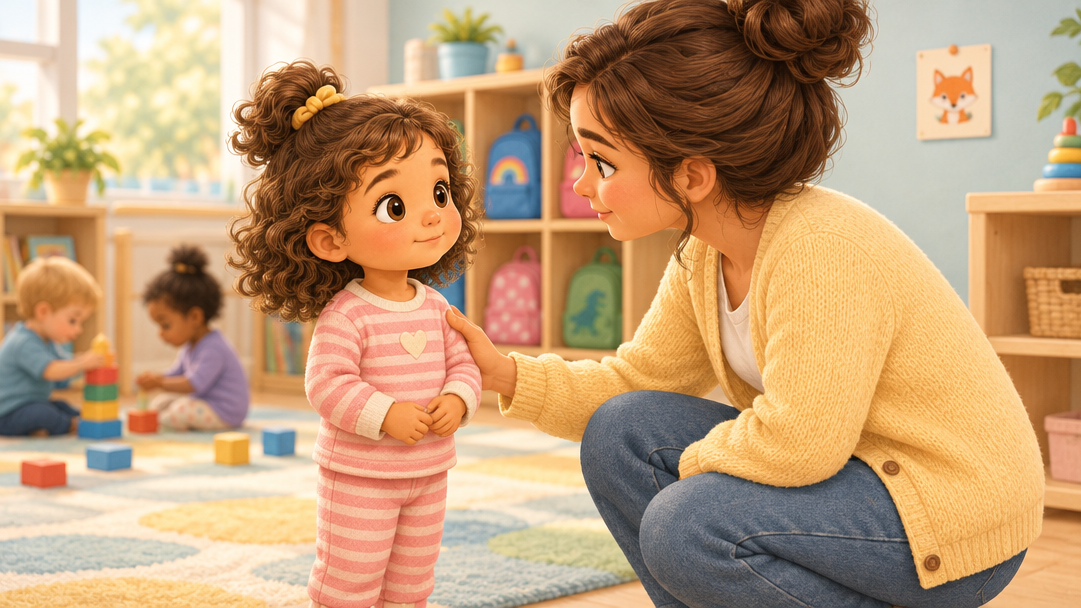
The call about toddler biting at daycare has a shape, and once you know it, it is easier to hear. I read more than a hundred parents who got it, and nearly every story is the same: a room move or a new baby, a run of bites or hits at the busiest times of day, a signed report at pick-up with the other child's name left blank, a shadow or a behavior plan, and the parent crying in the car. Some of them heard that they might be asked to leave.
Here is what the research and the parents agree on, and it is the reason we made the card at the bottom of this post: the fix is not a consequence at home for something your child cannot remember by five o'clock. The fix is the same words in both places.
Coming soon, the story for this moment: Your child and the Biting Feeling, with your child in every scene. Free to print: the same words card, one line for home and daycare with your child's name on it.
Why biting and hitting happen at daycare more than at home
Zero to Three's reasons for biting read like a description of a toddler room: a child who does not have the words yet for a strong feeling, a room that is too loud or too bright or too busy, teeth coming in, a child who needs more running around, or is overtired, or is simply excited. Their child-care advice is practical: more than one of the most popular toys in the room, and tell the teachers when your child has not slept well.
In the accounts, the trigger was almost always a change: moving up from the baby room, a new baby at home, a new nursery after a house move. One mom's nursery logged the time of every bite and found all of them came in the half hour before nap. Another's came at the coat pegs at drop-off. A child who bit several times a day at the new nursery and nowhere else was the most common story of all. That is not a child problem. That is a room problem, and rooms can be changed.
What to ask the daycare teacher after a bite
Ask for specifics, not reassurance. The questions one daycare advice site puts to parents are the right ones: what happened leading up to the bite, who was supervising, what they do to prevent it, whether it has happened before to any child, and the one that matters most, "What's the plan going forward?"
Three more from the accounts:
- When and where, every time. Before nap, before lunch, at the door, in the crowded corner, over one toy. The nurseries that got on top of it kept a log and found a pattern. The ones that only handed over a report to sign did not.
- Is it in writing? Several parents were told their child was on a behavior plan with nothing written down. One asked and found it was just a central incident record, because biting at that age is so common. Ask to see it.
- What are you saying to them? So you can say the same thing. More on this below.
You will not be told who the other child is, and you should not ask. Confidentiality protects every family in the room. Knowing the name does not help, and the other family is being told the same about yours.
What a good daycare plan looks like
Every body's advice for the moment is the same, and a good room does it in front of you.
A grown-up within arm's reach at the busy moments. Vanderbilt's early-childhood center says to shadow the child, or stay within arm's distance, during playtime. Zero to Three says to get down to the child's level and step in before it lands. In the accounts, the shadow was the single thing that ended it fastest, and the nurseries that could not staff one were the ones that eventually gave notice.
One short line, the same every time. Vanderbilt's is Stop. No biting. Biting hurts. Many rooms use kind hands or gentle hands. Which line matters less than everybody using the same one.
The hurt child first. Most of the attention goes to the child who was bitten, because even negative attention can keep the biting going. A good room comforts the bitten child, cleans the bite, and then turns to yours, calmly.
No punishment. Zero to Three says a toddler who bites should not lose play time over it, because that may make the problem worse, and that shaming and harsh punishment do not reduce toddler biting. The daycare advice site's red flags are exactly these: no incident report, and punishment, whether that is a time-out, yelling or shaming. One plan in the accounts removed the child to a nicer activity with an adult after every hit, which a sharper parent on the thread pointed out was a reward.
Fewer of the triggers. Two of the popular toy. A quieter corner. A shorter day for a while, which helped one child over months. A chewy that lives at daycare too, which one nursery wrote into the child's notes.
The same words at home and at daycare
This is the thing that nobody on the other end of the incident report tells you, and it is the single most practical line in all the research. Vanderbilt: "Try to have all caregivers approach the biting in the same way." The pediatricians say the same thing more gently: stay in close contact with your child's teacher and the other caregivers.
The early-years consultant Alistair Bryce-Clegg says the other half out loud, to the nursery: tell the biter's parent "that you do not expect there to be a consequence at home." A two year old cannot connect a lost toy at six o'clock to a bite at ten. What they can learn is that every grown-up in their life says the same six words and does the same calm thing. In the accounts, the nurseries that asked parents to use the room's words at home were the ones whose stories ended well.
So agree on three things: the line (I won't let you bite. Teeth are for food, or I won't let you hit, or whatever the room already says), the instead (a chewy, a hand up and stop, a stomp, come find me), and who goes to the hurt child first. Write them down. Put one copy on your fridge and hand the other to the teacher. That is what the free card below is: the top half for home, the bottom half tears off for the teacher, the same words on both, and three boxes for the teacher to write back what came before.
If daycare says your child may have to leave
No pediatric body says a word about expulsion. The American Academy of Pediatrics lists being sent home or barred from play as a reason to call your pediatrician, which is the right first call. One children's hospital says that if it does not stop, it may be time to find another childcare option. A pediatrician who gets this call a lot wrote that she is struck by "how often simply moving the toddler to a new daycare fixes everything!" She means the room, not the child.
From the accounts, what a parent can actually do:
- Ask for the plan in writing, and a meeting. The expulsions that families fought were the ones with no meeting and no plan: one owner excluded a 17 month old for five weeks without consulting her own key workers.
- Ask what they have tried. The daycare advice site's line is that expulsion should be a last resort, after a good program has tried everything else. Shadowing, a log, fewer triggers, a shorter day.
- Call your pediatrician, and ask about hearing and speech. More than one child in the accounts who bit for months turned out to have hearing loss, found later at a school hearing test.
- If you are in the UK, the council's Early Years team is the route; one family's complaint got them support and a better nursery within five months.
- Remember what the number is. One pediatrician's reading of the research: 94 percent of toddlers are physically aggressive at some point. A room that cannot manage that is a room that cannot manage toddlers.
And when the other parent demands your child be removed: one nursery in the accounts refused and said so. Good rooms protect every child in them, including yours.
Free printable
The same words card, for your fridge and the teacher
One line for biting, pushing or hitting, the same at home and at daycare. The top half goes on the fridge, the bottom half tears off for the teacher. Nothing you type leaves your device.
What they do
The line: “I won't let you bite. Teeth are for food.”
The instead (one thing, practised when nobody is upset)
Who says it at home (tap one or two)
Three sheets: the card (fridge half and tear-off teacher half), a page for you, and My Biting Feeling, a story to read at a calm time. Your answers go into the print page in the address after the #, which your browser never sends to us. Why the same words.
What to say at daycare pick-up
Nothing to your child about the bite. It is hours old and gone. Say the line at home when it happens at home, read the story at a calm time, and let the day be the day. To the teacher, one question: what happened just before? To yourself, the thing one mom wrote ten years on about her now delightful child: it was a phase at two, and it is a distant memory now.
The whole picture, why it happens and when it ends, is in toddler biting and hitting. The printed stories for home are in the biting social story and the hitting social story.
A story about the daycare room, with your child in it
The Biting Feeling and Gentle Hands are short stories, two to four years old, with your child in every scene: the feeling arriving, a grown-up's hand that gets there first, the same short line, the hurt child looked after, and the instead working. Nothing lands, nobody is called a biter, no time-out. Watch it together, then say the line; that is the one thing the research on stories for this age shows helps. All of our stories are on the stories page.
More in Social Stories
- Toddler Biting and Hitting: Why It Happens, What to Say, and When It Stops
Biting and hitting at one, two and three are normal, and they are not a sign of a mean kid. The feeling gets there before the words do. In the moment: stay calm, block the hand or move your child, say one short line the same way every time, then go to the one who got hurt. Teach the instead later, when everyone is calm. It fades as language grows, usually somewhere between two and a half and four.
- A Biting Social Story for Toddlers (Free Printable, and What to Say in the Moment)
A biting social story is a short, calm story in your toddler's own voice that names the biting feeling, says it is allowed, and gives one thing to do with it instead. Below is a free one you can print tonight, then why toddlers bite, exactly what to say in the moment, what a story like this does, and when to talk to your pediatrician.
- No Hitting Social Story for Toddlers: Gentle Hands, Free Printable
A no hitting social story is a short, calm story in your toddler's own voice about the big, scrunchy feeling that goes to their hands, what hitting does to other people, and what their hands and words can do instead. Below is a free one you can print with your child's name in it, then why toddlers hit, what to say in the moment, the kid who only hits you, and when to talk to your pediatrician.
Coming soon
For the toddler who bites when the feeling gets too big
A personalized story for toddlers who bite: the pressing feeling, a calm grown-up who stops it, words to use instead, and something crunchy that is allowed. A 2.5 minute story for ages 2 to 4.
We’re still making this one. Your child, by name, in every scene.
Frequently asked questions
- What should I ask daycare when my toddler bites?
What happened just before, who was close, whether it has happened before to any child, and what the plan is going forward. Ask whether the plan is in writing and what words the teachers use in the moment, so you can use the same ones at home. Patterns (before nap, at the door, over one toy) are the most useful thing a teacher can give you. You will not be told the other child's name, and should not ask.
- Should I punish my toddler at home for biting at daycare?
No. A two year old cannot connect a lost toy at six o'clock to a bite at ten in the morning. The early-years consultant Alistair Bryce-Clegg tells nurseries to say to parents that they do not expect a consequence at home. What helps is the same line and the same calm response in both places, which is what Vanderbilt's early-childhood center means when it tells parents to have every caregiver approach the biting in the same way.
- Can a daycare kick my toddler out for biting?
Some do, after weeks of daily incidents, and no pediatric body says anything about it either way; the American Academy of Pediatrics only lists being sent home as a reason to call your pediatrician. Expulsion should be a last resort after shadowing, a log of triggers, fewer of them and a shorter day have been tried. Ask for the plan in writing and a meeting, call your pediatrician, and ask about hearing and speech. One pediatrician who gets this call a lot wrote that moving to a different room often fixes everything.
- What does a good daycare plan for biting look like?
A grown-up within arm's reach at the busy moments, one short line said the same way every time, the bitten child comforted first, a log of when and where it happens, fewer of the triggers (two of the popular toy, a quieter corner, a chewy that lives at daycare), and no punishment. Zero to Three says a toddler who bites should not lose play time because it may make the problem worse. Red flags are no incident report and time-outs, yelling or shaming.
- Why does my toddler bite at daycare but not at home?
Because daycare is where a toddler is crowded, tired, sharing and surrounded by noise, which Zero to Three lists as the reasons toddlers bite. In the family accounts we read, the most common story was a child who bit several times a day at a new nursery and nowhere else, usually after a room move. That is a room problem more than a child problem, and rooms can be changed.
Sources
- CSEFEL (Vanderbilt University), Responding to Your Child's Bite
- Zero to Three, Toddler Biting: Finding the Right Response
- American Academy of Pediatrics (HealthyChildren.org), Aggressive Behavior
- DaycarePath, Daycare Biting: How to Handle It (2025)
- Alistair Bryce-Clegg, The PLAYlist, We've got a biter (2024)
- Alison Escalante MD, When the daycare calls your child a biter (2024)
- Nationwide Children's Hospital, Toddler Biting and Hitting
Co-founders and moms, FableFleet
Two moms, four kids between us. We write about the moments we are living through, and we made the bedtime routine and stories our own kids use.