
· Updated
Sibling Jealousy After a New Baby: What Is Normal, What to Do, How Long It Lasts
By Amanda and Ashley, two moms with four kids between us
Expect it. The NHS says it about sibling jealousy after a new baby: "It's almost certain to happen at some point." Most toddlers are fine for the first week or two. Then comes a stretch of accidents, bedtime fights, wanting the bottle back, and hitting when nobody is looking. Nobody can tell you how long it lasts. Most parents say the worst is the first few months, and the baby smiling or sitting up is the turn. What helps most is ten minutes a day that are only theirs, the same time every day. Bedtime is the easiest one to protect. Our daughter was three when her brother came, and that is what we did.
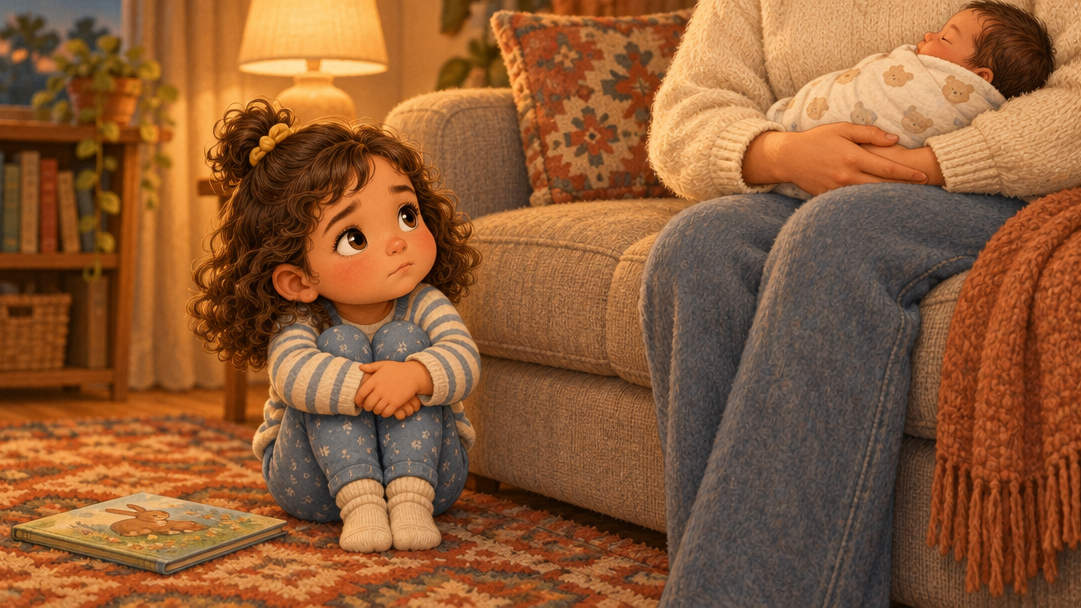
Two good weeks. Then your two year old wets the floor on purpose, screams for whichever parent is not in the room, and pinches the baby the second you turn around. Parent after parent I read described that same shape, and most of them said they felt like the worst parent alive while it was happening.
Our daughter was three when her brother came. It was a journey, and it still is. She loves hard. The one thing we did on purpose in those first weeks is the thing every pediatric body and most of those parents credit, and I will get to it. The rest is what I looked up: what is normal, what to do the moment your toddler hits the baby, and the real answer to how long.
Coming soon, the story for this moment: Your child and the New Baby, with your child in every scene. Free to print: the big sibling certificate, signed by the baby, with your child's name on it.
Sibling jealousy has a shape
Start with the good news, because nobody on page one gives it to you. The biggest review of the research on a second baby found "the evidence did not support a crisis model." Most children come through it fine. The same researchers also found what every parent already knows: children's acting out goes up from before the birth to after. More no. More throwing. More hitting. For a while.
Age matters. One study found the drop in a child's security after the birth was smaller for firstborns under two than for two to five year olds. A one year old does not know what is being shared. A three year old does.
Here is the shape the parents I read described, over and over. Two easy weeks. Then it sinks in that the baby is staying. One to four months of the hard stuff. Then the baby smiles, or sits up, or laughs at them, and the big kid decides it is a person. Many families got a second wobble when the baby started to crawl into their things.
If the baby is not here yet, start with our guide to preparing a toddler for a new baby. Most of what is below is softer when the before went well.
How long does new baby jealousy last
Nobody can give you a date, and no pediatric body tries to. The pages that say eight months, or three to six months, do not say where the number came from.
The one duration a body does give is for the potty. The American Academy of Pediatrics says that in many cases the child picks up where she left off in toilet training after a few days or weeks. Zero to Three says the same about the rest, without a clock: when you respond to the need your child is expressing, she is more likely to get back to herself fairly quickly.
From the parents: a few weeks for some, two to six months for most, a handful who said a year or more. The ones who said it ended fastest did the same two things. They never left the two alone together, and they kept a slot every day that was only the big kid's.
When the jealousy is words: she wants to send the baby back
Zero to Three titled its whole guide after the question a toddler asks: when is he going back in your belly. One mom I read said her two year old kept asking when it would be time for the baby to go home. Others heard I hate the baby.
The answer from Zero to Three is the kind one: avoid putting pressure on your child to be in love with the new baby. The NHS agrees: accept that your older child might not love their new brother or sister at first.
What to do: let it be said. You wish he would go back. It is a lot. Then move on. Zero to Three's warning is that shaming a child for natural feelings of confusion or jealousy leads to more negative feelings toward the baby, and more anger and harder behavior. The parents who told their child off for saying it watched the hitting start.
When the jealousy is hands: he hit the baby
This is the one that frightens you, and Zero to Three knows exactly what comes out of your mouth, something like What is wrong with you? Don't hurt your brother! Its plan instead: calmly take hold of her hands, firmly but not angrily, and show her how she can safely engage with her sibling. Then: "Make it about the rule (you can't play with others if you're grabbing) and not about protecting the baby from his big sister." One children's hospital adds the words to drop: say don't touch as little as possible.
The rule no body states and every parent did: never alone together for the first months. A sling, a basket up on the table, a playpen for feeds. One mom watched the hitting happen on the monitor the moment she left the room.
Punishment made it worse in every account I read that tried it. One mom tried the naughty step and telling off, and the hitting got far worse. She switched to praising her daughter near the baby, moving the baby calmly out of reach, and getting down for a cuddle. By about four months it was down to once a week and fading. Show gentle on a doll first, the way Zero to Three suggests, so your child has a way to touch that is allowed. Our social story for hitting is the one to read that night, and it covers the kid who hits you instead of the baby.
When jealousy goes backwards: she is in diapers again
The pediatricians say to expect your child to regress a little. A toilet-trained child might suddenly start having accidents, or might want to take a bottle. This is normal, and it is your older child's way of making sure they still have your love and attention.
What to do with it is where the bodies are at their kindest. The American Academy of Pediatrics: "Instead of telling them to act their age, let him have the attention they need." Zero to Three says that encouraging or demanding that an older child act like a big boy or girl often backfires, because they do not want to be a big kid in that moment. The NHS says it is completely normal behaviour, so try not to let it bother you and do not punish them.
One mom took away her son's big boy label and privileges for the accidents. Ten days of cleaning up and nothing changed, and she said herself it was probably the wrong call. Let them be little for a bit.
If it is the potty, the pediatricians' first instruction is a check with your pediatrician to be sure the cause is not physical. After that, the plan in our post on potty training accidents works for a new baby too: calm, no fuss, a sticker for dry spells. If it is bedtime, keep the steps the same and the same grown-up doing them. The regret I read more than once was a parent taking over a bedtime that had always been the other parent's.
The sibling jealousy fix: ten minutes that are theirs
Every body says it. The pediatricians say to set aside special time for your child. KidsHealth says time each day when the older child gets one parent's undivided attention. The child psychologists say make it a ritual, so the child knows mom and dad have protected this time for them. The parents I read credited it more than the books or the present.
We made sure to spend time with our daughter and focus on her when he arrived, so she felt all the same love. She loved helping too, a new diaper or the wipes when they were needed, which is the other thing the bodies ask for. Zero to Three's line on that: encourage your older child to help with the new baby, but do not force it.
One children's hospital names the easiest slot to protect: bedtime. Bedtime is where that time lives at our house, and it is why we made Finn's Bedtime: the same routine every night with your child's name in it, free, no account, and it runs while the baby cries in the other room. Keep the big sister book in it after the baby is home. The after is when it earns its place, and the shelf by age is in our guide to big sister books.
When to call the doctor about sibling jealousy
Two lines, both from the pediatricians' page on regression. Any potty regression gets a check first, to be sure the cause is not physical. And if it stretches on for a month or more, take a break from training and talk to your pediatrician. Any injury to the baby is a call the same day.
Free printable
The big sibling certificate, with your child's name on it
Signed by the baby. One line for the thing they did, the grown-ups named your way, and a page for you for the first week. Nothing you type leaves your device.
They are officially a
The thing they did (optional, blank leaves a line to write on)
Who signs it (tap one or two)
Two sheets: the certificate, which prints sideways, and a page for you. Your answers go into the print page in the address after the #, which your browser never sends to us. How we use it.
The big sibling certificate, for the jealous weeks
The free big sibling certificate has one line for the kind or brave thing they did, and one soft line that says it is okay to miss how it was. Fill it in on a good day, not a hard one, and put it on the fridge where they can see it.
The sibling story that keeps the hard parts in
Most new baby books end at the hospital door with everyone smiling. The Big Sibling story starts after that, with your child in it by name: the drawer that has to be shared, the first hold with a cushion under the elbow, the crying nobody can fix, and the baby turning toward their voice because it has been listening all along. It tells your child plainly that the crying is not their fault and not their job to fix. Nobody is called a big kid as a reward, and their name stays on the door. For ages two to six, with your child's name and the baby's.
Everything we have for this moment is on a new baby.
More in New Baby
- Big Sister Books for Toddlers, by Age: The Ones That Work at 2, 3 and 4
Before our son came we talked to our daughter about the baby in the tummy and read her the big sister books, a few weeks of them, at bedtime. Pick by age, not by cover. At two, a short board book with almost no words. At three, a book about what a big sister does. At four, one that admits the baby can be annoying. Read it for a few weeks before the baby comes and keep reading after, when it matters most. One book is not going to do the job on its own. The ten minutes a day that are only hers will.
- Big Brother Books for Toddlers, by Age: What Works at 2, 3 and 4
A big brother book for a toddler is the big sister book with one word changed, and the reviews say so. So buy for the age, not the word. At two, a board book where brother and baby are ordinary words. At three, one that shows what a big brother does. At four, one that lets him be cross about it. Read it at bedtime for a few weeks before the baby comes and keep reading after. No book carries his name, the baby's name, or what happens after the hospital door, and that is the part he needs most.
- Big Sister Gift and Big Brother Gift Ideas: What the Baby Brings, and When to Stop
One small thing, from the baby, handed over at the first meeting. Then no more presents for being the big one. That is the whole of the big sister gift and big brother gift ritual, and it is the part the parents I read remember years later. Not the toy. That the baby chose it. We did it the other way round at our house: we took our daughter shopping before her brother was born so she could pick out a present for him. Below is the hospital room script, picks by age with prices, the free certificate signed by the baby, and the one warning the experts give about buying too much.
- Preparing a Toddler for a New Baby, Before and After
We prepared our daughter for her brother in small ordinary ways. We talked about the baby in the tummy, we read her the big sister books at bedtime, we had her help with whatever we were doing, and we took her shopping to pick out a present for him. Her grandmother was at the house the night we left for the hospital. She got herself dressed in her black shiny shoes to come and meet him. Tell them in a season they can picture, keep the big changes months away from the birth, give them a job, and protect ten minutes a day that are only theirs once the baby is home. That is the whole plan.
Coming soon
For the child who did not ask for a baby
A personalized new baby story: your child by name, the shared drawer, the first hold, the crying nobody can fix, and the baby turning toward their voice. A 2.5 minute story. Ready within 24 hours.
We’re still making this one. Your child, by name, in every scene.
Frequently asked questions
- How long does new baby jealousy last in a toddler?
Nobody can give you a date, and no pediatric body puts a number on it. Most parents describe two easy weeks, then one to four months of the hard stuff, with the baby smiling or sitting up as the turn, and often a second wobble when the baby starts to crawl. The one duration the pediatricians give is for the potty: the child usually picks up where they left off after a few days or weeks.
- Is it normal for a toddler to hit the new baby?
Common enough that Zero to Three wrote the script for it. Calmly take hold of their hands, firmly but not angrily, and show them how to touch the baby safely. Make it about the rule, not about protecting the baby from them. Never leave them alone together for the first months, and skip punishment: in every parent account that tried the naughty step or telling off, the hitting got worse.
- Why is my toddler having potty accidents since the baby came?
The pediatricians list a new sibling as one of the causes of potty regression and call it normal: your older child's way of making sure they still have your love and attention. Check with your pediatrician first to rule out a physical cause, then stay calm, skip the fuss, and give them more of you. It usually settles in a few days or weeks.
- My toddler wants to be a baby again. What do I do?
Let them be little for a bit. The pediatricians say instead of telling them to act their age, let them have the attention they need. Zero to Three says demanding that a child act like a big boy or girl often backfires, and if they talk like a baby, answer as if you understood and do not make a big deal of it. The NHS says the same: it is completely normal, so do not punish it.
- What if my toddler says she hates the baby or wants to send it back?
Let it be said, and do not push. Zero to Three says to avoid putting pressure on your child to be in love with the new baby, and that with time and space most children make the connection on their own. The NHS puts it plainly: accept that your older child might not love their new brother or sister at first. Shaming the feeling tends to make the behaviour worse.
- What helps most with sibling jealousy?
Ten minutes a day that are only theirs, at the same time every day. Every body says it and the parents we read credited it more than the books or the present. One children's hospital says bonding time can be especially important at bedtime, which is why Finn's Bedtime is the same routine every night with your child's name in it, free and with no account.
Co-founders and moms, FableFleet
Two moms, four kids between us. We write about the moments we are living through, and we made the bedtime routine and stories our own kids use.