
· Updated
Preparing a Toddler for a New Baby, Before and After
By Amanda and Ashley, two moms with four kids between us
We prepared our daughter for her brother in small ordinary ways. We talked about the baby in the tummy, we read her the big sister books at bedtime, we had her help with whatever we were doing, and we took her shopping to pick out a present for him. Her grandmother was at the house the night we left for the hospital. She got herself dressed in her black shiny shoes to come and meet him. Tell them in a season they can picture, keep the big changes months away from the birth, give them a job, and protect ten minutes a day that are only theirs once the baby is home. That is the whole plan.
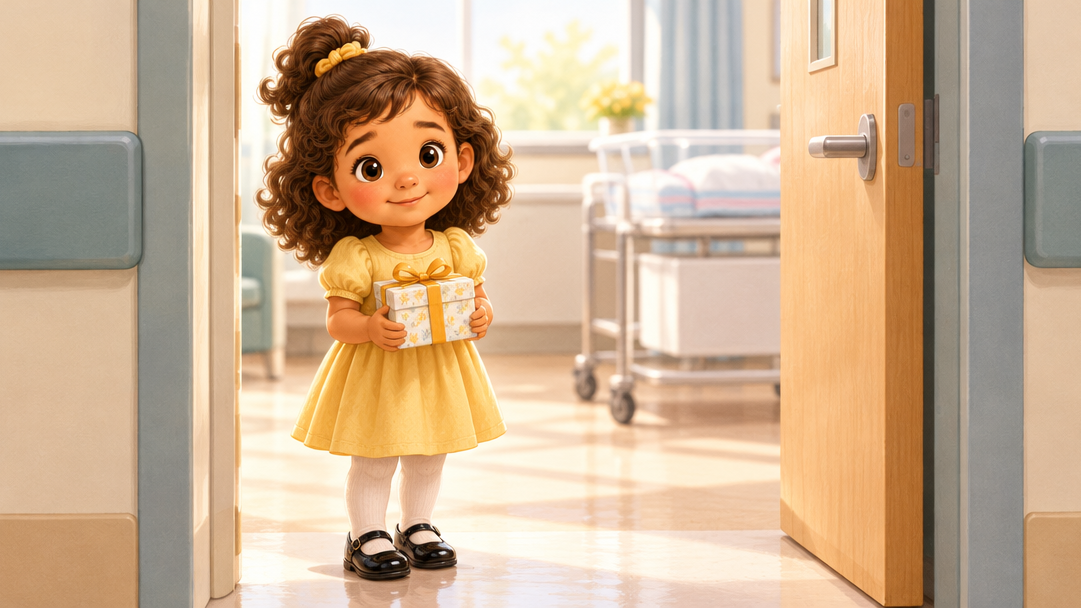
Before our son arrived we talked to our daughter about the baby in the tummy. We did not know if it was a boy or a girl; we left it a surprise. We read her books about being a big sister. We had her helping out whenever we could, with whatever the task was. We took her shopping so she could pick out a present for him. She was three.
Her grandmother was at the house when we had to go to the hospital in the night. When our daughter woke up she was distraught and looking for us. We FaceTimed, and that calmed her. Then she got herself all dressed to come and meet him at the hospital, wearing her black shiny shoes.
Here is what we did, in order, and what I found when I looked up why it worked. It is the plan I would give anyone preparing a toddler for a new baby.
Coming soon, the story for this moment: Your child and the New Baby, with your child in every scene. Free to print: the big sibling certificate, signed by the baby, with your child's name on it.
When to tell your toddler about the new baby
We talked about the baby when there was a tummy to talk about. The pediatricians say to find chances to talk about the baby and to be honest about it: the baby will be cute, and will also cry and take a lot of your time and attention. The Child Mind Institute says the more time a child has to get used to the idea, the better.
The catch is time itself. KidsHealth puts it plainly: preschoolers may not grasp concepts of time, so "it may be more useful to explain that the baby will arrive in a particular season." The parents I read who told a three year old early got months of being asked whether it was nearly July yet. Tell them when you would tell anyone else, and say it in a season they can picture.
The new baby books, at bedtime
The Child Mind Institute puts the books in the one place a toddler will sit still for them: board books and picture books about new babies, added to the usual bedtime ritual. That is what we did. The book went in after the bath, before the lights, and it stayed there after he came. The pediatricians say the books help a child get used to words like sister, brother and new baby, and that is the whole job at two and three. Which book, by age, is in our guide to big sister books.
The ones parents name most are I'm a Big Sister and I'm a Big Brother by Joanna Cole, The New Baby by Mercer Mayer, You Were the First by Patricia MacLachlan, and The Baby Is Here! from Daniel Tiger. If the new baby is joining a big brother, start with our big brother books.
The jobs: a toddler helping before and after the baby
We had our daughter helping with whatever we were doing. The pediatricians say to involve your preschooler in planning for the baby and to let them shop with you for baby things. When he came home she was the one who got the wipes and a new diaper when they were needed, and she loved it. The American Academy of Pediatrics' line on why: "Find ways to invite your child to help. This helps build a bond between siblings, reduce jealousy and promote curiosity."
A doll helps a two year old practise. The pediatricians suggest a doll so the child can take care of their own baby, and Zero to Three uses it for the one lesson that matters most: with a doll or a stuffed animal, show the touches that are gentle and the ones that are too rough for a baby.
The present she picked for the baby
We took our daughter shopping before he was born to choose a present for him. It is a small thing, and a three year old remembers it. The present at the first meeting is the part almost every family does, in one direction or both. What the parents I read remember years later is not the present. It is that the baby chose it.
One small thing, once. Zero to Three's warning for the week the baby comes: "Fight the urge to loosen up on limits and over-indulge your older child."
What not to change the month the baby is born
The pediatricians say to time the big changes in your child's routine. If you can, finish the potty or the move from the crib to a bed before the baby comes. If you cannot, put it off until after the baby is settled at home. The reason: a child asked to learn new things on top of all the changes a new baby brings can feel overwhelmed.
The parents who did it the month of the birth said so afterwards. A two year old moved to a bed the week a baby took the crib put the two together. Months before, or months after. Not the month of.
The hospital sibling class for a toddler
The pediatricians, Child Mind and KidsHealth all mention the hospital sibling class, and it is fine if your hospital runs one. A study that followed families for the year after the birth found the children who went to one did not differ from the children who did not, apart from avoiding the baby less. What the research keeps pointing at is not the class. It is the parents, and the ten minutes a day.
The night you leave for the baby's birth
This was the part we did not think hard enough about, and it is the part I would tell a friend to plan first. The pediatricians say to prepare your child for when you are in the hospital, because they may be confused when you leave. Their script: I will be back with the new baby in a few days.
Our daughter's grandmother was at the house when we had to leave in the night. When our daughter woke up, she was distraught and looking for us. We FaceTimed, and that calmed her. Three things from that night that I would do again:
- Someone she loves, sleeping in the house. Not a plan to call someone. In the house.
- A call the moment she wakes. Your face on the screen says more than any explanation the night before.
- A way for her to come. She got herself all dressed to come and meet him, in her black shiny shoes. Getting ready was her part of it.
The first meeting: your toddler meets the baby
KidsHealth says to consider letting your child visit you in the hospital as soon as possible after the baby is born, ideally when no other visitors are around. The parents I read agreed on the shape, and it is worth copying:
- Your arms free. The baby in the cot, or in someone else's arms, so your child gets you first and then finds the baby.
- If you had a section, say why you are in bed. A three year old who finds his mother lying down can think she is ill. A pillow over the wound before the cuddle.
- Keep it short. They are bored in an hour, and that is fine.
- The present from the baby, here. Small, and then no more.
One children's hospital names it as one of the ways to include them: a big sibling present when they first meet the baby. Ours had hers ready to give him, which she had picked out months before.
The first week at home with the baby
She loved helping. We made sure to spend time with her and focus on her when he arrived, so she felt all the same love. That is the whole of our first-week plan, and every body I read says the same two things.
Let them help. The British health service says to encourage your toddler to help with the baby, a diaper change for a start. KidsHealth adds the kind part: "If your child expresses no interest in the baby, don't be alarmed and don't force it."
Protect ten minutes a day that are only theirs. The pediatricians say to set aside special time for your child. KidsHealth says time each day when the older child gets one parent's undivided attention. One children's hospital names the easiest slot: bedtime. Bedtime is where that time lives at our house, and it is why we made Finn's Bedtime: the same routine every night with her name in it, free, no account, and it runs while the baby cries in the other room.
Expect a wobble. The pediatricians say to expect your child to regress a little, and instead of telling them to act their age, to let them have the attention they need. If it is the potty, our post on potty training accidents has the plan. If they hit the baby, Zero to Three says to calmly take hold of their hands and show them how to touch the baby safely, and our social story for hitting is the one to read that night.
Free printable
The big sibling certificate, with your child's name on it
Signed by the baby. One line for the thing they did, the grown-ups named your way, and a page for you for the first week. Nothing you type leaves your device.
They are officially a
The thing they did (optional, blank leaves a line to write on)
Who signs it (tap one or two)
Two sheets: the certificate, which prints sideways, and a page for you. Your answers go into the print page in the address after the #, which your browser never sends to us. How we use it.
The morning after the baby comes, on paper
The free big sibling certificate is for the fridge the week the baby comes home. Your child is officially a big sister, brother or sibling, to the baby by name, with one line for the thing they did, your signatures, and the baby's paw print. A second page has the first week for you, in the pediatricians' words.
The story where your toddler is the big one
Everything above is the before. The Big Sibling story is the after, with your child in it: a short personalized story for ages two to six, with your child in every scene and the narrator saying their name and the baby's name, or whatever you call the bump for now. The shared drawer, the first hold with a cushion under the elbow, the crying nobody can fix, and the baby turning toward their voice. Read it in the weeks before, and again once the baby is home.
Everything we have for this moment is on a new baby.
More in New Baby
- Big Sister Books for Toddlers, by Age: The Ones That Work at 2, 3 and 4
Before our son came we talked to our daughter about the baby in the tummy and read her the big sister books, a few weeks of them, at bedtime. Pick by age, not by cover. At two, a short board book with almost no words. At three, a book about what a big sister does. At four, one that admits the baby can be annoying. Read it for a few weeks before the baby comes and keep reading after, when it matters most. One book is not going to do the job on its own. The ten minutes a day that are only hers will.
- Big Brother Books for Toddlers, by Age: What Works at 2, 3 and 4
A big brother book for a toddler is the big sister book with one word changed, and the reviews say so. So buy for the age, not the word. At two, a board book where brother and baby are ordinary words. At three, one that shows what a big brother does. At four, one that lets him be cross about it. Read it at bedtime for a few weeks before the baby comes and keep reading after. No book carries his name, the baby's name, or what happens after the hospital door, and that is the part he needs most.
- Big Sister Gift and Big Brother Gift Ideas: What the Baby Brings, and When to Stop
One small thing, from the baby, handed over at the first meeting. Then no more presents for being the big one. That is the whole of the big sister gift and big brother gift ritual, and it is the part the parents I read remember years later. Not the toy. That the baby chose it. We did it the other way round at our house: we took our daughter shopping before her brother was born so she could pick out a present for him. Below is the hospital room script, picks by age with prices, the free certificate signed by the baby, and the one warning the experts give about buying too much.
- Sibling Jealousy After a New Baby: What Is Normal, What to Do, How Long It Lasts
Expect it. The NHS says it about sibling jealousy after a new baby: "It's almost certain to happen at some point." Most toddlers are fine for the first week or two. Then comes a stretch of accidents, bedtime fights, wanting the bottle back, and hitting when nobody is looking. Nobody can tell you how long it lasts. Most parents say the worst is the first few months, and the baby smiling or sitting up is the turn. What helps most is ten minutes a day that are only theirs, the same time every day. Bedtime is the easiest one to protect. Our daughter was three when her brother came, and that is what we did.
Coming soon
For the child who did not ask for a baby
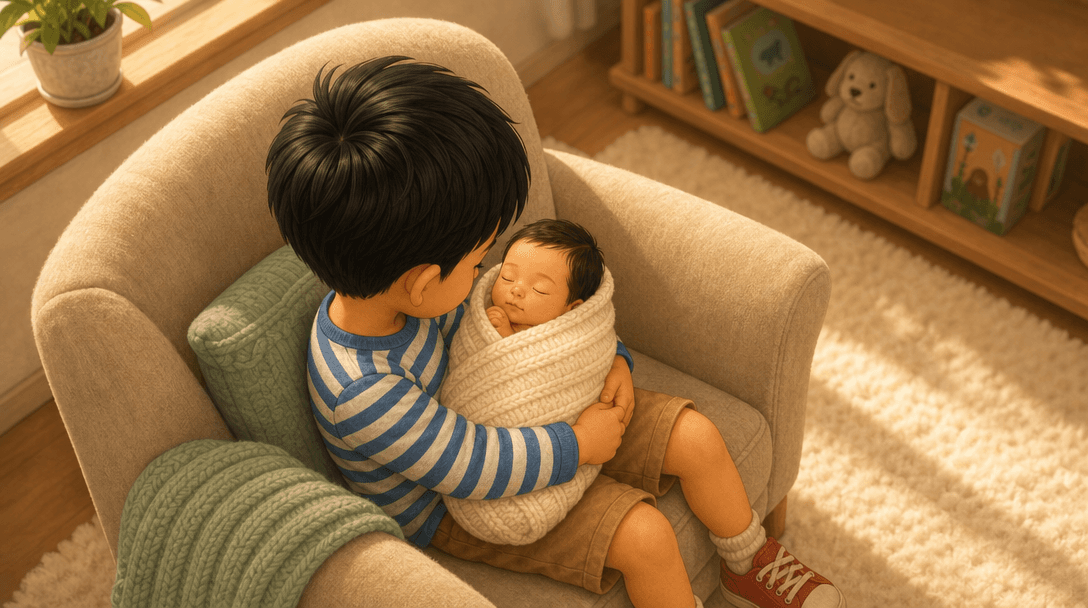
A personalized new baby story: your child by name, the shared drawer, the first hold, the crying nobody can fix, and the baby turning toward their voice. A 2.5 minute story. Ready within 24 hours.
We’re still making this one. Your child, by name, in every scene.
Frequently asked questions
- When should I tell my toddler about the new baby?
When you would tell anyone else, and in a season they can picture. KidsHealth says preschoolers may not grasp concepts of time and that it may be more useful to explain that the baby will arrive in a particular season. We talked about the baby in the tummy when there was a tummy to talk about. Told early, a three year old gets months of asking whether it is nearly time.
- How do I prepare my 2 year old for a new baby?
A board book about a new baby at bedtime for a few weeks before, a doll to practise gentle hands on, a small job before and after, and the potty and the big bed kept months away from the birth. The pediatricians say these books help a child get used to words like sister, brother and new baby, and that is the whole job at two.
- Should I move my toddler to a big bed before the baby comes?
Months before, or months after, not the month of. The American Academy of Pediatrics says to time the big changes in your child's routine: finish toilet training or the move from a crib to a bed before the baby arrives if you can, and if not, put it off until after the baby is settled at home. A toddler asked to give up the crib the week a baby takes it will put the two together.
- Should my toddler come to the hospital to meet the baby?
Yes, if they can. KidsHealth says to consider letting your child visit as soon as possible after the baby is born, ideally when no other visitors are around. Keep your arms free with the baby in the cot, say why you are in bed if you had a section, keep it short, and give the small present from the baby then. Ours got herself dressed in her shiny shoes to come.
- What do I do with my toddler when I go into labor?
Have someone they love sleeping in the house, not on call, and call them the moment they wake. The pediatricians say to prepare your child for when you are in the hospital and to tell them you will be back with the new baby in a few days. Our daughter's grandmother was at the house when we left in the night, and a FaceTime in the morning was what calmed her.
- Should the baby bring the toddler a present?
Most families do, and what the child remembers is that the baby chose it. One small thing at the first meeting, and then no more presents for being the big one. Zero to Three's warning for that week is to fight the urge to loosen up on limits and over-indulge your older child. We also took our daughter shopping before the birth to pick a present for her brother.
Co-founders and moms, FableFleet
Two moms, four kids between us. We write about the moments we are living through, and we made the bedtime routine and stories our own kids use.