
Resources · Biting · ages 2 to 4
Biting, all in one place
Biting at one, two and three is normal, and not a sign of a mean kid: the feeling gets there before the words do. In the moment, stay calm, move your child back, say one short line the same way every time, "I won't let you bite. Teeth are for food," then go to the one who got bitten. Later, when everyone is calm, give the mouth a job: a chewy on a hook, something crunchy at snack. Use the same words at home and at daycare. It fades as the words come, usually by three or four.
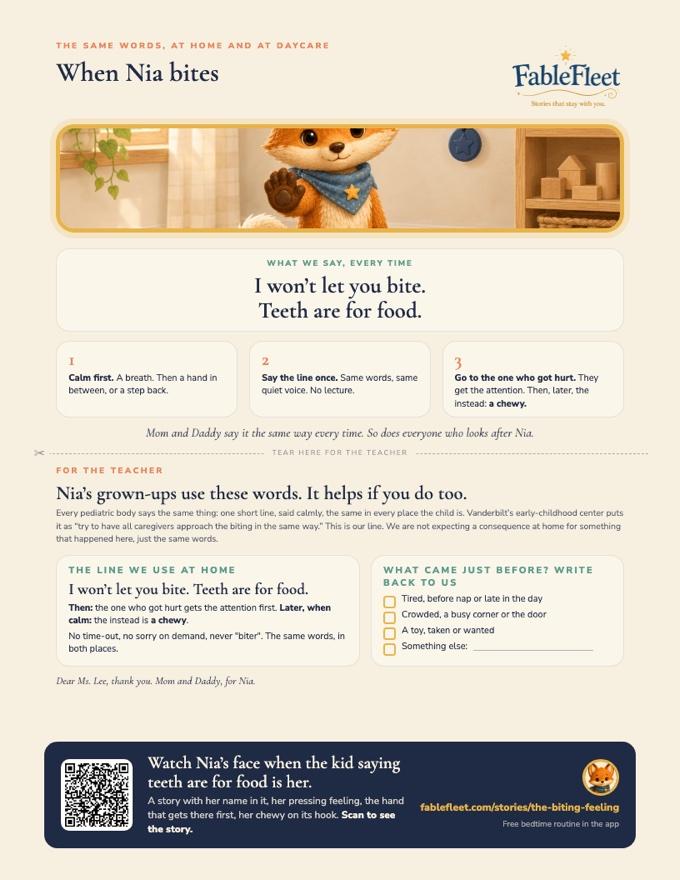
Free printable
The same words card for biting
One line for biting with your child's name, the top half for the fridge and the bottom half for the daycare teacher, plus My Biting Feeling, a social story in their voice.
Make yours free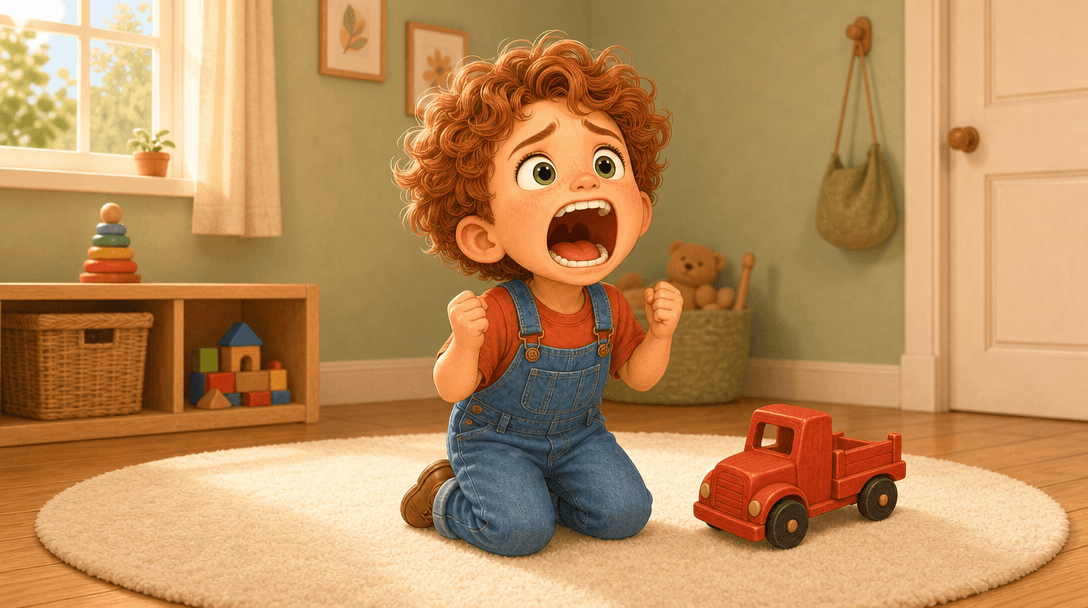
Coming soon
The Biting Feeling
A personalized story for toddlers who bite: the pressing feeling, a calm grown-up who stops it, words to use instead, and something crunchy that is allowed. A 2.5 minute story for ages 2 to 4.
See the story
For the nights
Finn's Bedtime
A free guided bedtime routine for ages two to four: pajamas, teeth, potty, a cuddle, a few lines said together, then a calm story that says your child's name.
Finn's Bedtime, freeThe guides, in the order you will need them
- 1A Biting Social Story for Toddlers (Free Printable, and What to Say in the Moment)
A biting social story is a short, calm story in your toddler's own voice that names the biting feeling, says it is allowed, and gives one thing to do with it instead. Below is a free one you can print tonight, then why toddlers bite, exactly what to say in the moment, what a story like this does, and when to talk to your pediatrician.
- 2Toddler Biting and Hitting: Why It Happens, What to Say, and When It StopsStart here
Biting and hitting at one, two and three are normal, and they are not a sign of a mean kid. The feeling gets there before the words do. In the moment: stay calm, block the hand or move your child, say one short line the same way every time, then go to the one who got hurt. Teach the instead later, when everyone is calm. It fades as language grows, usually somewhere between two and a half and four.
- 3Toddler Biting and Hitting at Daycare: What to Ask, What a Good Plan Looks Like, and the Same Words at Home
When daycare says your toddler is biting or hitting, the most useful thing you can do is get everyone using the same words. Ask what happened just before, who was close, and what the plan is. A good plan is a grown-up within arm's reach at the busy moments, one short line said the same way in both places, the hurt child comforted first, and no punishment. No pediatric body says a child should be expelled for biting; what follows is what the practitioners and a hundred families report.
Quick answers
- What do I say when my toddler bites?
- One short line, said calmly, the same every time: "I won't let you bite. Teeth are for food." Then most of your attention goes to the child who got bitten, because even a telling-off is attention. Later, when everyone is calm, give the mouth a job: a chewy on a hook, or something crunchy at snack.
- Should I punish my toddler at home for biting at daycare?
- No. A two year old cannot connect a lost toy at six o'clock to a bite at ten in the morning. What helps is the same line and the same calm response in both places. Hand the teacher the tear-off half of the card and ask what happened just before, every time.
- When should I worry about biting?
- The AAP says to call your pediatrician if it is unusually aggressive for longer than a few weeks, if there are injuries, attacks on adults, or your child is sent home from care. Ask for a hearing and speech check too; in the family accounts we read, that was the cause more than once.
Also for this moment: hitting, when the feeling goes to the hands · a new baby in the house, a common start of biting at home