
Resources · Hitting · ages 2 to 5
Hitting, all in one place
Hitting, pushing and grabbing at one, two and three are normal, and not a sign of a mean kid: the hands get there before the words do. In the moment, stay calm, stop the hands, say one short line the same way every time, "I won't let you hit. Hands on tummy, take a breath," then go to the one who got hurt. Later, when everyone is calm, practise the words instead: "I'm frustrated" or "Can I have a turn?" Use the same words at home and at daycare. It fades as the words come, usually by three or four.
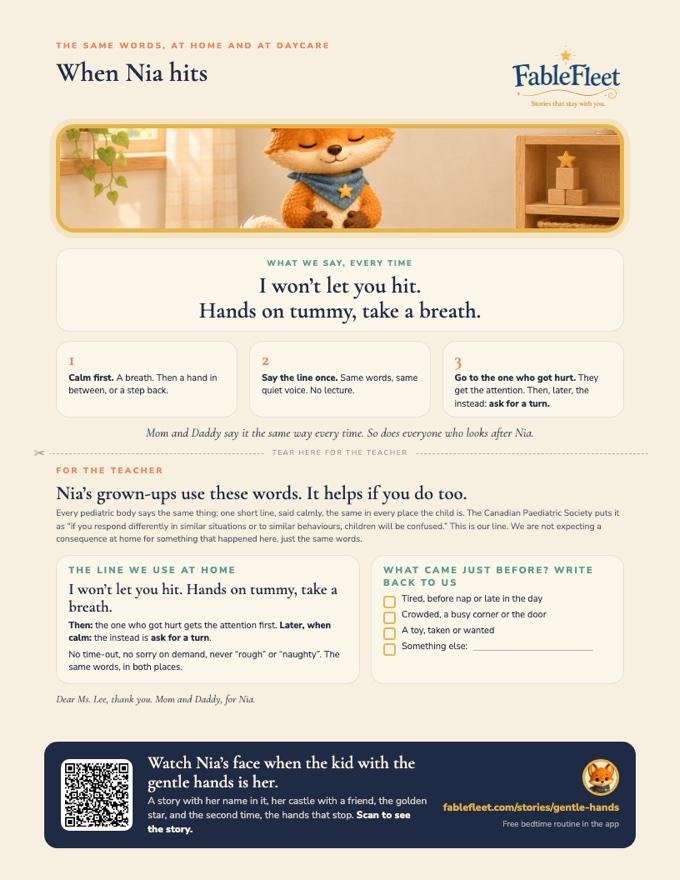
Free printable
My Gentle Hands, the hitting story
A gentle hands social story in your child's voice, twelve short lines with their name in it, plus the same words card for hitting and pushing at home and daycare.
Make yours free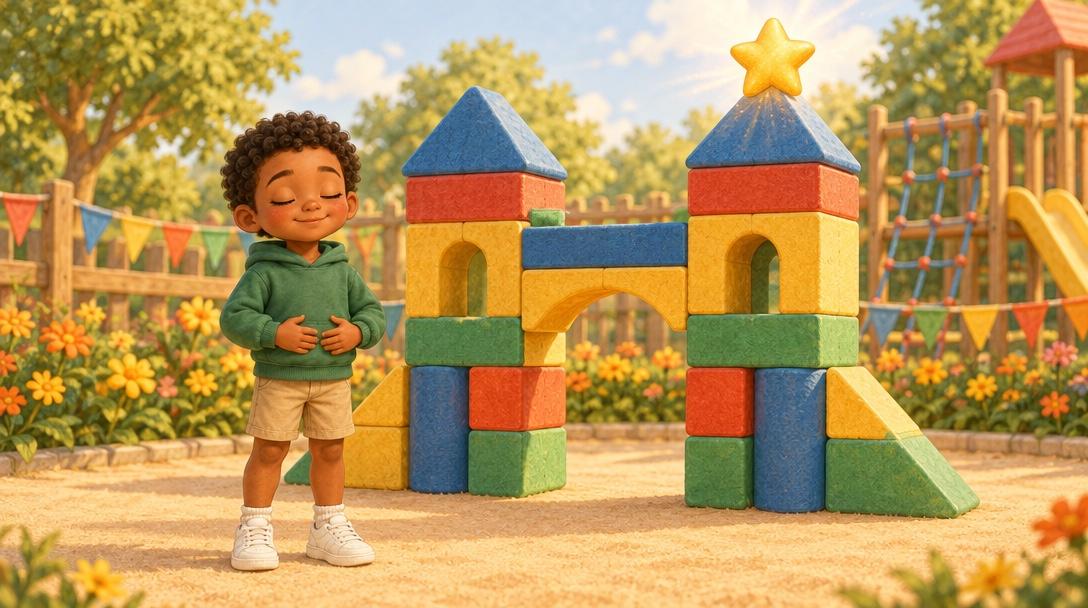
The story for hitting
Gentle Hands
A personalized social story about hitting and grabbing. Your child builds a castle with Nia, the tower falls, and this time the hands stop. Ages 2 to 6.
See the story
For the nights
Finn's Bedtime
A free guided bedtime routine for ages two to four: pajamas, teeth, potty, a cuddle, a few lines said together, then a calm story that says your child's name.
Finn's Bedtime, freeThe guides, in the order you will need them
- 1No Hitting Social Story for Toddlers: Gentle Hands, Free Printable
A no hitting social story is a short, calm story in your toddler's own voice about the big, scrunchy feeling that goes to their hands, what hitting does to other people, and what their hands and words can do instead. Below is a free one you can print with your child's name in it, then why toddlers hit, what to say in the moment, the kid who only hits you, and when to talk to your pediatrician.
- 2Toddler Biting and Hitting: Why It Happens, What to Say, and When It StopsStart here
Biting and hitting at one, two and three are normal, and they are not a sign of a mean kid. The feeling gets there before the words do. In the moment: stay calm, block the hand or move your child, say one short line the same way every time, then go to the one who got hurt. Teach the instead later, when everyone is calm. It fades as language grows, usually somewhere between two and a half and four.
- 3Toddler Biting and Hitting at Daycare: What to Ask, What a Good Plan Looks Like, and the Same Words at Home
When daycare says your toddler is biting or hitting, the most useful thing you can do is get everyone using the same words. Ask what happened just before, who was close, and what the plan is. A good plan is a grown-up within arm's reach at the busy moments, one short line said the same way in both places, the hurt child comforted first, and no punishment. No pediatric body says a child should be expelled for biting; what follows is what the practitioners and a hundred families report.
Quick answers
- What do I say when my toddler hits?
- One short line, said calmly, the same every time: "I won't let you hit. Hands on tummy, take a breath." Then go to the child who got hurt first, because even a telling-off is attention. Later, when everyone is calm, practise the words instead: "I'm frustrated" or "Can I have a turn?"
- What if my toddler only hits me, and laughs?
- Your reaction is the reward. Stay calm, a little sad, and take a step back: "I won't let you hit me." Say it the same way every time, and give the laugh nothing to work with.
- When should I worry about hitting?
- The AAP says to call your pediatrician if it is unusually aggressive for longer than a few weeks, if there are injuries, attacks on adults, or your child is sent home from care. Ask for a hearing and speech check too; in the family accounts we read, that was the cause more than once.
Also for this moment: biting, when the feeling goes to the mouth · a new baby in the house, the most common start of hitting at home · bedtime, for the hitting that comes at the end of the day