
· Updated
Is the Tooth Fairy Real? What to Say When Your Child Asks
The tooth fairy is real as a family tradition: she's been coming since 1908, and what she looks like and does is your family's version. Whether your child believes she's a real person is up to them and you. Most kids ask around seven or eight, usually because a classmate said something, and most are testing, not asking, so start with "What do you think?" If they ask you straight, tell them straight and kindly, and let them in on the secret for a younger sibling. The best research we have (on Santa, the closest thing) found three in four kids trust their parents exactly as before once they know.
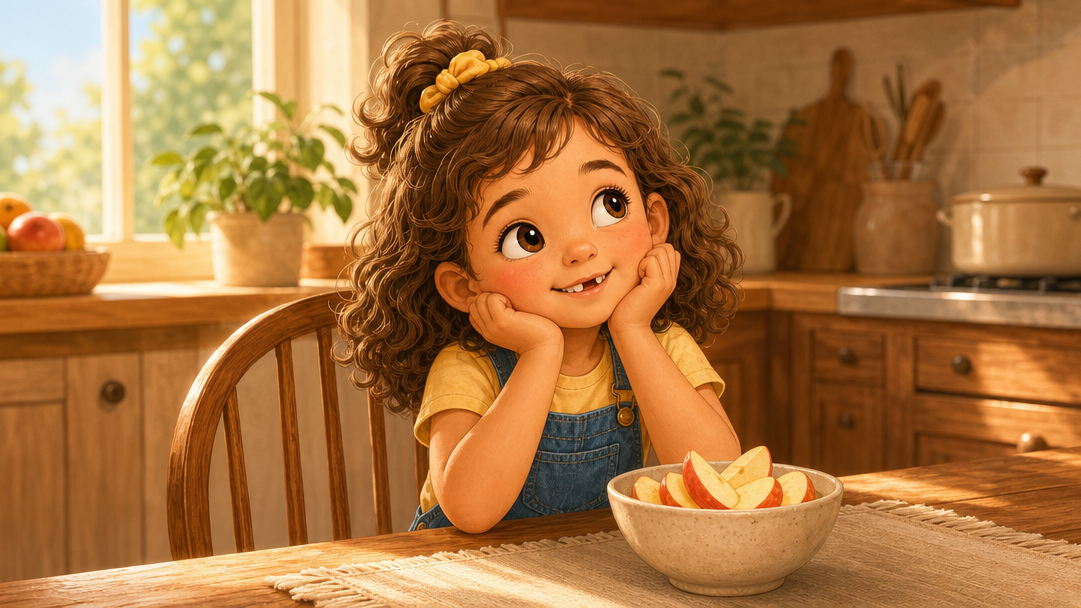
My daughter is three, so nobody in our house has asked yet. But her cousins are at the gap-toothed age, and I've watched one of them start to squint at the whole thing, so I went and read what's actually known before the question lands on me. Here's what I found, and what I'm going to say.
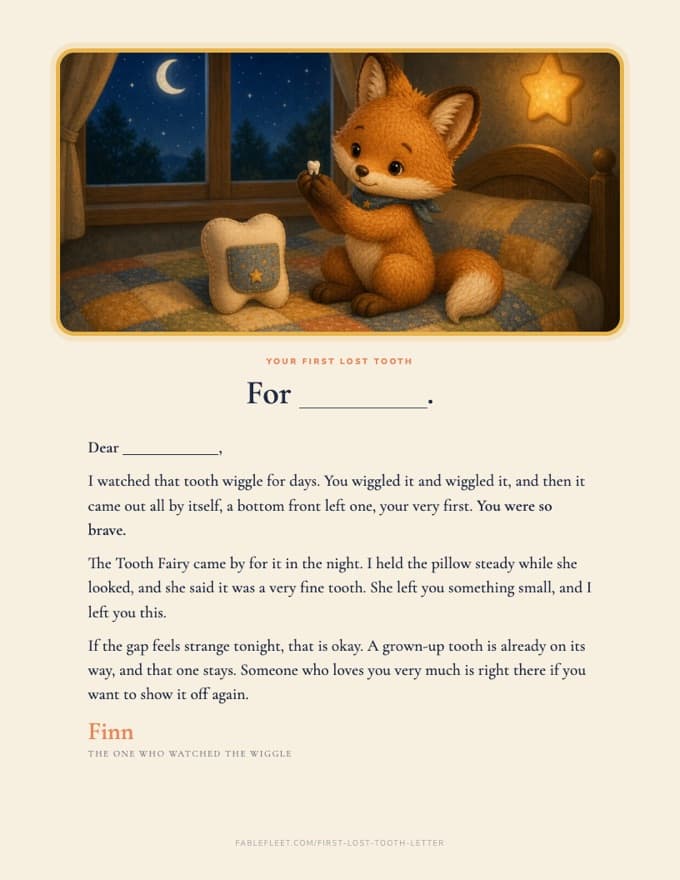
Free to print: the first lost tooth kit, with a letter from Finn, a certificate and the notes for when the night goes wrong.
Is the tooth fairy real? The short answer for your child
Depends who's asking and how old. For a five year old who just lost a tooth and wants to know if she's coming, the answer is yes: in our house, the tooth goes in the pillow and in the morning something has happened. That's true. For an eight year old with a look on their face, the honest answer is the one below.
What is true for everyone: the tooth fairy is a real tradition that families have kept for over a century. She first appears in print in 1908, in a household column in the Chicago Tribune: "Many a refractory child will allow a loose tooth to be removed if he knows about the tooth fairy." She was invented to get a nervous kid through a wobbly tooth, and that's still her best job. There's no official version of her, so what she looks like, what she does with the teeth and how much she leaves is your house's version. The rest of her is in our tooth fairy guide.
When kids ask, and why
Around seven or eight, and usually because of someone else. In the families I read, the question almost always arrived from the outside: a classmate said parents are the fairy, an older cousin said it with a smirk, a magazine article, a box of teeth found in a nightstand. The research on Santa, which is the closest thing anyone has studied properly, lands in the same place: children "generally discovered the truth on their own at age seven" in one study, and shifted "at an average of 8 years old, but that varied significantly" in a newer one.
The tooth fairy tends to last a little longer than Santa. The only tooth fairy number anyone has is from 1978, and it's a good one: 60 percent of eight year olds still believed in her, against 25 percent for Santa. The proof keeps turning up under the pillow every few months until twelve, and she's tied to the child's own body rather than a date on the calendar. So don't expect one neat age. Expect a stretch of years where they half-believe, test, and decide.
Testing, not asking
Most of the time, a seven year old saying "is the tooth fairy real?" isn't asking for the facts. They're checking what you'll say, and they're deciding what they want to be true. That's why the first move is a question back.
"What do you think?" Then listen. A lot of kids will tell you exactly where they are. "I think it's you but I want her to keep coming" is a complete answer, and you can say "then she will." "I know it's you" with a grin is a different one. A child who shrugs and says "I don't know, I just wondered" usually isn't ready, and the fairy keeps coming.
If they clearly know and you insist, that's the version that goes badly. Follow your child. The families I read who did this well all said some version of: I let her lead, and when she was done, we were done.
When they ask you straight
Sometimes it's not a test. They look at you and ask for real. Then the answer is real too, and kind. Something like: "The tooth fairy is a story families tell to make losing a tooth feel special. The money and the notes came from us, because we love doing it. You can keep leaving your teeth out as long as you want, and it still counts."
Then the line that turns it from a loss into a promotion: let them in on the secret for a younger sibling. In the families I read, the kids who were asked to help (write the note, keep it quiet, be the one who knows) went from disappointed to proud in about a day. Being on the grown-up side of it is its own kind of magic, and it keeps the tradition going for the little one.
A few things that make it worse, every time: a long speech; "you're too old for that now"; telling them the Easter Bunny and Santa fell in the same breath unless they ask; and, the big one, letting them find out from someone else because you waited past the point where they clearly knew.
Does the "lie" hurt trust?
This is the worry under the question, and it's worth answering plainly, because the internet is full of opinion pieces saying yes. The only study that actually asked kids found no: of 48 children who'd worked out Santa, three in four said they trusted their parents exactly the same as before, and the researchers wrote that the kids "didn't report a drastic loss of trust." Most reactions to finding out were "predominantly positive" in the older study, and it was the parents who were sad, not the kids.
What did predict a bad time: being told later, more abruptly, by someone other than a parent, after years of heavy staging (the trails, the cameras, the elaborate proofs). The older research found the same thing from the other direction: parents who pushed hardest didn't hold belief any longer; they just made the landing rougher. So the advice writes itself. Keep the fairy simple, answer honestly when asked for real, and don't be the last to know that your child already knows.
Free printable kit
The first lost tooth kit, with your child's name in it
A letter from Finn, a certificate, four notes for the nights that go wrong, and a page for you. Tap a few things; nothing you type leaves your device.
She, he or they
Which tooth (tap it; top row is the top of the mouth)
Bottom front left
Not sure? The first one is almost always a bottom front tooth.
Tooth number
How it came out
Finishes the sentence “You were brave when…”
Who came for it
The grown-ups who were there (tap one or two)
Four sheets: the letter from Finn, the certificate, four notes for the nights that go wrong, and a page for you. Your answers go into the print page in the address after the #, which your browser never sends to us. The first tooth, on one page.
If you'd rather not do the fairy at all
Plenty of families don't, for faith reasons or just because they don't want to say something untrue to their kids. Some say up front: "This is a game we play, and we're the tooth fairy. Want to play?" Kids love being in on it from the start. Others keep the tooth in a box and mark the morning with a certificate the grown-ups sign. Our free first lost tooth kit was built for exactly that: the letter from Finn and the certificate work with the Tooth Fairy, Ratoncito Pérez, la petite souris, or nobody, and the Wiggly Tooth story never names who came in the night.
What I'm going to say
When my daughter asks, probably years from now, probably because of a cousin: "What do you think?" If she wants her to keep coming, she keeps coming. If she asks me straight, I'll tell her straight, and then I'll ask her to help with her brother's first tooth. That's the whole plan. Everything else, from the money to the night it goes wrong, is in the tooth fairy guide.
More in Tooth Fairy
- The Tooth Fairy: The Whole Guide for Parents, From a Mom Who Hasn't Done It Yet
The tooth fairy comes at night after a child loses a baby tooth, takes the tooth, and leaves a small gift, usually a few dollars and often a note. There is no official version: she first appeared in print in 1908, in a tip for getting a nervous child through a wobbly tooth, so what she looks like, what she does with the teeth and how much she leaves is up to your house. What the families who do it well all do: buy the coin before the first wiggle, decide the amount and stick to it, give the tooth somewhere to go, say the rules out loud early, and decide now whether you're keeping the teeth. A third to a half of families have no fairy at all (a mouse, a keepsake box, nothing), and that's fine too.
- Personalized Tooth Fairy Gifts: What Actually Feels Made for Your Child
The most personal tooth fairy gift is a short handwritten note with your child's name and one true thing about them this week. Pair it with one small keepsake that fits who they are: a coin from their birth year, a named tooth pillow, a certificate that says which tooth it was, a small book, or a story with their name in it. For a first tooth, pick something you can repeat for every child in the house. Decide now whether you're keeping the teeth; a labelled envelope in a safe spot is enough.
- The First Lost Tooth: The Wiggly Weeks, the Day It Goes, and the Morning After
Most kids lose their first tooth around six, usually a bottom front one, after weeks of wiggling that feel longer than they are. The American Academy of Pediatrics says baby teeth "ordinarily are shed first at about age 6," and a year either side is normal. Let your child wiggle it and never pull a tooth that isn't ready. The two bedtime worries are "will it hurt?" and "what if I swallow it?" and both have short, honest answers. A little blood is normal. Where the tooth goes that night is your family's call: a fairy, a mouse, a keepsake box, or nothing, and the moment counts the same. Mark the morning with a photo, someone to tell, and the free certificate in our first lost tooth kit.
- The First Tooth Fairy Visit: What to Leave, How Much, and How to Pull It Off
The first tooth fairy visit is a swap: after your child is asleep, the tooth goes and a small gift and a note take its place. Decide the amount before the first tooth (US families average about US$6 a tooth and a little more for the first; a dollar into a piggy bank is plenty), buy the coin now, give the tooth a container your child picks, and write the note while you're still awake. Wait until they're deeply asleep, swap, and be nearby in the morning. If something goes wrong, there's a note for that, and in a hundred families' stories nobody's fairy ever refused to pay.
- What If the Tooth Fairy Doesn't Come? What to Say in the Morning, and the Note That Fixes It
If the tooth fairy didn't come, she's late, not gone. In the morning: name the feeling, stay certain ("She must have had a very busy night. We'll leave it out again tonight."), and give your child a job, like writing her a note. That night: the planned gift, a short note with a reason (the weather is the classic), and one small extra. That's what every family who forgot did, and the kids were fine by breakfast. Then set the alarm, because once is a story and twice is a pattern.
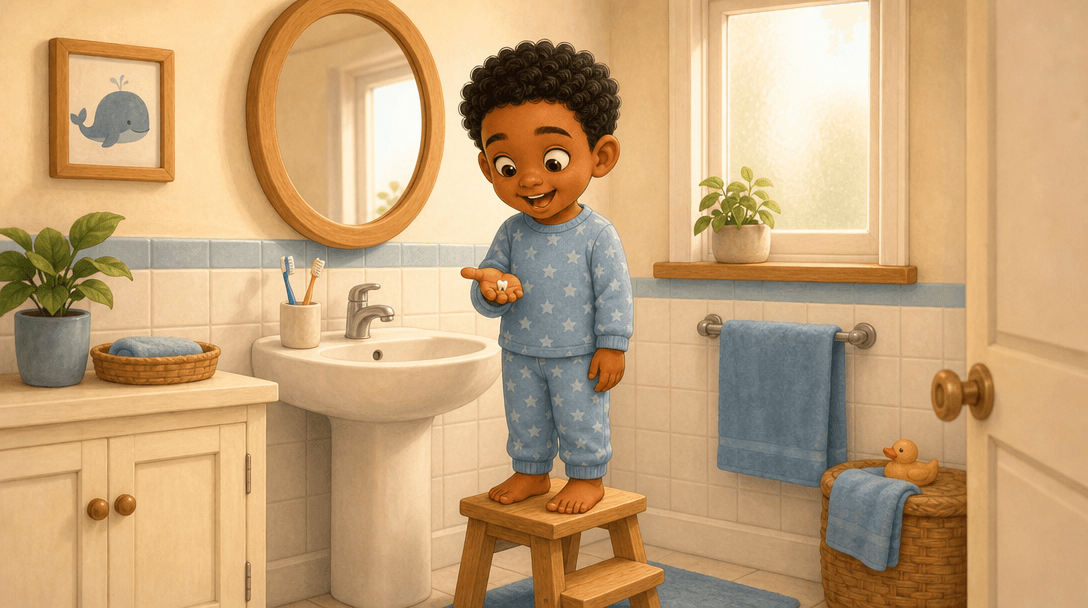
The story for this milestone
A first wobbly tooth, and the long wait for it to fall out
A personalized first lost tooth story: the wiggle, the long wait, the bedtime worry answered, and the morning after. A 2.5 minute storybook film for ages 5 to 7. Ready within 24 hours.
We make it from the details you choose. Your child, by name, in every scene.
Frequently asked questions
- Is the tooth fairy real?
She is real as a family tradition, kept since at least 1908, and what she looks like and does is your family's version. Whether your child believes a real person comes in the night is up to them and you. Most kids ask around seven or eight and are usually testing rather than asking, so start with "What do you think?" and follow their lead.
- At what age do kids stop believing in the tooth fairy?
Usually somewhere between seven and nine, and often later than for Santa. The research on Santa puts the average at seven to eight. The only tooth fairy figure anyone has, from a 1978 study, found 60 percent of eight year olds still believed in her against 25 percent for Santa, probably because the proof keeps turning up under the pillow for years. Expect a stretch of half-believing and testing rather than one neat age.
- What should I say when my child asks if the tooth fairy is real?
Ask "What do you think?" first. Many kids will tell you what they want to believe, and if they want her to keep coming, she can. If they ask you straight, tell them straight and kindly: she is a story families tell to make losing a tooth special, and the notes and money came from you because you love doing it. Then ask them to help with a younger sibling's turn.
- Does telling kids the tooth fairy is real damage trust?
The best evidence says no. In the one study that asked children who had worked out Santa, three in four said they trusted their parents exactly as before, and the researchers reported no drastic loss of trust. What predicted a bad reaction was being told late, abruptly, by someone other than a parent, after years of heavy staging. Keep it simple and answer honestly when asked for real.
- What if we don't want to do the tooth fairy?
Then don't. Plenty of families skip her for faith reasons or because they would rather not say something untrue, and the moment can still be marked. Some tell their kids up front that it is a game the grown-ups play. Others keep the tooth in a box and sign a certificate. Our free first lost tooth kit works with a fairy, a mouse or nobody, and the Wiggly Tooth story never names who came in the night.
Sources
- Word Histories, the earliest 'tooth fairy' (Chicago Sunday Tribune, 1908)
- Science News on Prentice, Manosevitz and Hubbs (1978), belief in Santa and the tooth fairy by age
- Anderson and Prentice (1994), Encounter with reality: children's reactions on discovering the Santa Claus myth
- Mills and others (2024), Debunking the Santa myth, Developmental Psychology, via UT Dallas
- Yoo, Jiang and Rosengren (2025), Why Santa but not witches?, Frontiers in Developmental Psychology
FableFleet team
Founders & moms, FableFleet
We're a small team of moms building the personalized children's stories we wished existed for our own kids. Everything we publish is rooted in lived experience and cited research.