


How to use a potty chart so it helps
A chart is a small piece of structure on top of the approach pediatricians recommend: wait for the readiness signs, then make the potty an easy, cheerful part of the day. Used that way it helps. Used as a scoreboard it backfires. Here is the difference.
Reward the trying, not the result
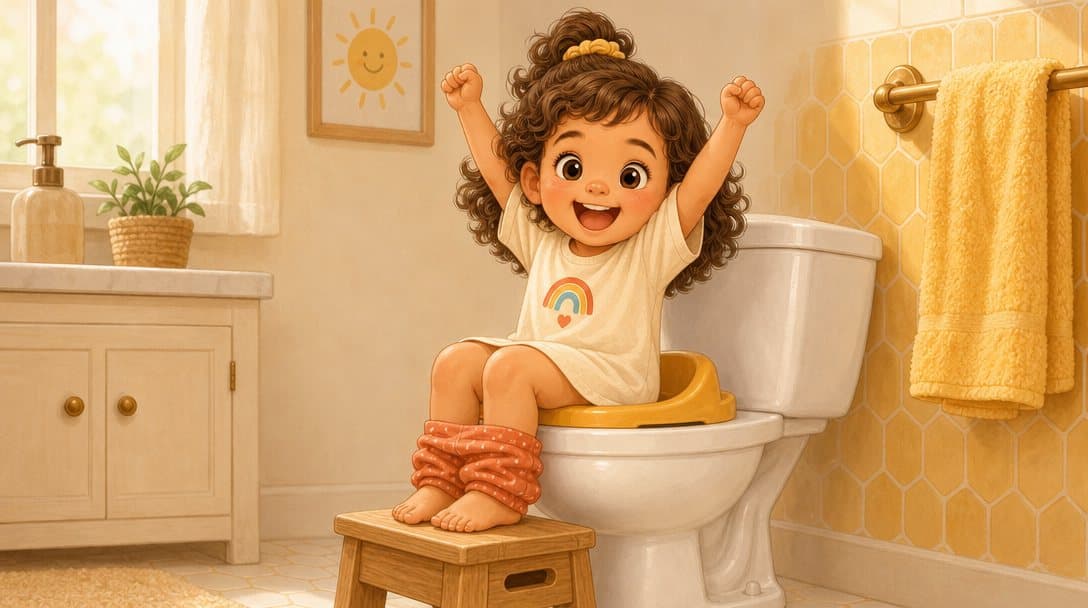
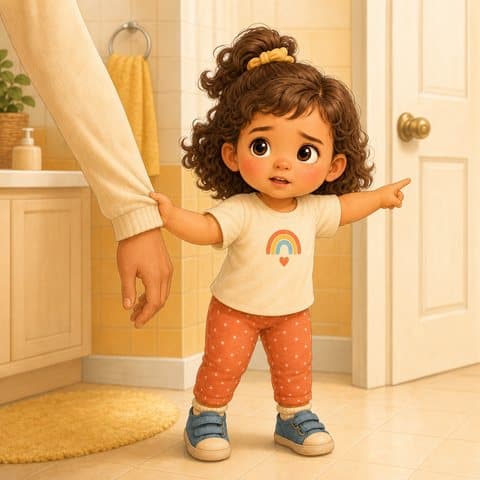
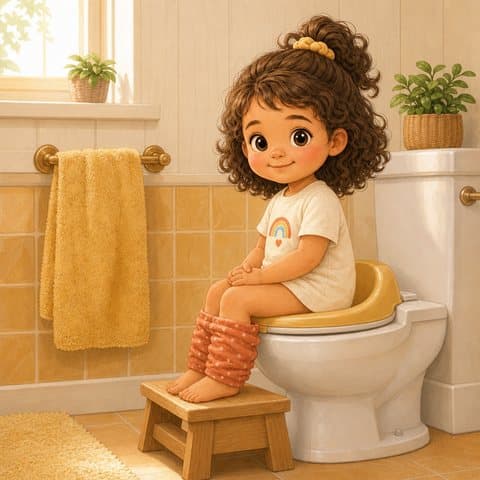
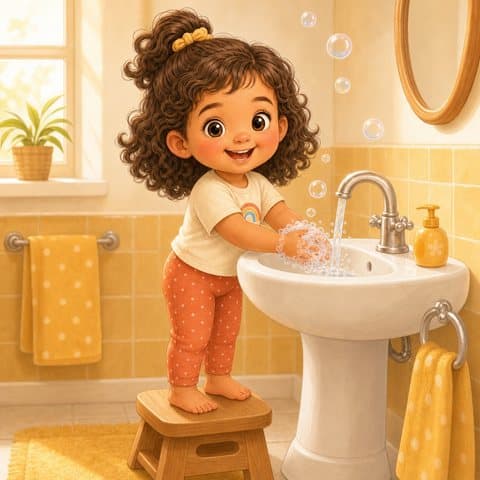
The rows that matter most are the ones your child controls: telling you, sitting down, washing hands. Whether anything happens on the potty is not something a two year old can decide, so a chart that only counts results leaves them with nothing to earn on a hard day. Put “went in the potty” on the chart once sitting is easy, not before.
The cheer is the reward
Sticker and star charts have a track record for toileting, including soiling and bed wetting, in children under about seven. The part that seems to do the work is the praise that comes with the sticker, not the sticker itself.1 So the reward on this chart is a lamp and a cheer. If you want something for a full chart, keep it small and soon: the park, choosing dinner, a call to Grandma. There is a fair argument that big prizes can lower a child's interest in the skill once the prizes stop,2 and it is easy to avoid.
Nothing comes off the chart
Accidents are part of learning. A lamp is never taken away, and the chart says so at the bottom. A child who loses a sticker for an accident learns to hide the next one, and hidden accidents make training longer.
Short, then gone
A chart is a bridge, not a habit. Use it for a week or two, or until the step is easy, then stop. The praise carries on without it. If a chart has been on the fridge for a month, the step it was for is probably not the right step yet.
Readiness first
The signs pediatricians look for: staying dry for a couple of hours, noticing a wet or dirty diaper, showing interest in the toilet, being able to pull pants down and up, and being able to follow a simple instruction.3 Most children show these somewhere between eighteen months and three years. A chart started before the signs are there teaches a child that the potty is a place where they fail.
Which approach is this?
Reviews of toilet training describe two sound approaches: a child led method that waits for readiness and keeps pressure low, and a structured method built on praise and reinforcement. They have never been compared head to head, and neither has been shown to be better.3,4 The American Academy of Pediatrics and the Canadian Paediatric Society recommend the child led approach.5 This chart is the child led approach with one structured piece borrowed: a visible, cheerful record of trying.
Questions parents ask
- Do potty training reward charts work?
- For most children under about seven, yes, as long as the chart rewards trying and the praise comes with it. Sticker and star charts have been shown to help with toileting, including soiling and bed wetting. The praise delivered with the sticker seems to be what does the work, which is why this chart is built around a cheer and a lamp rather than a prize.
- What should go on a potty chart?
- The steps your child can nearly do already: telling you, sitting down, washing hands. Put the result (went in the potty) on the chart only once sitting is easy. A row your child can fill on the first day is the point. Three to five rows is plenty.
- Should I take a sticker away after an accident?
- No. Accidents are part of learning and nothing should come off the chart. Taking a reward away teaches a child to hide accidents, which makes training longer, not shorter.
- What is a good reward for a potty chart?
- The lamp and your cheer. If you want a prize for a full chart, keep it small and immediate: a trip to the park, choosing dinner, a phone call to Grandma. Big prizes shift the attention from the skill to the prize.
- When should I stop using the chart?
- After a week or two, or as soon as the step is easy. Charts work as a bridge. Once your child is going on their own, the chart has done its job and the praise can carry on without it.
- Is a chart the right approach for my child?
- Pediatric reviews rate two approaches as sound: a child led approach that waits for readiness, and a structured approach built on praise and reinforcement. Neither has been proven better than the other. A chart is a light version of the second, and it works best after the readiness signs are there.
More potty training guides
- Potty training methods: 3 day, Oh Crap and child led
- What age to start potty training
- Potty training accidents and what to say
- Best potty training books for toddlers
- Night time potty training
- All potty training guides
Sources
- Sticker/star chart. The SAGE Encyclopedia of Cognitive Behavioral Therapy. sk.sagepub.com
- Warneken F, Tomasello M. Extrinsic rewards undermine altruistic tendencies in 20 month olds. Developmental Psychology, 2008.
- Choby BA, George S. Toilet training. American Family Physician, 2008. aafp.org
- Mrad FCC et al. Toilet training methods in children with normal neuropsychomotor development: a systematic review. Journal of Pediatric Urology, 2021. pubmed.ncbi.nlm.nih.gov
- Toilet training: a systematic review of the evidence. CMAJ, 2012. cmaj.ca