
Resources · Potty training · ages 2 to 4
Potty training, all in one place
Most kids are ready somewhere between two and three, and readiness beats the calendar: staying dry for two hours, telling you they have gone, wanting to sit. Pick a quiet week, daytime first, nights much later. One to three messy days, then it clicks. Accidents for months after are normal, not a step back.
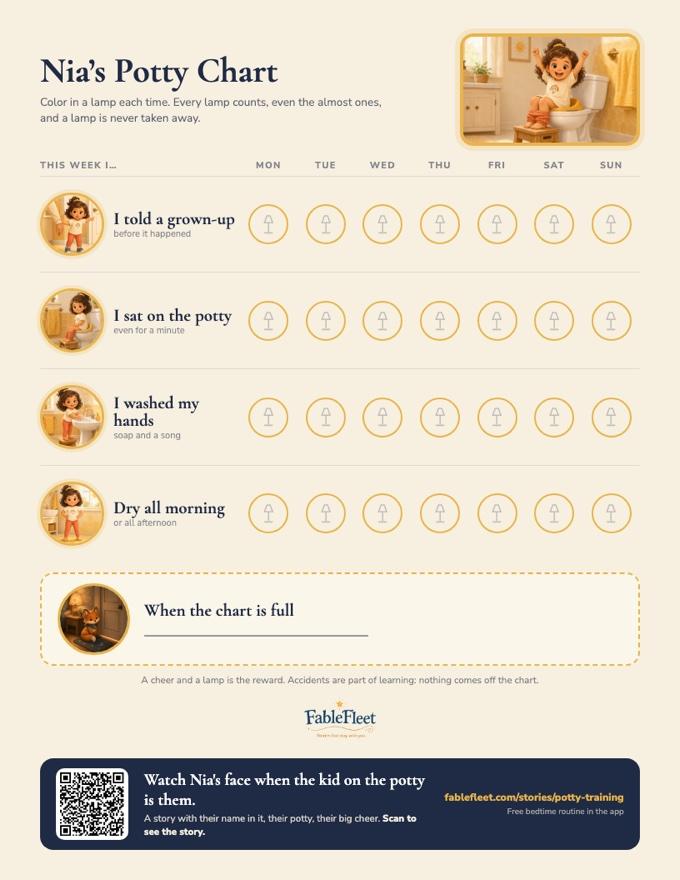
Free printable
The potty chart
Seven steps in pictures, your child's name on it, a week of stars. Nothing you type is sent anywhere.
Make yours free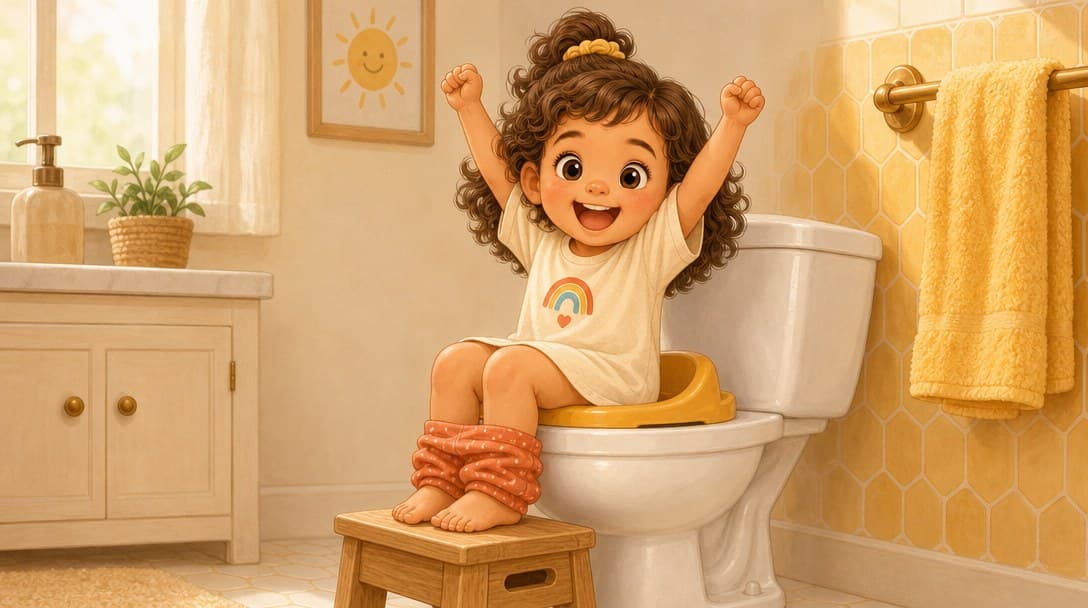
Coming soon
Learning to Use the Potty
A personalized potty training story: noticing the feeling on the inside, the cold seat and the step stool, a grown-up who waits, and the flush met properly. A 2.5 minute story for ages 2 to 4.
See the story
For the nights
Finn's Bedtime
A free guided bedtime routine for ages two to four: pajamas, teeth, potty, a cuddle, a few lines said together, then a calm story that says your child's name.
Finn's Bedtime, freeThe guides, in the order you will need them
- 1What Age to Start Potty Training, and the Readiness Signs We Watched For
There is no single right answer to what age to start potty training. Pediatricians put the first readiness signs at 18 to 24 months and typical daytime training between 24 and 36 months, and most families start somewhere in between. What tells you it is time is a pattern that holds for about two weeks: dry stretches of two hours, some curiosity about the toilet, simple instructions followed, and a cooperative mood. My daughter showed signs at 16 months and was trained by 18. That was her timing, not a target.
- 2Potty Training Methods Compared: 3 Day, Oh Crap and Child-Led, and What Worked for UsStart here
There are three potty training methods worth knowing: child-led, which pediatricians default to and takes weeks to months; the 3 day method, three days at home with no diaper; and Oh Crap, the same idea spread over one to two weeks in stages. All three work for a child who is ready, and none of them works for a child who is not. We did three days at home with our daughter. The method gave the training a shape; her readiness did the rest.
- 3How to Potty Train a Boy: Sitting First, Standing Later
To potty train a boy, start him sitting for both pee and poop, and add standing only once sitting is fully reliable. That is the position of the American Academy of Pediatrics, the Mayo Clinic and Nemours. Boys finish a couple of months later than girls on average, but the gap is small next to how different one child is from the next. We trained our daughter; our son's turn is still ahead. This is the pediatric guidance on boys, next to what carries over from doing it once.
- 4Potty Training Regression and Accidents: What They Mean and What to Say
A potty training regression is when accidents come back after your child was dry. It is usually information: a new sibling, a move, a daycare change, an illness, or the one most parents miss, constipation. Most potty training regressions settle in two to four weeks. In the first weeks of training, accidents are simply normal: three to eight a day in week one, one to three in week two, close to none by week four. Say one short, calm sentence every time; ours was: that's okay, accidents happen.
- 5Night Time Potty Training and Pull-Ups: When to Switch, and When to Wait
Night dryness is mostly body, not behavior. A hormone that slows urine overnight and a bladder big enough for the whole night both have to grow in, and that often comes months or years after daytime training. Wet nights are normal up to age five or six. In the day, cotton underwear teaches the cue because your child feels wet; pull-ups muffle it, so they belong to naps, nights and travel. Wait for the dry morning signal before switching to underwear at night. Our daughter's nights came on their own, a good while after her days.
- 6Best Potty Training Books for Toddlers, Preschoolers and Parents
The best potty training books come in two kinds. For parents: Oh Crap (Glowacki), The No-Cry Potty Training Solution (Pantley) and the free American Academy of Pediatrics toilet training hub. For toddlers: Once Upon a Potty (Frankel), Potty (Patricelli) and A Potty for Me (Katz). Preschoolers need characters their own age and a real story: Time to Pee (Willems) and Everyone Poops (Gomi). Skip anything with shame, a promised timeline or a checklist on the back. And the most specific potty book there is, you write yourself.
Quick answers
- Is three too late to start?
- No. Three year olds often train fastest because they can talk it through. Late is when it starts to cost sleep or school, not an age.
- Pull-ups or underwear?
- Underwear by day once you have started; pull-ups at night until they wake dry most mornings.
- What do I say the night before?
- Keep it small and certain: "Tomorrow we try the potty. If you miss, we clean up and try again." Then the story, then bed.
Also for this moment: the bedtime routine chart · a new baby in the house, the most common reason for a step back