
Resources · Lost tooth and the tooth fairy · ages 5 to 7
Lost tooth and the tooth fairy, all in one place
Most kids lose the first tooth around six, a bottom front one, after weeks of wiggling. Let them wiggle, never pull. Decide your family's version before the first wobble (a fairy, a mouse, a keepsake box, or nothing), buy the coin now, and pick an amount you can repeat twenty times. If the night goes wrong, a note fixes it.
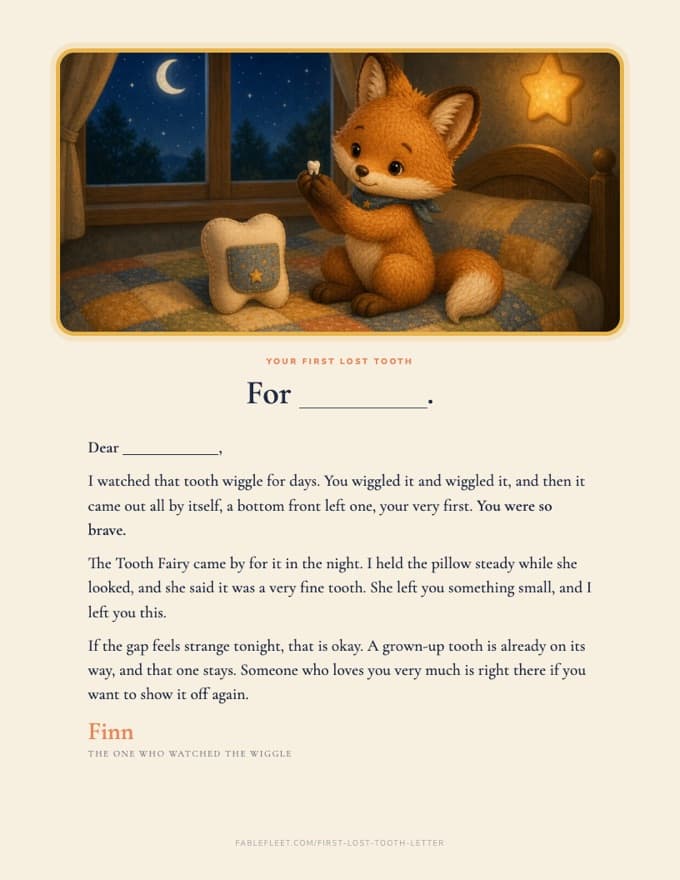
Free printable
The first lost tooth kit
A letter from Finn with your child's name, a certificate you sign, four notes for the nights that go wrong, and a page for you. Works with or without a tooth fairy.
Make yours free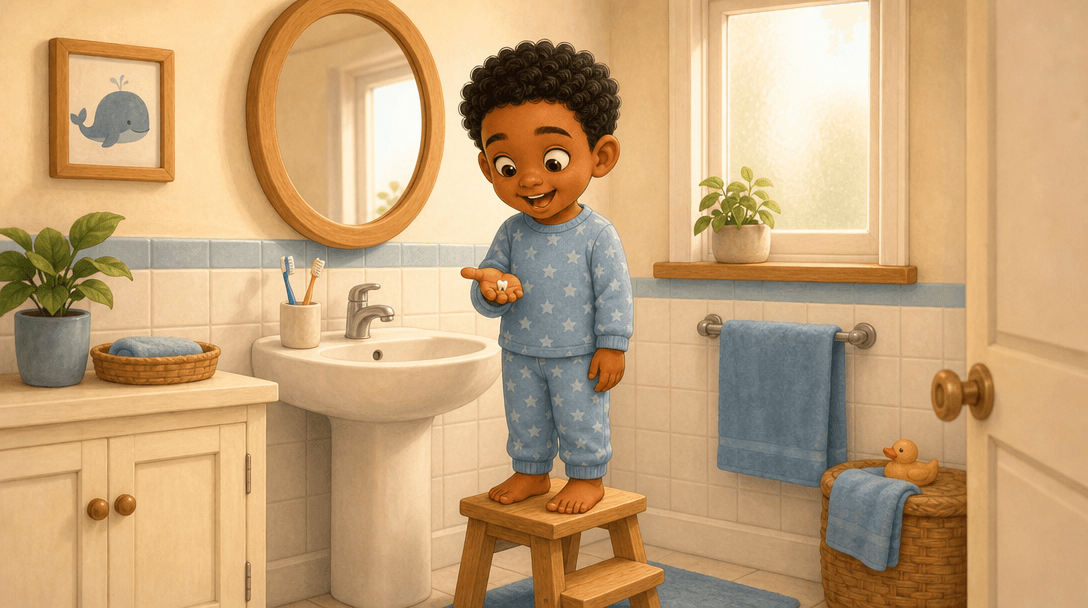
Coming soon
Wiggly Tooth
A personalized first lost tooth story: the wiggle, the long wait, the bedtime worry answered, and the morning after. A 2.5 minute story for ages 5 to 7. Ready within 24 hours.
See the story
For the nights
Finn's Bedtime
A free guided bedtime routine for ages two to four: pajamas, teeth, potty, a cuddle, a few lines said together, then a calm story that says your child's name.
Finn's Bedtime, freeThe guides, in the order you will need them
- 1The Tooth Fairy: The Whole Guide for ParentsStart here
The tooth fairy comes at night after a child loses a baby tooth, takes the tooth, and leaves a small gift, usually a few dollars and often a note. There is no official version: she first appeared in print in 1908, in a tip for getting a nervous child through a wobbly tooth, so what she looks like, what she does with the teeth and how much she leaves is up to your house. What the families who do it well all do: buy the coin before the first wiggle, decide the amount and stick to it, give the tooth somewhere to go, say the rules out loud early, and decide now whether you're keeping the teeth. A third to a half of families have no fairy at all (a mouse, a keepsake box, nothing), and that's fine too.
- 2First Lost Tooth: The Average Age, the Wiggly Weeks and the Morning After
The average age of the first lost tooth is about six, usually a bottom front one, after weeks of wiggling that feel longer than they are. The pediatricians say a year either side is normal. Let your child wiggle it and never pull a tooth that isn't ready. The two bedtime worries are will it hurt and what if I swallow it, and both have short, true answers. A little blood is normal. Where the tooth goes that night is your family's call: a fairy, a mouse, a keepsake box, or nothing, and the moment counts the same. Mark the morning with a photo, someone to tell, and the free certificate in our first lost tooth kit.
- 3A Tooth Fairy Letter Alternative for the First Tooth, and the First Visit
The first tooth fairy visit is a swap: after your child is asleep, the tooth goes and a small gift and a note take its place. For the note, our free kit has an alternative to the tooth fairy letter for the first tooth: a letter from Finn with your child's name, which tooth it was and how it came out. Decide the amount before the first tooth (US families average about US$6 a tooth and a little more for the first; a dollar into a piggy bank is plenty), buy the coin now, give the tooth a container your child picks, and write the note while you're still awake. Wait until they're deeply asleep, swap, and be nearby in the morning. If something goes wrong, there's a note for that, and in the families I read nobody's fairy ever refused to pay.
- 4What If the Tooth Fairy Doesn't Come? What to Say in the Morning, and the Note That Fixes It
If the tooth fairy didn't come, she's late, not gone. In the morning: name the feeling, stay certain (she must have had a very busy night, and you'll leave it out again tonight), and give your child a job, like writing her a note. That night: the planned gift, a short note with a reason (the weather is the classic), and one small extra. That's what every family who forgot did, and the kids were fine by breakfast. Then set the alarm, because once is a story and twice is a pattern.
- 5Is the Tooth Fairy Real? What to Say When Your Child Asks
The tooth fairy is real as a family tradition: she's been coming since 1908, and what she looks like and does is your family's version. Whether your child believes she's a real person is up to them and you. Most kids ask around seven or eight, usually because a classmate said something, and most are testing, not asking, so start by asking what they think. If they ask you straight, tell them straight and kindly, and let them in on the secret for a younger sibling. The best research we have (on Santa, the closest thing) found three in four kids trust their parents exactly as before once they know.
- 6Tooth Fairy Gift for the First Tooth: Personalized Ideas for Your Child
The best tooth fairy gift for the first tooth is a short handwritten note with your child's name and one true thing about them this week. Pair it with one small keepsake that fits who they are: a coin from their birth year, a named tooth pillow, a certificate that says which tooth it was, a small book, or a story with their name in it. For a first tooth, pick something you can repeat for every child in the house. Decide now whether you're keeping the teeth; a labeled envelope in a safe spot is enough.
Quick answers
- How much does the tooth fairy leave?
- US families average about US$6 a tooth and a little more for the first. Decide it before the first tooth. A dollar into a piggy bank is plenty.
- What if my child swallows the tooth?
- It passes on its own. Call the doctor only for coughing or trouble breathing. Write a note, and the visitor still comes.
- What do I say when they ask if she is real?
- Start with "What do you think?" If they ask you straight, tell them straight and kindly, and let them help with a younger sibling's turn.
Also for this moment: the first lost tooth kit: a letter from Finn, a certificate, and notes for the nights that go wrong